Full story
Hormuz leverage, wider threats
Iran is betting it can outlast Washington by turning Middle East trade routes, shipping lanes and energy infrastructure into pressure points, using a strategy of calibrated escalation that aims to widen the conflict without triggering full-scale war.
“Iran is betting it can outlast Washington by turning the Middle East’s trade routes, shipping lanes and energy infrastructure into pressure points”
Reuters reported that Tehran’s message is that unless Washington accepts a new status quo giving Iran a greater role in Hormuz, the conflict could spread beyond the Gulf, with multiple maritime chokepoints and energy assets at risk.
Michael Knights of the Washington Institute told Reuters that “Iran, from the beginning, has tried to out-escalate the United States by stretching out its escalation options so that it always has something new to bring every week — a new geography, a new type of weapon, a new type of target,” framing Iran’s advantage as pressure on regional states and the global economy.
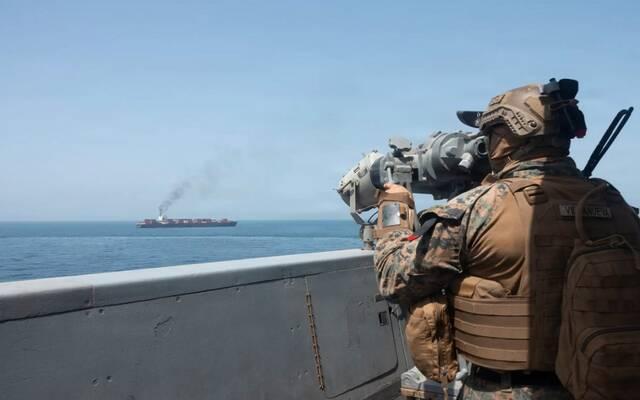
The Reuters analysis said Iran has signalled that no maritime chokepoint is off limits after disrupting traffic through Hormuz, and that threats to the Red Sea and Saudi energy infrastructure point to a broader effort to raise the cost of protecting global commerce.
In the same Reuters account, a Gulf source said Revolutionary Guards commanders believe “they can get more,” linking the pressure campaign to what they see as President Donald Trump’s reluctance to become deeply entangled in another Middle East conflict ahead of November’s midterm elections.
U.S. planning and Iranian denials
While Tehran presses its campaign, CNN reported that U.S. Central Command asked military analysts for new plans to increase pressure on Iran and punish it, describing the request as “creative and unconventional.”
Iran International said a U.S. Central Command intelligence officer wrote in an email dated July 29 to a broad group of military analysts: “We are looking for new and creative and unconventional ways to increase pressure on Iran and punish it.”

CNN also reported that Trump decided to back away from carrying out a wide attack on Iran on Sunday, August 2, in response to a request from it and from regional countries, and on the condition of quickly reaching an agreement that would reopen the Strait of Hormuz and remove the Iranian nuclear threat.
In parallel, Iran International said Iranian Foreign Ministry spokesperson Ismail Baqai denied during a press conference on the same day that there were any negotiations with the United States, even as Trump had announced talks would take place on Monday, August 3.
The Reuters analysis cited by multiple outlets said Tehran’s leadership concluded earlier attempts at flexibility only yielded greater pressure from Washington, reinforcing the view that leverage must be established before meaningful negotiations can begin.
Negotiation stakes and endurance
The dispute over the future governance of the Strait of Hormuz is at the center of the confrontation, with Oman presenting Iran with a Gulf-backed proposal for managing the waterway that includes voluntary user fees while Washington rejected any fees and insisted Hormuz remain an international waterway free from Iranian control.
““They’re interested in establishing sovereignty over the strait and exercising selective control over the waterway.””
Reuters reported that Tehran is seeking administrative authority over the strait and the ability to levy service charges on vessels, while the United States rejected any arrangement that would allow Iran to exercise control over the strait.
Michael Singh of the Washington Institute told Reuters that Iran believes it still holds the initiative, saying “They’re interested in establishing sovereignty over the strait and exercising selective control over the waterway.”
The Reuters analysis also described an emerging Saudi-led maritime coalition as a defensive framework focused on escorting commercial vessels, sharing intelligence and safeguarding sea lanes rather than confronting Iran directly, a shift that Gulf sources said reflects regional and Western focus on protecting trade routes and energy infrastructure.
Denis Sitronovich, the former head of the Iran desk at Israel's Military Intelligence, wrote that “there is little evidence that it would be willing to make fundamental concessions about the Strait of Hormuz merely under U.S. pressure,” warning that Washington could remain trapped in cycles of threats and frustration if its assessment does not match on-the-ground realities.