Gaza Genocide05 September, 20263 min read
UNRWA Cuts Aid to Palestinian Refugee Camps in Northern Lebanon, Forcing Families to Choose Food or Medicine
This article is an automated aggregation of coverage from news outlets. Our editorials offer in-depth analysis curated by the NewsCord team.
UNRWA cuts aid to six Palestinian refugee camps in northern Lebanon. Funding shortages halt services, triggering school closures in camps.
The Times of Israel was read line by line by the Watchdog: 1.7. See the score →
UNRWA cuts hit camps
In northern Lebanon, Palestinian refugee Aziza Wahbeh in Nahr al-Bared says UNRWA’s latest aid cuts force her family to choose between food and medicine, with electricity available for only two hours a day and water families must buy because none is supplied. Wahbeh, who lives with a chronic kidney stone, said, “We now choose between a loaf of bread and our medicine,” adding that UNRWA was “the only artery sustaining us with some food assistance, medical care, and schooling for our children.” The cuts come as UNRWA faces its worst financial crisis since its founding in 1949, with the agency receiving $829 million in 2025 and facing a $100 million cash-flow deficit for 2026.
“UNRWA is making choices between which camps to support and which to leave without necessary aid.”
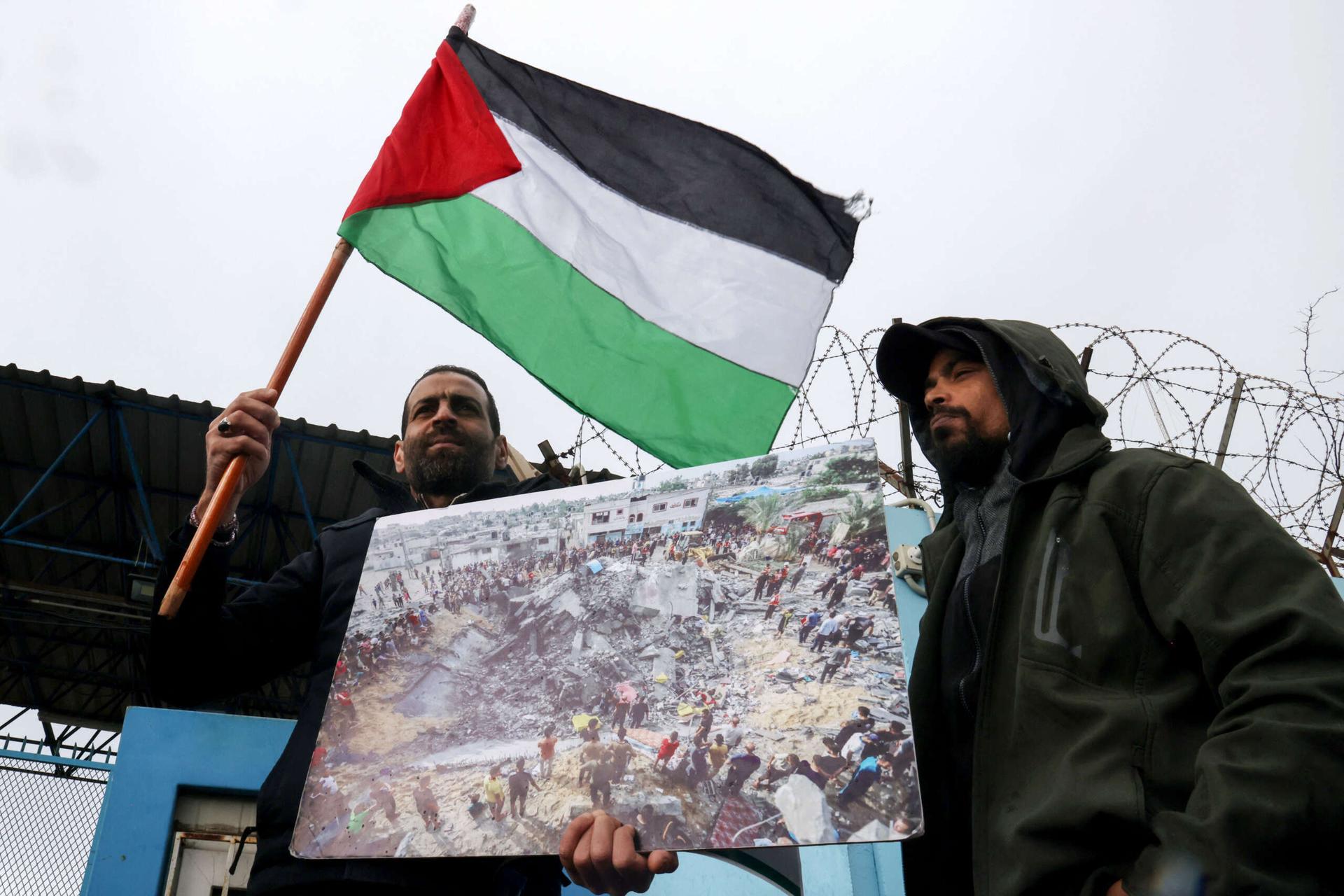
In May, UNRWA excluded six camps from its emergency cash assistance program—Nahr al-Bared and Baddawi in the north, Ein al-Hilweh and Mieh Mieh in the Saida area, and Mar Elias and Dbayeh in Beirut—on the grounds that they were not “directly affected” by the ongoing conflict in Lebanon. Palestinian factions and popular committees held simultaneous sit-ins outside the agency’s offices in Nahr al-Bared and Baddawi in mid-June, and demonstrations broke out in Beirut on August 14 against cuts to UNRWA services.

Condemnations over emigration
While UNRWA aid cuts deepen hardship in Lebanon’s camps, the Times of Israel reports that foreign ministers of Saudi Arabia, Jordan, the United Arab Emirates, Turkey, Qatar, Egypt, Indonesia and Pakistan issued a joint condemnation of remarks by Defense Minister Israel Katz and National Security Minister Itamar Ben Gvir calling for plans to facilitate the emigration of Palestinians from the Gaza Strip. The ministers “strongly condemn” remarks by Ben Gvir and Katz “regarding the displacement of the Palestinian people from the Gaza Strip,” warning that such proposals represent “a direct threat to the legitimate and inalienable rights of the Palestinian people.” The Times of Israel says Ben Gvir unveiled a plan on Thursday aimed at removing the vast majority of Gaza’s Palestinian population through what he termed “voluntary emigration,” including by establishing a dedicated government ministry.
Itamar Ben Gvir’s proposal followed Katz saying plans to facilitate mass emigration from Gaza remain under discussion and were merely “frozen” by Trump, who had initially proposed relocating Gaza’s roughly 2.3 million residents in February 2025. The Times of Israel adds that Trump later abandoned the proposal amid international opposition and a lack of willing destination countries, and that Trump pledged instead to “encourage people to stay and offer them the opportunity to build a better Gaza.”

Aid, policy, and pressure
The UNRWA crisis described by Mondoweiss and Truthout is tied to early 2024 accusations by Israel that UNRWA staff were involved in the October 7 attacks, after which more than a dozen donors led by the United States suspended funding.
Mondoweiss says the agency received $829 million in 2025, barely a quarter of its assessed needs, and that Christian Saunders told donors on June 30 that the agency’s financial situation is unsustainable.
In Lebanon, Wahbeh’s account of daily survival—where her father goes up the mountain to gather sage and sell it, and “If he sells, we eat for a day. If he doesn’t sell, we don’t eat”—shows how the aid gap is felt inside Nahr al-Bared.
Meanwhile, the Times of Israel frames the Gaza emigration debate as a threat to international efforts to achieve peace, quoting the ministers’ warning about “grave consequences of transforming calls for forced displacement into declared policy or practical measures.”
Taken together, the sources depict a pressure system spanning UNRWA’s funding shortfall and service cuts in Lebanon’s camps and political proposals about Gaza’s population, with UNRWA’s emergency cash assistance exclusions in May and the Gaza emigration condemnations issued on Sunday by the coalition of foreign ministers.