USAupdated 11m ago2 min read
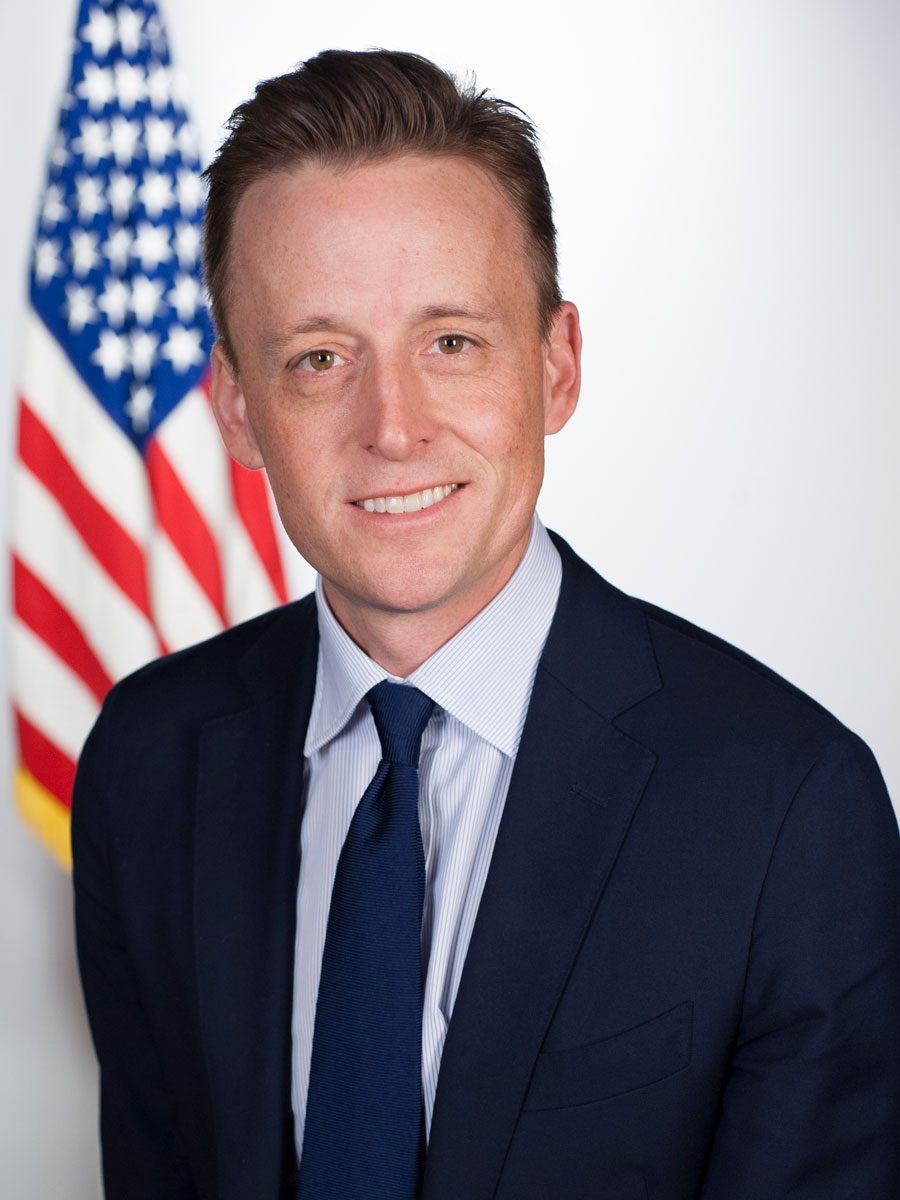
Archive photo · 15 March 2018White House Replaces National Cyber Director Sean Cairncross After US Tech Outages
“had long wanted Cairncross out of the job”
“President Trump supported the decision to let go of the director”
Photo: Millennium Challenge Corporation / US federal government, Public domain · Cropped for layout
This article is an automated aggregation of coverage from news outlets. Our editorials offer in-depth analysis curated by the NewsCord team.
White House national cyber director Sean Cairncross is being replaced after recent US tech outages. President Trump reportedly supported the firing, citing lack of required cyber credentials.
Save coverage image
Cairncross replaced after outages
Sean Cairncross left his post as White House national cyber director after technology-related outages in the United States disrupted air travel, banking and national security networks. Secretary of State Marco Rubio announced Kirsten Davies, the Pentagon's Chief Information Officer, as the new cyber director, and Rubio said, "Look forward to working together to strengthen America's cybersecurity,". Davies assumed the position in an acting capacity, and Davies wrote on X late Thursday night, "Our nation stands in the crossroad of analog, digital, and quantum technologies, our American way of living increasingly interconnected,".
The outages included a nationwide halt to air travel that disrupted more than 18,000 flights and a global outage affecting hundreds of millions of Microsoft users, according to a person close to the White House cited by Reuters. The White House faced scrutiny as officials sought to assure people in the country that there was no evidence of a cyberattack, with the top US intelligence official saying the disruptions were separate service outages associated with maintenance and technical changes.
Who pushed the change
A person close to the White House told Reuters that the president fully supported firing Sean Cairncross, and the person said, "The president fully supported firing Sean Cairncross from his position,". Axios and other outlets reported that White House chief of staff Stephen Miller pushed for the personnel change because Cairncross "lacked the strong cyber credentials to perform the job". Cairncross declined to comment on his departure, and he said in a statement on Thursday night it was the "honor of a lifetime to serve" in Trump’s administration.
Homeland Security Secretary Markwayne Mullin told lawmakers that authorities investigating the outages had "seen nothing that would indicate that they are related," and Mullin said he was "98% confident" the outages were not the result of malicious foreign activity. Secretary of State Marco Rubio told reporters in Manila that there was "zero evidence" that hackers, criminals or foreign governments were behind the tech outages, or that the incidents were connected.
Next steps and Senate timing
The Hill reported that the Defense Department Chief Information Officer Kirsten Davies would assume the position in an acting capacity, and the White House believed she has the credentials for the job. The Hill also reported that Cairncross oversaw the Office of the National Cyber Director, which manages cybersecurity policy and strategy across the federal government. The New York Times said Davies would need Senate confirmation to remain in the role on a permanent basis, and the Senate will have to confirm whoever fills the role permanently.
HuffPost reported that Cairncross's successor will need to be confirmed by the US Senate, which will be controlled by Democrats beginning in January. The New York Times described the past week’s technological problems as slowing banking transactions, disrupting email services, shutting down a key system at the National Security Agency, and temporarily grounding all commercial air traffic in the United States.