Sudan08 October, 20262 min read
WHO Warns Darfur Health Needs Far Exceed Resources, Especially Tawila Displaced People
This article is an automated aggregation of coverage from news outlets. Our editorials offer in-depth analysis curated by the NewsCord team.
More than 700,000 displaced in Tawila face severe health, food, water shortages. WHO warns health needs in Darfur far exceed resources, urges urgent funding and access.
Darfur health crisis deepens
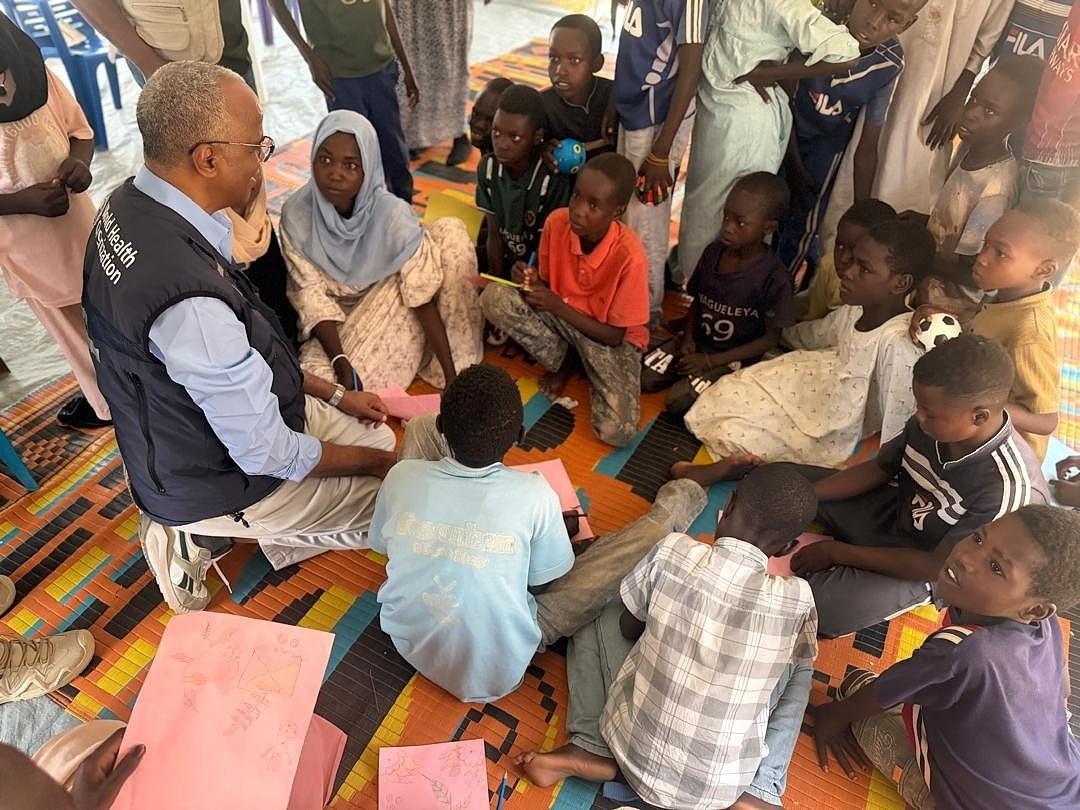
WHO warned that health and humanitarian needs across Darfur far exceed the resources currently available to respond, particularly in Tawila where more than 700 000 displaced people are facing severe gaps in health, nutrition, food, water, sanitation and protection services. WHO Representative in Sudan Dr Abdinasir Abubakar said, "I have witnessed the immense scale of health and humanitarian needs in Tawila and other parts of Darfur," after a 10-day field mission to Darfur states. WHO said Darfur hosts 65% of Sudan’s 8.6 million internally displaced people, according to the International Organization for Migration (IOM).
WHO reported that mental health services are severely limited and that stocks of medicines for HIV, tuberculosis and neglected tropical diseases are running dangerously low. WHO said it is ready to scale up in Darfur, Kordofan and other conflict-affected areas, but only 23 per cent of its $97.7 million humanitarian appeal for 2026 has been funded.
Funding gap and displacement
WHO said it requires USD 97.7 million for its 2026 health emergency response in Sudan but has received only USD 22 million, leaving a funding gap of about USD 75 million. WHO Sudan Representative Dr Abdinasir Abubakar said, "Nowhere was this clearer than in Tawila," during a 10-day mission in Darfur. WHO said more than 700,000 displaced people are sheltering in Tawila while shortages of medicines, medical staff and humanitarian funding are putting further pressure on already overstretched services.
WHO reported that across Darfur, an estimated 5.6 million people are displaced, representing about 65 per cent of all internally displaced people in Sudan, according to UNHCR figures cited by WHO. WHO said hundreds of refugees left Maji camp for the border town of Adré after being removed from humanitarian aid lists following an assessment earlier this year.
Sanctions and the wider war
The UN Security Council unanimously renewed its Sudan sanctions regime for two months until 11 December, with targeted sanctions and an arms embargo. The UN said the mandate of the panel of experts that monitors the sanctions now runs to 11 January 2027, after a one-month rollover adopted on 11 September. The UN reported that on 3 October an aerial attack on two trucks contracted by the World Food Programme (WFP) in South Kordofan killed a driver.
The UN said diplomatic efforts remain stuck on a US-backed 90-day ceasefire proposal that the army has resisted, according to news reports. The UN also warned that the war between the Sudanese army and the paramilitary Rapid Support Forces (RSF) continues to take a heavy toll on civilians and aid operations, while outside support is sustaining the military capabilities of both sides.