Finance · updated 1h ago · 3 min read
WTO Warns Weakened Trade Rules Could Cut Global GDP Up To 10% By 2050
Failure to modernize trade rules could cut GDP by up to 10% by 2050. Fragmentation of the world trading system could disproportionately hit poorer economies.
Reuters and the regional outlets present the same WTO scenario ranges.
10 of 11 outlets skipped it: the WTO models differences from a 2050 baseline, not a near-term forecast.
20outlets compared
Same story, two versions
tap a side to read it in full
TechStock²
“the gap between reform and the erosion of common rules could cost roughly 5% to 10% of global GDP.”Read the original ↗
Reuters
“In a more severe scenario, in which multilateral cooperation collapses and is replaced by a patchwork of free trade agreements, global GDP would fall 6.9%”Read the original ↗
Shifts attention between opportunity cost and worst-case fragmentation losses.
WTO’s 2050 cost warning
The World Trade Organization warned that weakening multilateral cooperation could leave global GDP up to 10% lower by 2050, while stronger cooperation could lift global GDP by 2.9% and boost exports by 17.9%, according to its World Trade Report 2026 released on Sept. 15.
“global GDP would fall 6.9% and exports nearly 27%”
In Reuters’ summary of the WTO’s modelling, a “geo-fragmented” world would cut global GDP by 5.1% and exports by 18.6% by 2050, while a scenario where multilateral cooperation collapses into a patchwork of free trade agreements would see global GDP fall 6.9% and exports nearly 27%.
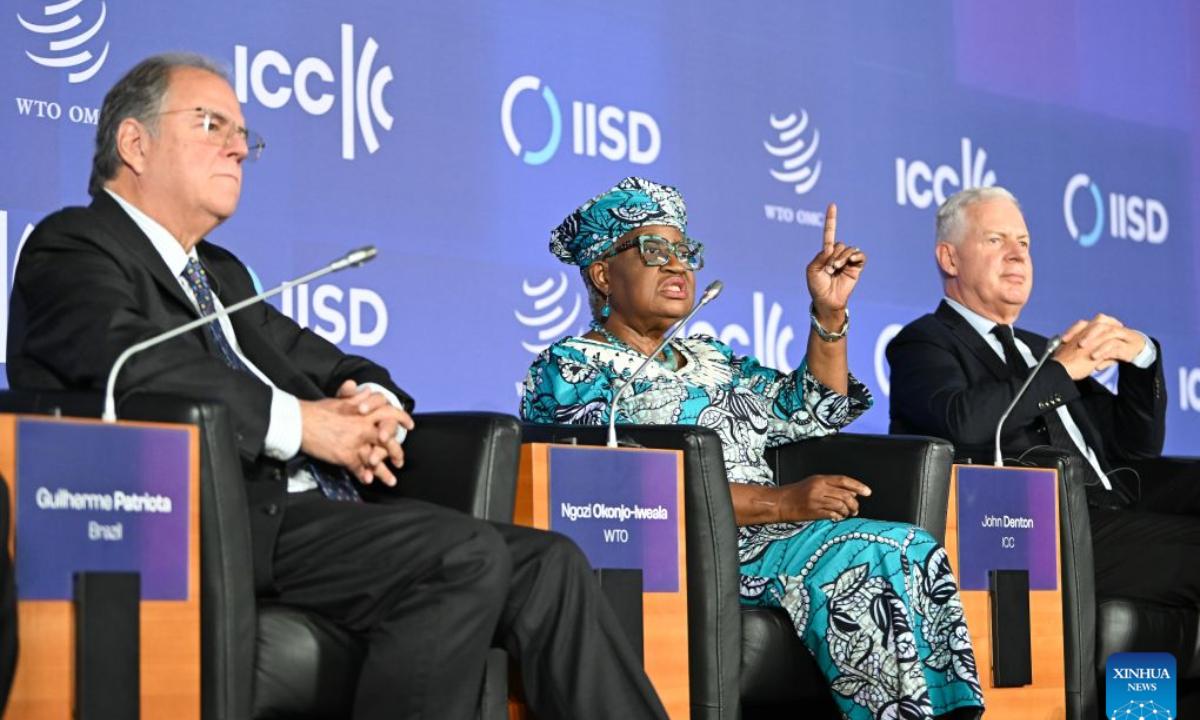
Reuters also reported that WTO economists found enhanced multilateral cooperation could raise global GDP by 2.9% and boost exports by almost 18%, and that least-developed countries would stand to gain most from stronger cooperation but could also suffer the largest losses from fragmentation.R
The WTO’s warning is framed as a response to shifts in economic power, the rise of industrial policy, digital trade, and escalating political tensions between major powers, with Reuters quoting WTO Chief Economist Rob Staiger saying, "The rules are under strain and they really are having an impact."R
Staiger: critical juncture
WTO Chief Economist Rob Staiger told Reuters that the trading system was at a "critical juncture," and he tied the risk of fragmentation to four challenges identified in the report: a broader distribution of economic power, growing state intervention in economies, changes in the nature of trade driven by digitalization and global value chains, and rising political friction.R
In the same Reuters account, the WTO said its 166 members failed to reach agreement on a reform package at a ministerial meeting in Yaounde, Cameroon, in March, before relaunching talks in Geneva on decision-making, dispute settlement, and the challenges posed by subsidies and state intervention.R
The WTO also warned that trade policy uncertainty had reached unprecedented levels, as governments increasingly deploy tariffs, subsidies, export controls and industrial policies, and Reuters reported that about 72% of global merchandise trade still takes place under WTO most-favoured-nation tariff terms, down from roughly 80% in 2022.R
Reuters added that Staiger said regional trade agreements and plurilateral initiatives could strengthen the multilateral system, but could undermine it if they evolved into competing blocs, and he warned that without a strong WTO framework such arrangements risk diverting trade toward preferred partners rather than the most efficient producers.R
Who gains, who loses
The WTO’s scenarios in Reuters’ account put least-developed countries at the center of the distributional stakes, with the report modelling that they would stand to gain most from stronger cooperation but could also suffer the largest losses from fragmentation.R
“Least-developed countries would stand to gain the most”
Reuters reported that the WTO’s warning comes as countries increasingly pursue regional and sector-specific trade arrangements amid rising trade tensions and sweeping U.S. tariffs, and it noted that in March a group of WTO members agreed to move ahead with the organisation’s first baseline digital trade rules through a plurilateral agreement.R
In the WTO’s framing quoted by Reuters, the rules are meant to limit discrimination against non-members and constrain how free trade agreements are structured, but the report’s scenarios suggest that erosion of those common rules would raise the costs of fragmentation for the global economy.R
The WTO’s Director-General Ngozi Okonjo-Iweala said in the report that the global trading landscape has changed significantly but the founding logic remains relevant, and she warned that "the status quo is not an option," while the WTO’s modelling in Reuters showed the gap between strengthened multilateral cooperation and erosion could be large enough to drive a slide in output and exports by 2050.R