Lebanon03 June, 20263 min read
Yehiel Leiter Says Lebanon Won’t Be Occupied by Hezbollah as Israel Backs Disarmament
This article is an automated aggregation of coverage from news outlets. Our editorials offer in-depth analysis curated by the NewsCord team.
Direct Israel-Lebanon talks underway in Washington. Israel ties peace to Hezbollah's dismantlement.

Direct talks in Washington
Israel’s ambassador to the United States Yehiel Leiter said Lebanon had clarified in talks mediated by the United States that it no longer wishes to be 'occupied' by Hezbollah, while he emphasized Israel’s support for the disarmament of all non-state armed groups and the dismantling of Hezbollah’s terrorist infrastructure in Lebanon.
“We want to reach peace and normalization with the State of Lebanon... There are no major differences between Israel and Lebanon. The problem is Hezbollah.”
The U.S. State Department held a trilateral meeting Tuesday with Secretary of State Marco Rubio, Counselor Michael Nedham, and the U.S. ambassador to Lebanon Michel Issa, alongside the Israeli ambassador Yehiel Leiter and Lebanon’s ambassador to the United States Nada Hamade Maoud, and the parties agreed to launch direct negotiations at a time and place to be agreed upon among themselves.

The meeting marked the first high-level contact between the governments of Israel and Lebanon since 1993, and the United States congratulated both countries on what it called this historic achievement while stressing that any ceasefire agreement must be between the two governments under U.S. mediation.
In a separate account of the talks’ opening, Israeli Foreign Minister Gideon Saar said, 'We want to reach peace and normalization with the State of Lebanon... There are no major differences between Israel and Lebanon. The problem is Hezbollah.'
Hezbollah, Berri, and conditions
In an exclusive interview with This Is Beirut, Yehiel Leiter said Israel wishes to open a new page with Lebanon but conditions any lasting normalization on the disarmament of Hezbollah, and he described Israel’s proposed two-track negotiation process with a security track and a civil track. Leiter also linked Israel’s border security concerns to the October 7 attack, saying, 'the October 7 attack profoundly altered the Israeli security perception at the borders: Israel can no longer accept, he says, the presence of armed groups hostile to nearby civilian communities.'
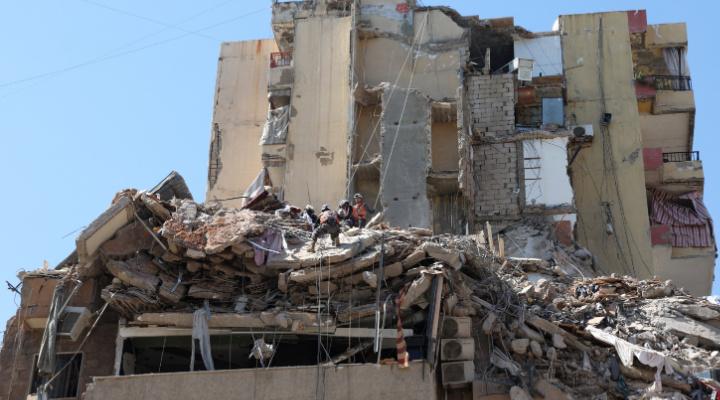
At the same time, Lebanese Parliament Speaker Nabih Berri rejected negotiating with Israel without stopping the war raging in southern Lebanon despite the ceasefire, telling France 24 that negotiations with Israel cannot take place without stopping the war. France 24 also reported that Berri’s statements came as Israeli forces ordered residents of four more villages in southern Lebanon to evacuate, underscoring how the ceasefire and the talks’ conditions remain contested on the ground.
What the talks could change
A Carnegie Endowment for International Peace analysis said President Joseph Aoun and Prime Minister Nawaf Salam urged holding negotiations with Israel to stop Israel’s aggression against Lebanon, and it cited that a series of deadly Israeli raids launched on April 8 killed about 360 people in ten minutes and wounded 1,300 others. The same analysis said Aoun’s April 27 statements about critics demanding national consensus came as Hezbollah criticized the government’s decision to enter direct negotiations through the Lebanese ambassador in Washington, and it argued that Aoun and Salam “erred in rushing into talks without laying the groundwork.”
In a separate framing of the negotiations’ substance, An-Nahar reported that Aoun linked any negotiating step to a comprehensive ceasefire and specified constants including Israeli withdrawal from the occupied areas, the release of prisoners, allowing the displaced to return to their towns and villages, launching the reconstruction process, and the deployment of the army in the Litani River area up to the border. The Washington Institute also described the talks as potentially developing into a broader peace process mediated by the United States, while warning that officials must address potential impediments, notably Nabih Berri, the longtime ally of Hezbollah.