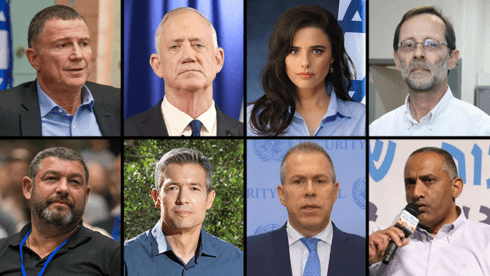
Yuli Edelstein Leaves Likud After 23 Years, Talks With Ayelet Shaked Shape Israel’s 2026 Election
Key Takeaways
- Yuli Edelstein leaves Likud after 23 years, seeking a new political platform.
- Edelstein's departure heightens focus on cross-threshold small parties shaping the 2026 election.
- Analysts warn fragmentation could allow small parties to decide Israel’s election landscape.
Election math after Oct. 7
Israel’s 2026 election is being shaped by the possibility that small parties could decide the outcome if they survive the electoral threshold, after MK Yuli Edelstein decided Friday to leave Likud after 23 years.
“According to analysts, the real showdown of the new Israeli elections on September 17 does not pit the right against the so-called center-left but between two rival camps within the nationalist right”
Edelstein’s break came as he entered advanced talks with former minister Ayelet Shaked, with both targeting a “new government without Haredi parties” to pass a draft law, while also discussing intensive contacts with Gilad Erdan.

After Shabbat, Edelstein wrote on X that after October 7, “it was clear to me that what was will not be.”
In the same post, Edelstein said he “fought with all my strength for equal and genuine enlistment,” and he framed his departure from Likud as leaving “the Likud faction, but not the Likud members.”
Threats, demands, and bloc splits
The political fight described by Ynetnews centers on whether rival right-wing camps can form a government without Haredi parties and without Arab parties, with Edelstein and Shaked seeking to force Prime Minister Benjamin Netanyahu to change course.
Edelstein and Shaked are also holding contacts with Yoaz Hendel and the reservists’ party, and Hendel is demanding a public declaration supporting a government excluding Haredi parties and excluding Arab parties.
Hendel’s position is complicated by Dedi Simhi, who “opposes making a statement about the Haredim and is not ruling out joining forces with Netanyahu,” while Edelstein’s team continues to press the statesmanlike right.
In parallel, the Times of Israël poll coverage ties the Gaza war’s aftermath to coalition deadlock, saying Bennett, like Gantz and Liberman, said it became “untenable to rely on Arab party support after the pogrom carried out on October 7, 2023 by the Palestinian terrorist group Hamas.”
US strikes and coalition risk
Beyond domestic coalition arithmetic, the Times of Israël reported that a N12 poll found 59% of Israelis support their country’s possible participation in a U.S. strike against the Islamic Republic, with 29% opposed and 12% undecided.
“Good evening, Réunion”
The same report said an anonymous source told Axios that if Trump launched strikes against the Islamic Republic, they would probably take the form of a U.S.–Israeli joint operation, “of an even larger scale than the 12-day bombing campaign Israel carried out against Iranian nuclear and military sites in June of last year.”
It also described election scenarios in which Netanyahu’s coalition and the opposition bloc would again fail to secure a majority in the Knesset without the support of an Arab faction, while the leaders of the two blocs refused to rely on Arab support to form a government.
In the first scenario described, Netanyahu’s Likud would remain the largest party with 27 seats and the coalition would total 52 seats, but the parties opposed to Netanyahu would win 53 seats, leaving both sides short of the 61-seat majority needed to form a government.
More on Gaza Genocide

Trump Tells Axios Netanyahu Knows Who the Boss Is Ahead of White House Meeting
18 sources compared

Israeli Forces Detain Kamal Adwan Hospital Director Hussam Abu Safiya in Life-Threatening Danger
10 sources compared

Israeli Settlers Injure Palestinians In Tubas And Idhna, West Bank
12 sources compared
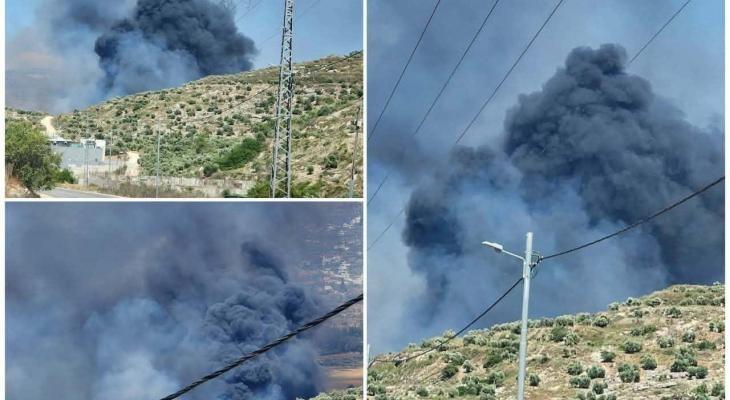
Israeli Settlers Injure At Least Five Palestinians in Attacks Near Beitillu and al-Khan al-Ahmar
11 sources compared