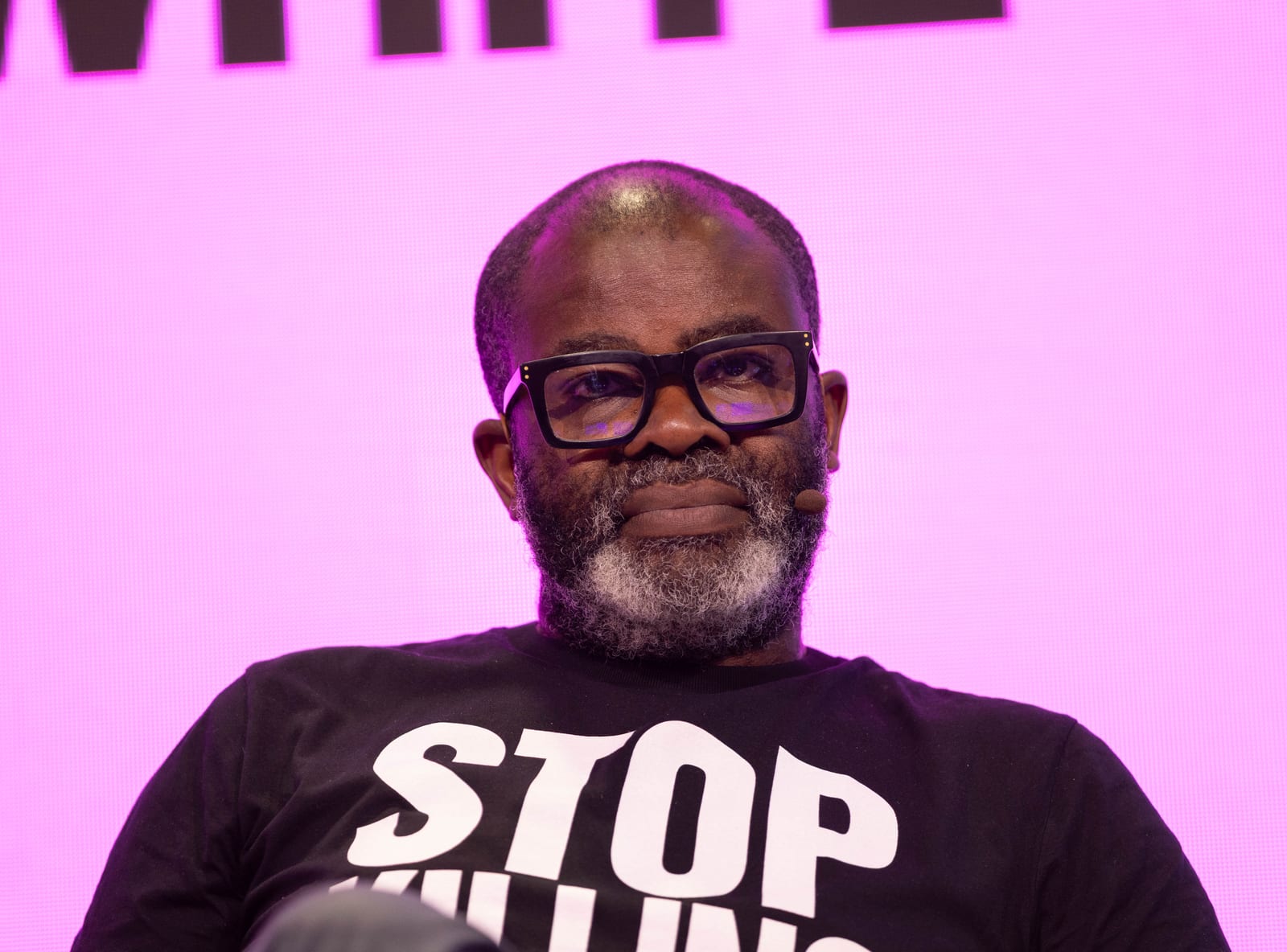
Have you ever wondered how one clip on X turns into a week of headlines calling for someone to lose their job? Byline Times spent six months mapping it, and published the first part on 12 November.
The investigation is long and detailed. These are its most damning findings. Below them is what we found when we read the accounts' own posts and the records of the papers that printed their attacks.
- 57 X accounts boosted each other 25,218 times. Byline counted every repost and quote post among the accounts that attacked Misan Harriman, Gary Lineker and ten other public figures who have criticised Israel or defended Palestinians. 12 of the 57 are anonymous.
- 15 accounts wrote 53% of the posts attacking the 12. @SubversiveForce wrote 274 of them and @habibi_uk wrote 250.
- The two biggest attackers are both anonymous, and they work as a pair. @SubversiveForce boosted @habibi_uk 1,151 times. @habibi_uk boosted it back 785 times. They posted within the same minute 174 times, which Byline says is twice what chance would predict. It calls them "an operational unit".
- A 57-second clip became a Telegraph headline in under 21 hours. Heidi Bachram cut a video of more than five minutes down to 57 seconds and wrote: "He compares it to the Holocaust." The Telegraph's headline the next day: "Southbank Centre chief 'compares Reform election victory to Holocaust'".
- Harriman was saying the opposite of what they accused him of. He quoted Susan Sontag, a Jewish writer, on what the Holocaust taught her: 10% of any population is cruel, 10% is merciful, and the other 80% can be moved in either direction. His point was that most people are not hateful and can be reached. The Mail's headline: "Fury as arts chief 'compares Reform voters to Nazi supporters'".
- @habibi_uk named 700 people and attacked 363 of them. Jeremy Corbyn appears in 317 of its posts, Keir Starmer in 183 and Zarah Sultana in 108.
- The papers printed at least 428 critical items about the 12 targets. 235 in the Telegraph, 107 in The Times, 35 in the Mail and 34 in the Jewish Chronicle.
- Four people told Byline about a WhatsApp group made up mainly of journalists. Nicole Lampert had already written about private messenger groups herself, in the Jewish Chronicle.
What they did to Misan Harriman
Misan Harriman is a photographer, an Oscar nominee and the chair of the Southbank Centre. On 9 May, two days after Reform UK won 677 council seats, he posted a video of more than five minutes to Instagram. He began with Susan Sontag, the Jewish-American writer, and what she took from the Holocaust.
“She said when thinking about the Holocaust, 10% of people in any population are cruel no matter what, and 10% is merciful no matter what and the other, this is important, the other remaining 80% could be moved in either direction.”
Misan Harriman, Instagram, as transcribed by Byline Times, 9 May 2026Read the original
Read that again. It is not a comparison between Reform voters and Nazis. It is a statement about every population, in every country: a few people are cruel, a few are kind, and most can be led either way. Harriman told his viewers which part mattered. "This is important", he said, and then he gave them the 80%.
So what did he mean? That most of the people who voted Reform are not hateful. They were moved, and they can be moved back. That is why he called the result "a warning and a rallying call": a warning about where people can be led, and a call to go and reach them. He said of Reform's voters: "They are not devils." He was asking his followers not to write millions of people off.
A man who quoted a Jewish writer's lesson from the Holocaust, to argue that his opponents' voters are decent people who can be won over, was reported as a man who called them Nazis.

Byline timed what happened next to the minute.
9 May to 24 June 2026, as Byline Times recorded it
9 May, 6.03pm
Heidi Bachram posts 57 seconds of the video on X
Byline found the Sontag framing was cut, and so was "They are not devils". Her caption: "He compares it to the Holocaust. This is truly DISGUSTING."
9 May, 6.33pm
Robert Jenrick MP quotes the clip
"This crass moron should be nowhere near a taxpayer-funded organisation."
9 May, evening
The network arrives
Karen Pollock of the Holocaust Educational Trust calls his post "shocking". David Toube, general counsel of the Jewish Leadership Council, reposts her and Jenrick. Stephen Pollard, a former editor of the Jewish Chronicle: "It is sickening that @misanharriman is even involved in a public institution." @habibi_uk posts five times, the last: "Misan Harriman is a disgusting creep who loves hatred."
10 May, 3pm
The Telegraph prints Bachram's caption as a headline
"Southbank Centre chief 'compares Reform election victory to Holocaust'".
11 May
The Mail follows
"Fury as arts chief 'compares Reform voters to Nazi supporters'".
14 to 18 May
The Times calls for "a swift exit"
A column, then a letter endorsing it signed by five people including Danny Cohen, then a leading article.
19 May
63 parliamentarians write to the Culture Secretary
Their letter cites the Telegraph twice and The Times once. Jenrick is one of the signatories.
26 May
The Telegraph gives Danny Cohen a column
"Misan Harriman is unfit to remain the Southbank Centre's boss". It does not tell readers he signed the Times letter eight days earlier.
24 June
Harriman says he will leave in the autumn
He and the Southbank Centre both say he told the Deputy Chair in January, four months before the first headline. The Telegraph's headline: "Southbank Chief in Antisemitism Row to Stand Down a Year Early".
That is how a smear travels. An activist cuts a video. An MP and an anonymous account pass judgement on 57 seconds of it. The Telegraph prints her caption as its headline the next day, and then MPs cite the Telegraph.
Byline logged 56 press items on Harriman in 35 days. The Telegraph ran 18 and The Times 16. @habibi_uk had been attacking him by name and job title for almost a year before the first article. We searched X ourselves and found 36 posts by @habibi_uk naming Harriman before 8 May 2026, the first on 8 June 2025.

Under one Telegraph article, a paying subscriber wrote on 21 May: "Ask Mossad to deal with it. We can't." Byline found the comment still up six months later. Harriman told Byline that the Telegraph "now has its readers posting things like that".
What NewsCord found in May
We reported on this at the time. The Telegraph ran two attack pieces on Harriman in five days, both by the same arts correspondent, Craig Simpson, and both built on a social media post. The first called his question about the Golders Green attack a "conspiracy". His question was why the press had left out the attacker's Muslim victim, and he was right: the attacker was charged with three counts of attempted murder, and the first man he stabbed was Ishmail Hussein.
Our census of the coverage counted 62 articles across 18 outlets. Nine of the journalists who wrote them also wrote about Jason Arday. Byline has now shown where the Telegraph's second story came from.
What they did to Gary Lineker
- 34 accounts in the network named Lineker in 210 posts since November 2022. The first hostile posts came two and a half years before he left the BBC. The posts were seen 7.8 million times.
- @habibi_uk named him in 39 posts, more than any other account. One of them: "Jews! Please do not upset Gary Lineker by shooting at people who want to murder you."
- They did not stop when he left. Lineker left the BBC in May 2025 after reposting a video about Zionism that carried a picture of a rat. He deleted it and apologised. The network named him 92 times in the two and a half years before that, and 118 times in the 16 months after.
- The organisations claimed the result. The Board of Deputies: "We had called for his departure and welcome this outcome." The Campaign Against Antisemitism: "The BBC didn't want to do it, but they were forced to."
- When Andy Burnham gave Lineker an interview, four accounts posted about it inside 92 minutes: Jewish Women Count, @SubversiveForce, @habibi_uk and Nicole Lampert.
We counted the press coverage of Lineker in August. Six pieces attacked him for sharing a clip of a Jewish anti-Zionist who had just been acquitted by a jury. None defended him. Stephen Pollard wrote one of the six.
What the accounts say
These are the accounts' own words, as Byline recorded them. Notice who they are aimed at: a Holocaust survivor, a Jewish party leader, a UN official and a journalist's mother.
The network in its own words
What they post about Palestinians
Byline did not judge the content of the posts. So we read them. We searched X on 13 November for what the accounts in the network have posted about Palestinians, Gazans and Muslims, and saved 461 posts. These are the accounts that accuse other people of hatred.


- Nicole Lampert, who writes for the Mail and the Jewish Chronicle, on 16 December 2025: "No other people are fetishised like the Palestinians by television media with the terrorist group at their helm ignored."
- Jake Wallis Simons, on 12 November 2026, to a critic: "Are you aware of the worst humanitarian crisis on Earth (clue: definitely not Gaza)?"
- @habibi_uk calls an elected MP "the Islamist MP Adnan Hussain" and calls Leicester "an Islamist stronghold". It calls people who march for Gaza "hate marchers" as a matter of routine.
- @habibi_uk on Stephen Kapos, on 22 January 2026: "a cherished Jewish fig leaf for the hate marchers". It said it again on the night of the Harriman clip.
A Holocaust survivor is a "fig leaf". A people is to blame for 7 October. A genocide cannot be a genocide because its victims are not all dead. These are the people the Telegraph, The Times and the Mail take their stories from.
Who carries the anonymous accounts
- David Toube, general counsel of the Jewish Leadership Council, boosted @habibi_uk 694 times. He is its biggest named amplifier.
- Harry's Place boosted it 279 times. A writer called "habibi" published 536 posts on that blog between 2008 and May 2025. Byline says it has established that the blogger and the X account are the same person.
- Heidi Bachram was boosted 4,371 times, more than any other account. @habibi_uk alone boosted her 525 times.
- Nicole Lampert, who writes for the Mail and the Jewish Chronicle, was boosted 2,248 times.
- The Campaign Against Antisemitism's account was boosted 2,016 times. 1,298 of those came from one account, Stephen Silverman's.
- About half of the 33 named accounts belong to working journalists and commentators. They include Stephen Pollard and Jake Wallis Simons, both former editors of the Jewish Chronicle.
Boosts received from the rest of the network
Byline Times counted 25,218 boosts among 57 accounts. These four received the most that it reports.
See the figures
| Account | Boosts received from the network |
|---|---|
| Heidi Bachram | 4,371 |
| @habibi_uk (anonymous) | 3,497 |
| Nicole Lampert | 2,248 |
| Campaign Against Antisemitism | 2,016 |
A High Court master ordered Twitter to disclose who is behind @habibi_uk in March 2021. The operator was not named in public. Byline says it will name the person in part two.
A judge has already said what one of these campaigns was for
In December 2025 a district judge at Westminster Magistrates' Court threw out the Campaign Against Antisemitism's private prosecution of the comedian Reginald D Hunter. The person the charity said he had offended was Heidi Bachram.
“I have no doubt that the prosecution is abusive.”
District Judge Michael Snow, Westminster Magistrates' Court, reported by Chortle, 23 December 2025Read the original
The judge said the charity's "true and sole motive in seeking to prosecute Reginald Hunter is to have him cancelled", and that its summary of the case "did not reveal the extent of her tweets directed against Reginald Hunter". The Campaign Against Antisemitism said it was deeply disappointed and that its lawyers were reviewing the ruling.
How it gets into the papers
- The same people post and then write. Byline found 34 writers with critical press items on two or more of the 12 targets. Jake Wallis Simons wrote about eight of them, Stephen Pollard about six and Danny Cohen about four.
- @habibi_uk has been cited as a source in at least 14 press articles since June 2020, in outlets including The Independent, the Evening Standard, the Mirror, the Jerusalem Post and the Times of Israel. The Telegraph has credited it for photographs.
- A think tank thanked it by name. The Henry Jackson Society's November 2022 report on Leicester cites the account in nine endnotes. Its July 2023 report thanks "Wasiq Wasiq and Habibi for their expert feedback and review".
- A lobby group moved in step with it. @habibi_uk attacked Lineker over a post, and 30 minutes later UK Lawyers for Israel addressed him about the same post. Eight days later it said it had complained to the BBC. We have set out UK Lawyers for Israel's record separately.
Critical press items about the 12 targets
Byline Times counted at least 428 items critical of one or other of the 12. More than half ran in the Telegraph.
See the figures
| Paper | Critical items |
|---|---|
| The Telegraph | 235 |
| The Times | 107 |
| Daily Mail | 35 |
| The Jewish Chronicle | 34 |
An anonymous account is being treated as a source by national newspapers, and nobody outside a courtroom knows who runs it.
The private groups
Four people told Byline about a WhatsApp group made up mainly of journalists. Nicole Lampert wrote about this world herself in the Jewish Chronicle on 7 October 2022. She called it "JTwitter" and listed its "sizeable wins" over a theatre, a social media company and Jeremy Corbyn's Labour.
“You'll see us in JTwitter out in the open, backing each other up during spats, giving each other likes and retweets. Less openly are the private messenger groups.”
Nicole Lampert, The Jewish Chronicle, 7 October 2022Read the original
Byline does not say the posts in its files were planned in that group. It says the counts show who carries whom, and not who directs whom.
Then they went for Byline Times
On 10 November, two days before Byline published, Andrew Gilligan attacked it in The Spectator. His subject was a £266,221 Local News Fund grant to Bylines Networks, whose recipients Press Gazette had reported on 5 November. He called Byline Times "hard-left conspiracy theorists" and accused it of "Jason Arday trutherism". Byline Times says it receives no government funding and that its directors have no financial or editorial stake in the network.

Then two of the people named in Byline's investigation shared it. Stephen Pollard posted at 9.41am, 76 minutes after Gilligan. Nicole Lampert posted at 9.44am, three minutes after Pollard. @SubversiveForce, the anonymous account Byline calls half of an "operational unit", followed at 2pm.


The Times followed the next day with its own article: "Left-wing news group gets £250k taxpayer-funded grant".
Pollard knew the investigation was coming, because Byline had written to him about Harriman. He says he ignored the letter. He called Byline a "mob" instead, and Lampert joined him three minutes later. The people named in an investigation into pile-ons piled on to the outlet that investigated them, before it had published a word. You can't write this stuff.
Gilligan has his own record. We set it out in our dossier.
The papers that printed it
So who are the papers that turn these posts into news? We went through who owns each one and what regulators and courts have already found about how they work. A libel settlement is not a court finding, and we say which is which.
The Telegraph
- Who owns it: founded in 1855. Axel Springer, a German company, bought it for £575m and said it would close the deal on 30 June 2026. Axel Springer's written "Essentials" include: "We support the right of existence of the State of Israel." The Telegraph's parent made a pre-tax loss of £3.9m in 2025.
- The most Editors' Code breaches of any UK newsbrand in 2025. Press Gazette counted 12. The Daily Express was next with six.
- It invented a Hamas reference at a children's camp. The Telegraph wrote that children at a Muslim organisation's camp made kites "in an apparent reference to the paragliders used by Hamas on October 7". It set out no basis for that, and the regulator found it did not appear to have sought the organisation's comment. IPSO ruled in March 2026 that this was "significantly misleading information requiring correction".
- It said a minister had declared a Muslim group extremist. He had not. IPSO, August 2024: the paper "was unable to outline the care it had taken to prevent this inaccuracy occurring; it had simply said it was due to human error".
- Its front page said one in 12 Londoners is an illegal migrant. The figure was the paper's own sum and it was wrong. IPSO: "By its own admission, it has done so inaccurately." IPSO, June 2025.
- It accused a campaign group of amplifying antisemites, then took the article down. The Telegraph removed its March 2025 article about Stop Funding Hate. Press Gazette reported that it agreed to pay the group's legal costs without accepting liability. The Jewish Chronicle reported that the group "had repeatedly asked The Telegraph to provide links to the social media posts on which the story was based".
The Times
- Who owns it: founded in 1785. Rupert Murdoch bought it in 1981. Since September 2025 his son Lachlan alone controls the family's votes in News Corp, an American company run from New York. Times Media made £69.2m before tax in the year to June 2025.
- IPSO found its front page on a "Muslim foster home" was a distortion. In 2018 the regulator upheld Tower Hamlets council's complaint about "Judge rules child must leave Muslim foster home". Its ruling: "This was not what the court had decided, or an implication of what the court had decided." The Times had to flag the ruling on its front page.
- It put words in an imam's mouth. In 2019 The Times apologised and paid damages to Abdullah Patel after a front-page story: "We accept that he did not make any such comment." Press Gazette reported that the claim is believed to have come from posts by another man with the same name.
- It paid £30,000 to CAGE and Moazzam Begg in 2020 after wrongly suggesting they backed the Reading attack suspect. Its apology said they "had no involvement with the suspect". Doughty Street Chambers.
The Daily Mail
- Who owns it: founded in 1896 by the Harmsworth family. Lord Rothermere took it private at the start of 2022 through Rothermere Continuation Limited, which the offer described as "a Bermuda registered company owned by a trust held for the benefit of Lord Rothermere and his immediate family".
- It paid £150,000 to a British Muslim family in 2016 over two Katie Hopkins articles on MailOnline, and apologised. Carter-Ruck.
- It paid £120,000 in 2019 after linking a Palestinian aid charity to a "hate festival" in Gaza and to terrorism. The charity's trustees sued. The Mail's apology said neither the charity nor its trustees "have ever been involved in or provided support for terrorist activity of any kind". Press Gazette.
- It quoted a fake tweet. In 2020 the Mail paid the Cambridge academic Priyamvada Gopal £25,000 after a column said she "was attempting to incite an aggressive and potentially violent race war". The tweet it relied on came from a fake account. Varsity.
- It said a businessman supported Hamas. He did not. In February 2025 the Mail's publisher paid Dale Vince £40,000 and accepted the allegation "was untrue and that Mr Vince does not support Hamas in any way". Press Gazette.
The Spectator
- Who owns it: founded in 1828. The hedge fund owner Paul Marshall, a major investor in GB News and the owner of UnHerd, bought it for £100m in September 2024 and made Michael Gove its editor. It lost £6.6m before tax in 2024.
- It told readers 32,000 Muslims were "eager to commit the next terror atrocity". The magazine admitted the figure was wrong. IPSO found in 2018 that it "over-stated the potential threat posed by the group" and that the right number "was freely available in the sources the publication relied on".
- It has paid for Stephen Pollard before. In 2010 The Spectator and Pollard apologised and paid damages to Islam Expo over a Pollard article on the magazine's website suggesting it was a "fascist party" dedicated to genocide. They called the suggestion "unintended and false". 5RB.
- A monitoring group rated 57.4% of its articles on Islam and Muslims as biased or very biased. The Centre for Media Monitoring assessed 3,733 Spectator articles published between January 2018 and December 2025, and reported in July 2026. That is a monitoring group's assessment and not a regulator's.
The Jewish Chronicle
- Who owns it: founded in 1841. A consortium led by Sir Robbie Gibb bought it out of liquidation in 2020 with money from donors it did not name. Jonathan Kandel has held more than 75% of its shares and votes since August 2024. Its accounts show a £3.55m debt that was released and not repaid. The lender has never been named.
- It published fabricated stories about Gaza. In September 2024 the paper removed a freelancer's stories and said it was "not satisfied with some of his claims". Its editor, Jake Wallis Simons, posted on X: "I take full responsibility for the mistakes that have been made." Jonathan Freedland, Hadley Freeman, David Aaronovitch and David Baddiel quit. Freedland said the paper was owned by "a person or people who refuse to reveal themselves".
- Under Stephen Pollard it paid libel damages again and again. To Audrey White in 2020: "we published articles which made allegations about Mrs Audrey White, some of which were untrue". To Nada al-Sanjari in 2020, with Pollard named in the apology. To Marc Wadsworth in 2021, over allegations of intimidation that were false. And £50,000 to the trustees of a Palestinian aid charity in 2019.
- IPSO saw the pattern and did nothing. In April 2025 the regulator said it was "deeply concerned" by the fabricated stories and that "a pattern of upheld complaints at the Jewish Chronicle emerged in 2019". It decided a standards investigation "was not appropriate at this time". IPSO's statement, as reprinted by InPublishing.
Stephen Pollard edited the Jewish Chronicle through those libel payouts. Jake Wallis Simons edited it through the fabricated stories. Both now write for the Telegraph. Byline counts Pollard writing against six of the 12 targets and Wallis Simons against eight.
Nobody was sacked from journalism for any of it. They moved to a bigger paper and kept going.
57 accounts are not the public
The Mail's headline on Harriman began with the word "Fury". Whose fury? Byline counted. 57 accounts were behind the attacks on its 12 public figures, and 15 of them wrote 53% of the posts. The two that wrote the most are anonymous. That is a few dozen accounts on one website, and the papers reported it as a national row about antisemitism.
Look at who they go for.
- Jews who disagree with them. Stephen Kapos, a Holocaust survivor, is a "fig leaf". Zack Polanski is "the traitor within". Byline's file records @habibi_uk attacking Michael Rosen, the Jewish children's author, in seven posts. Byline says the account "reserves a particular contempt for Jews who oppose the war".
- The left. Byline's file has @habibi_uk naming Jeremy Corbyn in 317 posts, John McDonnell in 212, Zack Polanski in 132, Richard Burgon in 129 and Zarah Sultana in 108.
- Anyone with an audience. A football presenter, a photographer, a television presenter and a journalist's mother.
What do they have in common? Byline describes its 12 as public figures who have been critical of Israel's policies in Gaza and have defended the rights of Palestinians. Harriman's video was about Reform, and that did not matter. @habibi_uk had already named him in 36 posts over the year before, and two days after the clip it was posting about the Gaza marches he photographs. The accusation is antisemitism. What the targets share is that they speak in public about Israel's apartheid, its war crimes and its genocide in Gaza.
And look at what they count as success. The Campaign Against Antisemitism on Lineker: "The BBC didn't want to do it, but they were forced to." Nicole Lampert listed "sizeable wins". A judge found that the charity's "true and sole motive" in prosecuting a comedian was "to have him cancelled". Lineker left the BBC. Everyone else with a public profile can see what it costs to speak about Gaza.
None of it would work if the papers ignored it. Anonymous accounts that call a Holocaust survivor a "fig leaf", and a columnist who says a genocide cannot be one because Gazans are "still alive", would be talking to each other. Instead the Telegraph prints a caption as a headline, 63 parliamentarians cite the Telegraph, and a few dozen accounts decide who is fit for public life.
Misan Harriman quoted a Jewish writer's lesson from the Holocaust to say that most people can be moved towards mercy. An activist cut it to 57 seconds, an anonymous account called him a creep, and the Telegraph printed her version as news.
Sources: Dan Evans and the Byline Times team, "'Habibi': The Anatomy of an Influence Operation on X", 12 November 2026, for every count, timing and quotation from the X accounts unless a post is linked; 461 posts we saved from X searches on 13 November 2026; IPSO rulings, court reports, Companies House filings and the publishers' own apologies as linked; Andrew Gilligan, The Spectator, 10 November 2026; NewsCord's Harriman and Lineker censuses and Who owns the news.
Conversation
Be specific, respectful and constructive. Comments are public to readers who can access this article. Publishers can hold or remove comments.
Loading the conversation…