Iranupdated 1h ago2 min read
Abbas Araghchi Blames US and Israel for Strait of Hormuz Insecurity, Says It Can Reopen in Seven Days
This article is an automated aggregation of coverage from news outlets. Our editorials offer in-depth analysis curated by the NewsCord team.
Araghchi blames US and Israeli aggression for Strait of Hormuz insecurity. Hormuz can reopen within seven days, contingent on US decision.
Hormuz dispute escalates
Iranian Foreign Minister Abbas Araghchi blamed insecurity in the Strait of Hormuz on aggressive actions by the United States and what Tehran calls the Zionist regime, saying the aggression began on Feb. 28, 2026, and has continued in various forms since.
“This issue will not be solved on the battlefield. Peace cannot be built through threats of destruction.”
Araghchi made the remarks during a meeting with Egyptian Foreign Minister Badr Abdelatty on the sidelines of the Organisation of Islamic Cooperation’s Council of Foreign Ministers summit in Baghdad.
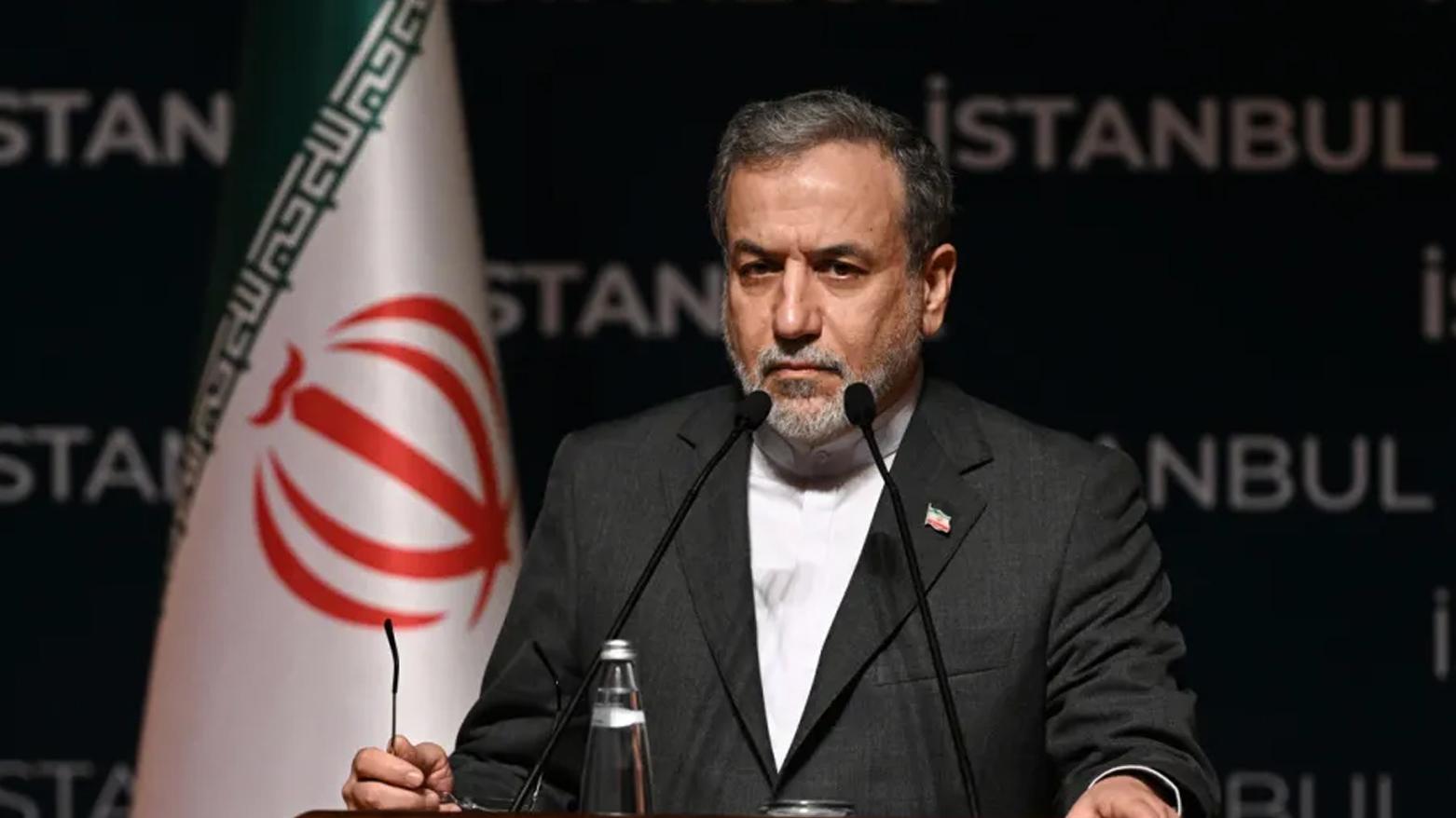
Araghchi said the Islamic Republic has always adhered to diplomacy with a responsible approach to reducing tensions, while he said the US side has repeatedly broken its commitments, most recently violating its pledge just two weeks after signing a memorandum of understanding to end the war.
Iranian Foreign Minister عباس عراقجي said the Strait of Hormuz can be reopened within seven days, and he said the decision now lies with the United States.
Araghchi also stressed that “This issue will not be solved on the battlefield. Peace cannot be built through threats of destruction.”
US blockade and bomb talk
President Donald Trump said American forces are enforcing an effective blockade on Iran and that no Iranian vessel can cross the Strait of Hormuz, while he also said Tehran will never possess a nuclear weapon.
Trump told reporters that the campaign in Iran will end 'very soon,' adding, 'Faster than people think.'

Brig. Gen. Seyed Majid Ibn al-Ridha responded to the American threats in a post on the X platform, carried by Tasnim, saying that the names and sizes of bombs do not matter.
The IRGC Navy reported the explosion of a giant oil tanker carrying more than two million barrels of crude oil after colliding with a sea mine while trying to cross the Strait of Hormuz.
Centcom accused the IRGC of spreading false information about control of the strait, denying Iran’s account of the Singapore-flagged container ship 'M/V GFS Pride' being struck by a sea mine last Wednesday.
Reopening timeline and naval incidents
Iran’s Foreign Minister عباس عراقجي said Tehran conveyed via Qatar a specific seven-day plan, and he said that if the necessary conditions are met, the Strait can be reopened and normal maritime activity restored within seven days. Iran’s navy said it detected an oil tanker on fire as it attempted to cross a prohibited area east of the Strait of Hormuz in the Gulf of Oman, according to state media. The navy described the tanker as “violating,” saying it switched off its tracking systems, and it gave no indication of what caused the fire.
“The navy describes the tanker as ‘violating,’ saying it switched off its tracking systems.”
Iran’s Army Commander, Amir Hatami, said his country fully controls the Strait of Hormuz, explaining that the IRGC Navy controls the western side while the Army’s Navy handles the eastern side toward the Gulf of Oman. The IRGC Navy warned ships not to attempt to pass without complying with Iranian rules, while the Iranian Navy had announced Friday the sighting of a burning tanker east of the strait in the Gulf of Oman after its tracking systems were shut down.