Gaza Genocide14 July, 20263 min read
Al-Awda Hospital In Nuseirat Suspends Services After Fuel Shortage, Resumes With WHO Fuel
This article is an automated aggregation of coverage from news outlets. Our editorials offer in-depth analysis curated by the NewsCord team.
Fuel shortages disrupted Al-Awda Hospital's services in central Gaza. WHO provided 2,500 liters of fuel to restart operations.
ynetglobal was read line by line by the Watchdog: 6.6. See the score →
Fuel keeps Al-Awda running
A hospital in the center of the Gaza Strip, Al-Awda Hospital in Nuseirat, suspended activities due to a fuel shortage before resuming on Friday after receiving 2,500 liters of fuel supplied by the World Health Organization (WHO) to power its generators. Ahmed Mehanna of the Al-Awda Health Association, which runs the hospital, told AFP that the quantities would only allow the facility to operate for two and a half days, and he warned that a fuel replenishment had been promised to start on Sunday. Mehanna said early Friday morning he reported a temporary halt to services when the electric generators had ceased to function, leaving only vital services—emergency, maternity, and pediatrics—operational.
He explained that normally the hospital consumes daily between 1,000 and 1,200 liters of diesel, but current reserves do not exceed 800 liters, and he warned that if the fuel shortage were to continue it would directly threaten the hospital's ability to provide its basic services. A displaced woman resettled in Nuseirat told AFP that they told her they did not have electricity to perform an X-ray and that they could not take care of her, after which she said she was given a painkiller and told to go to another hospital if her condition did not improve.

Water, generators, and disease
Doctors Without Borders, in a report published this Tuesday, April 28, said the water shortage in Gaza is deliberately organized by Israeli authorities by destroying infrastructure and imposing restrictions on the entry of materials that allow wells to operate.
Filipe Ribeiro, the Palestine mission head, said: "90% of water and sanitation facilities have been destroyed," adding that "the evacuation of wastewater is no longer possible either."
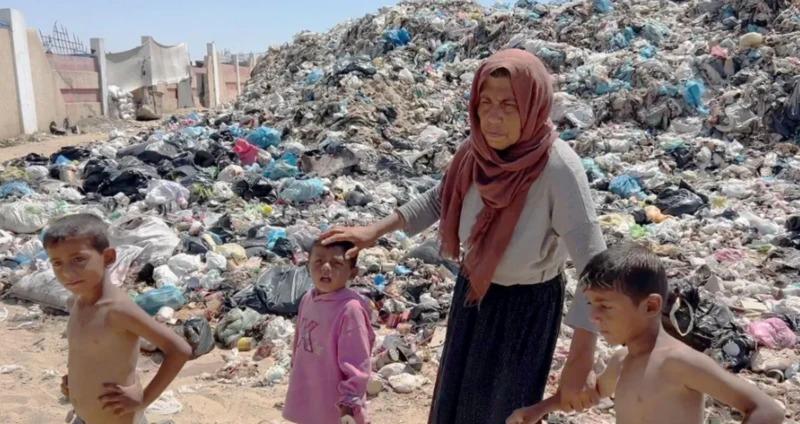
In the Deir el-Balah camp, Wala Jena said: "it's a great suffering, it takes a long time, we spend hours queuing, and sometimes, even if we wait, there is no water."
Radio France also reported that MSF said it had brought in desalination units but denounced obstacles imposed again by Israel, while Israel rejected the accusations and said it provides water but that it is largely undersized relative to needs.
Separately, Dr. Raed Hussein, director of Shuhada al-Aqsa Hospital, said in statements to the Sada News Agency that when a small electric generator stopped working, they were forced to shut down operating rooms because the available electrical capacity was no longer sufficient to handle the required load.
Transport strain and system risk
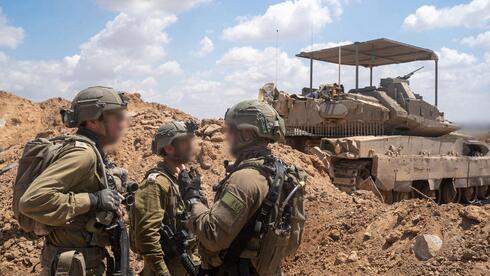
A severe and ongoing shortage of transport vehicles in reserve brigades is harming operational readiness of forces in the Gaza Strip and the conditions of soldiers, according to a senior commander quoted by ynet. The commander told ynet, “We are not managing to send soldiers out for rest rotations,” and said soldiers at their limit are not managing to get even “the little certainty of knowing when they will see home again.” He warned that commanders sometimes allocate working transport vehicles for moving soldiers in and out instead of operational missions, saying, “That harms capability,” because “there are no Humvees for operational activity.”
The commander described improvised solutions and said, “In the end, it increases the risk that people will drive against orders and take people on trucks,” adding that it happens “on unofficial trucks, without seat belts or on other vehicles that are not suited for transportation.” In response, the IDF said in ynet that “The claim that there is a gap in the brigade’s vehicles is known,” and emphasized that “the shortage has not harmed the operational readiness of the soldiers.”