Technology and Science28 September, 20262 min read
Fatih Birol Says Iran War Aligns Energy Trilemma on Cost, Security, Environment
This article is an automated aggregation of coverage from news outlets. Our editorials offer in-depth analysis curated by the NewsCord team.
Electrification central to cost, security, and environmental performance, per IEA report. Global renewables must triple by 2030; progress uneven due to financing and policy gaps.

IEA Trilemma at UN
Fatih Birol, head of the International Energy Agency, told the United Nations that “We have to make choices, we have to make trade-offs but when we look at the world today, for the first time in years, all of these three objectives are getting aligned.” Birol framed the shift around the “energy trilemma,” balancing cost, security and environmental impact, and he said those priorities are increasingly aligning in part because of the Iran war. Ars Technica cited IEA report figures showing that with $100 worth of gasoline, an internal-combustion-engine car would go 862 miles, while $100 worth of electricity would let an electric vehicle go 2,310 miles.
Ars Technica also cited IEA report figures for home heating, saying $100 would buy enough fuel for a gas boiler to provide 30 days of heating and enough electricity for a heat pump to provide 42 days of heating. Ars Technica said the gaps are probably larger today with gasoline and natural gas experiencing price spikes that exceed rising electricity costs.
Tripling Renewables, 35% by 2035
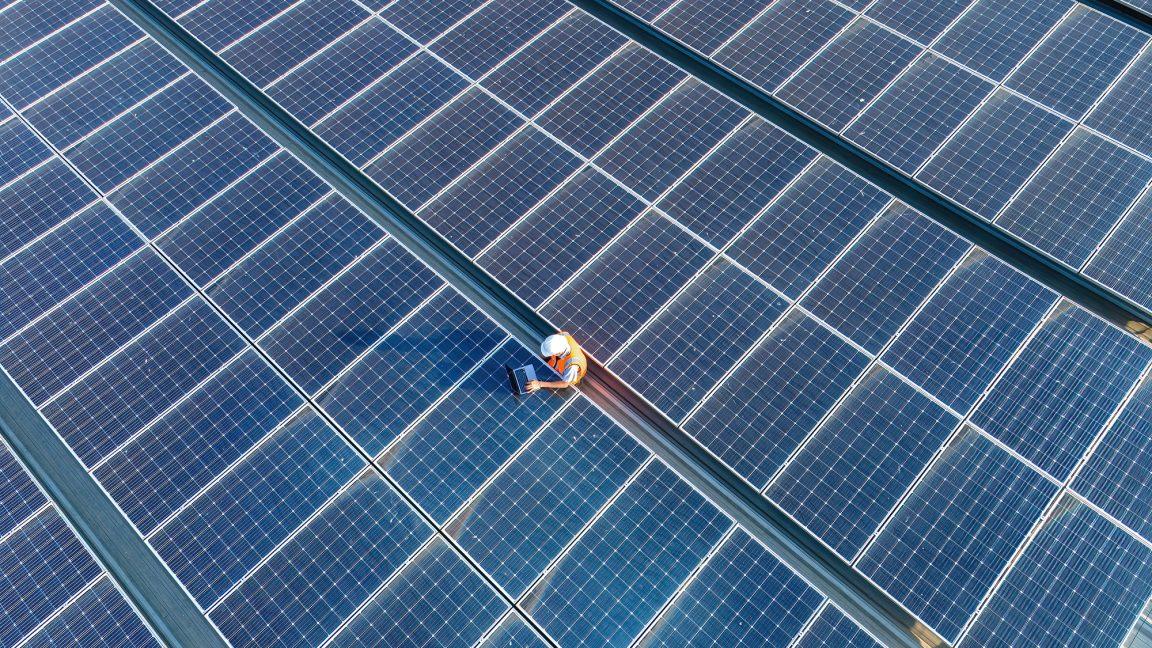
IRENA said countries have committed to tripling renewable power capacity by 2030 and accelerating electrification, while progress remains uneven in many emerging and developing economies. IRENA said the COP28 UAE Consensus called on countries to transition away from fossil fuels and triple renewable power capacity by 2030, with IRENA as custodian of itstracking report. IRENA said the COP31 Presidency of Türkiye placed electrification at the heart of its Action Agenda through a global “35% by 2035” target.
IRENA said it will convene the Global High-Level Forum on Energy Transition in Santo Domingo, Dominican Republic, on 9 October 2026 at the request of the Dominican Republic as President of the 16th IRENA Assembly. IRENA said the Forum will mark the launch of PARLAC, the Partnership for Accelerating Renewables in Latin America and the Caribbean, and it will connect political dialogue with concrete investment opportunities.

Electrons, Pipelines, and Policy
The Pembina Institute said the Pacific Link pipeline does not meet the criteria to be designated a project of national interest under the Building Canada Act because it will not “contribute to clean growth and to meeting Canada’s climate objectives.” Janetta McKenzie, director of the oil and gas program at the Pembina Institute, said Canadian taxpayers are being asked to pay $35-$43 billion in construction costs without a workable toll structure to recover their money. Ember’s The Age of Power report argued that “the race of this century is no longer just about who controls fuel, but who can produce, finance, coordinate and use cheap electricity best.”
Ember’s report said electricity overtook oil as the largest source of ‘useful energy’ in 2007 and that the deployment of solar and batteries represents the fastest energy shift in human history. Thepoint.au said its submissions propose changes to federal mechanisms so policy stops treating electricity, transport, industry, digital infrastructure and emissions policy as independent silos.