Technology and Science01 September, 20263 min read
Alteon Raises $2.5 Million To Develop Wind-Powered Autonomous Aircraft For Months Without Landing
This article is an automated aggregation of coverage from news outlets. Our editorials offer in-depth analysis curated by the NewsCord team.
Alteon raised $2.5 million in a pre-seed round led by Lachy Groom with Together Fund. Recent flight test showed autonomous flight within a metre of the ocean surface.

6 outlets told this the same way.
Alteon’s $2.5M Bet
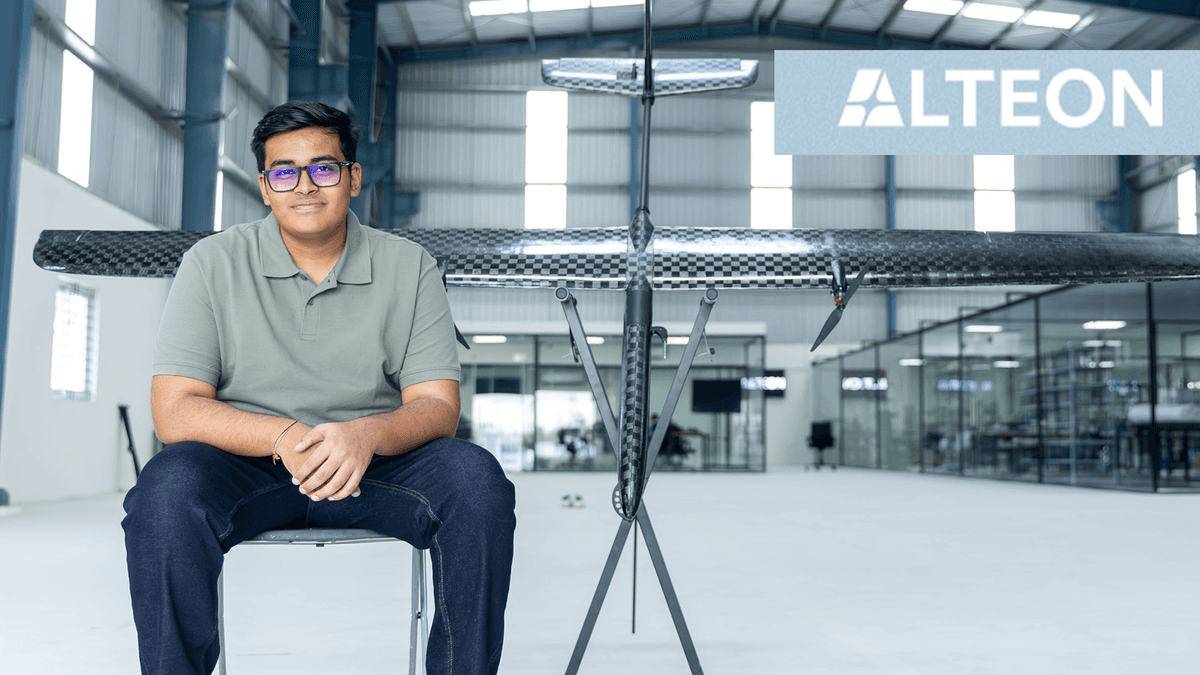
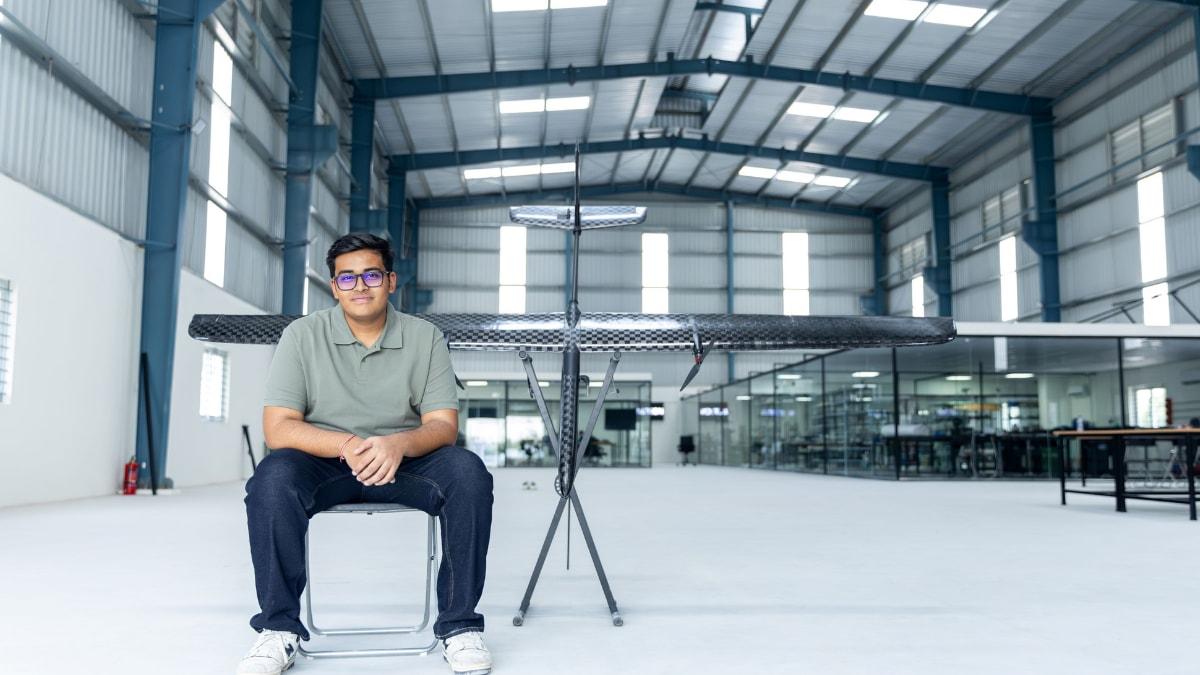
Bengaluru-based deep-tech aerospace startup Alteon raised $2.5 million in a pre-seed round led by Lachy Groom, with participation from Together Fund, to develop autonomous aircraft that can fly for months without landing. The funding followed a milestone flight test in which Alteon’s aircraft demonstrated autonomous flight within a metre of the ocean’s surface, and the test derisked a key part of the manoeuvre behind its autonomous high-endurance flight. Samay Sanghvi said, “Ultra high endurance is downstream of ultra high efficiency, precision and reliability,” linking the company’s next steps to scaling autonomy, structures, aero, and other engineering work as flight time moves from hours to months.
TechCrunch reported that Alteon’s plan is to initially use the aircraft for maritime surveillance, giving governments real-time visibility into activity in their waters. In the same TechCrunch account, Sanghvi described the core approach as designing a small, fixed-wing autonomous aircraft that can extract energy from wind shear above the ocean through dynamic soaring.
Ocean Tests and Milestones
Alteon’s recent offshore flight test involved the aircraft autonomously flying multiple consecutive loops less than a metre above the open ocean, clearing a major technical hurdle on the path to sustained dynamic soaring.
In TechCrunch’s description of a recent test over the Bay of Bengal, the aircraft autonomously completed seven O-shaped cycles at more than 62 miles per hour, flying within one meter of the water’s surface.
TechCrunch also quoted Dr. Gabriel Bousquet calling the low-altitude flight over water a “promising first result,” while warning that the harder challenge is proving reliable energy extraction in real-world winds over extended periods.
Bousquet told TechCrunch that flying low enough to harvest that energy safely is particularly difficult because the aircraft must contend with turbulence, waves, spray, rain, and changing light conditions while continuously sensing and reacting to a moving ocean surface.
TechCrunch further reported that Dr. Bharath Swaminathan said keeping an aircraft airborne for several days using dynamic soaring would be “a very big step, and a big achievement,” even as he noted local wind shear and turbulence can vary substantially.
From Surveillance to Fleets
Alteon’s longer-term objective is autonomous dynamic soaring without propulsion, with the company saying the next major milestone is “energy-neutral dynamic soaring,” which would allow the aircraft to fly continuously with its propulsion switched off. TechCrunch reported that Sanghvi said the eventual plan is to use propellers as turbines to convert some energy into electricity and recharge onboard batteries, after the aircraft can sustain flight using harvested wind energy. In the BW Disrupt account, the company framed the goal as making continuous, autonomous presence over the ocean possible, with fleets able to carry payloads for mapping weather and ocean conditions, tracking ships and fishing activity, and monitoring critical infrastructure.
BW Disrupt also tied the envisioned persistent layer to defence, search and rescue, science, and industry, and said it could help authorities detect and deter activity such as illegal fishing and drug trafficking. Lachy Groom, in the BW Disrupt report, said the ocean is the biggest unwatched surface on the planet and that every aircraft ever built has had to land, while Alteon removes that assumption with an aircraft that flies itself, charges itself from the wind, and stays up for months.