Published

Iran

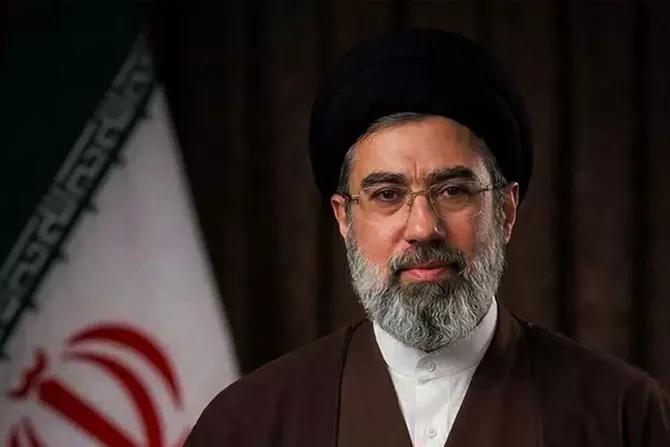
Mojtaba Khamenei Praises Pezeshkian Administration, Urges Stronger National Unity in Government Week Message

Image via نورنیوز

At a glance

  1. Khamenei praised Pezeshkian administration for addressing people’s needs amid aggression.
  2. He urged stronger national unity and social cohesion as fundamental priorities.
  3. Pezeshkian administration pledges to bolster the economy and align with Leader's guidance on unity.

Unity message and warnings

Iran’s Supreme Leader Mojtaba Khamenei praised President Masoud Pezeshkian’s administration for addressing people’s needs amid “aggression,” and urged stronger national unity in a Government Week message.

Khamenei said “preserving unity and safeguarding social cohesion” is a “fundamental” issue that should remain a central priority, and he warned that “committing any act that harms social cohesion is prohibited.”

Consistent coverage

Where the coverage agrees

Most outlets stress unity and anti-divisive rhetoric; differences are about emphasis, not facts.

In the same message, he called for culture, education and upbringing to be treated as cross-cutting priorities across all government strategies, and he singled out teachers, university and seminary instructors, nurses and doctors working in public institutions, and homemakers.

The message also said implementing these recommendations would contribute to building an “ever-stronger Iran,” while emphasizing that “every discouraging statement that weakens national and public motivation” can have the same effect from now on.
Government Week context

Mehr News Agency said Khamenei made the remarks on Friday in a message marking Government Week, which is held annually to commemorate President Mohammad Ali Rajai and Prime Minister Mohammad Javad Bahonar, both assassinated in the bombing of the prime minister’s office on August 30, 1981.

Mehr also reported that Khamenei honored the memory of the martyred presidents Rajai and Raeisi, the martyred prime minister Bahonar, and the martyred employees, managers and ministers of various administrations, and he praised the “sincere and caring” President Pezeshkian for measures taken despite “the intensification of sanctions and blockades.”

In the message, Khamenei pointed to economic and livelihood challenges such as inflation and urged attention to “boosting production,” “gradually phasing out the dollar from its important role,” and placing resistance-economy policies at the center.

Mehr further said the remarks came as the United States launched on Monday a campaign titled “Operation Economic Outcast,” after Washington failed to reach its war objectives against Iran, and it quoted Khamenei saying the country’s development path does not lie in complying with “unreasonable demands.”

Cabinet pledges and annex

Iran’s cabinet issued a statement on Saturday pledging to safeguard national unity, prioritize the economy and the people’s livelihood, and advance diplomacy and defence as “two complementary wings,” in response to the Leader’s guidance.

The cabinet said it would honor the memory of the martyred presidents Rajaei and Raeisi, Prime Minister Bahonar and other government martyrs, and it renewed its commitment to the late Leader and to the current Leader.

Aligning with Khamenei’s warning against actions harmful to social cohesion, the cabinet said all major political, economic, social and cultural decisions would carry a “national cohesion annex,” and it pledged to avoid “false dichotomies” and “despairing words.”

The cabinet also pledged to solve a chain of economic problems including curbing inflation, smart market management, job creation, directing capital to national production, and gradually reducing dependence on the dollar, while pushing forward technology, education, agriculture, industry, communications and culture.

Explore the original reporting

Compare all 16 sources

How each outlet frames it

Every outlet we compared, the headline it ran, and a link to the original article.

West Asian

Caspian Post
Caspian Post

Iran's Khamenei Calls for Stronger National Unity

28 August, 2026

Iran International
Iran International

Live Coverage - United States: Redirecting 82 ships as part of the Iran blockade.. and Tehran announces a 35% drop in trade

29 August, 2026

Mehr News Agency
Mehr News Agency

Leader stresses need for preserving national unity

28 August, 2026

Mehr News Agency
Mehr News Agency

Government pledges full support for Leader's path

29 August, 2026

PressTV
PressTV

Pezeshkian administration embraces Leader’s guidelines, vows to bolster economy, national unity

29 August, 2026

Tabnak
Tabnak

A commanding message from Ghalibaf: Parliament stands behind the government

27 August, 2026

خبرپو
خبرپو

Economic diplomacy at the zero-point border; opening of strategic projects Tar|Tasnim

29 August, 2026

نورنیوز
نورنیوز

Reaction of the government spokesperson to Qaim-Panah’s remarks; emphasis on preserving national unity and cohesion

28 August, 2026

نورنیوز
نورنیوز

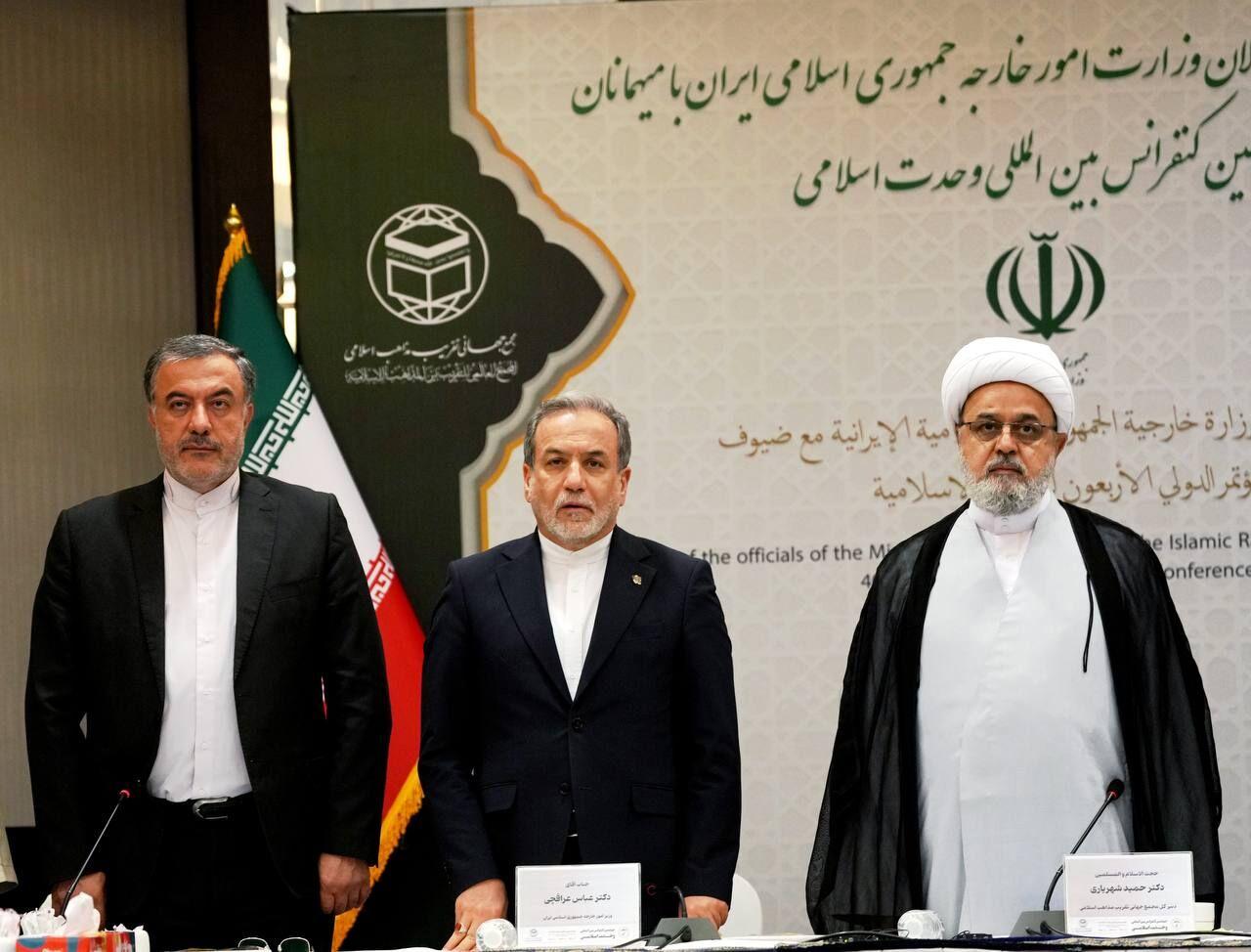
Iran will continue path of resistance, avenging martyred Leader: FM Araghchi

29 August, 2026

Other

iranpress
iranpress

Leader Calls for National Unity, Warns Against Divisive Rhetoric

28 August, 2026

Khabaronline
Khabaronline

On the occasion of Government Week and Unity Week, with the special guest from Iraq, Rezvanshahr stood united in support of unity and allegiance to the leadership.

26 August, 2026

اطلاع باما
اطلاع باما

A key commitment for the economy, livelihood, and national unity

29 August, 2026

انتخاب
انتخاب

The Leader of the Revolution: I firmly declare that committing anything that harms social cohesion is forbidden. Financial Times: The United States’ first move against Iran in the form of an “economic DDI” operation; Washington restricts Egyptian banks’ access to the U.S. financial system. Bloomberg: Oil export flows from

29 August, 2026

باشگاه خبرنگاران جوان

The government spokesperson: We must, by avoiding marginal interpretations, focus on preserving national unity and cohesion.

28 August, 2026

ساعت 24
ساعت 24

Iranian ISIR: Tomorrow is not the time to make up for neglect in economic diplomacy

27 August, 2026

سایت طلا
سایت طلا

The Government: We commit to supplying the livelihoods of the people

29 August, 2026

Read stored source text: Caspian Post

Source: IRNA Iran's Supreme Leader Mojtaba Khamenei has praised the administration of President Masoud Pezeshkian for addressing people’s needs amid the aggression, while calling for stronger national unity. In his message, the leader emphasized that “preserving unity and safeguarding social cohesion” is a “fundamental” issue that should remain a central priority, The Caspian Post reports, citing Mehr. “Undoubtedly, every discouraging statement that weakens national and public motivation, and every kind of imagined dichotomy - such as war or negotiations, consensus or extremism, compromise or warmongering - which in the past inflicted direct or indirect harm on our dear people, can have the same effect from now on,” he said. Khamenei stressed that “committing any act that harms social cohesion is prohibited.” He also said that culture, education and upbringing should be treated as cross-cutting priorities across all government strategies. The leader called for particular attention to teachers, university and seminary instructors, nurses and doctors working in public institutions, as well as homemakers. He noted that homemakers play an important role in shaping the country’s cultural future through raising their children. Khamenei expressed hope that implementing these recommendations would contribute to building an “ever-stronger Iran.” Share on social media

Read stored source text: Iran International

"The Financial Times" of Britain reported that two banks, Milli Bank and Sexports (Exports and Exports), which are entities affiliated with the Iranian regime and on the US sanctions list, are still active in the United Arab Emirates and provide services to their clients. The Iranian government, in response to a message from Supreme Leader Ali Khamenei, announced that it would endure the sanctions and what it described as the United States’ and Israel’s “conspiracies,” while continuing the diplomatic and defensive track. Tehran Governor Mohammad Sadegh Motamadian told the ISNA news agency that the US naval blockade of Iran, along with the tightening of sanctions, has placed the country’s administration in “extremely exceptional circumstances.” The Associated Press reported that six months after the outbreak of war with Iran, American diplomats and several of their family members who left the region in the early days of the war began returning to the American embassies in the Middle East. Reuters stated that Iran’s foreign trade fell by about 35 percent under US sanctions and the naval blockade, while the annual inflation rate reached 66 percent last month. The International Maritime Organization said the crisis in the Strait of Hormuz remains unresolved, with about 400 vessels carrying nearly 6,000 crew members still unable to safely leave the Gulf waters. Washington expanded the scope of its “economic exclusion operation,” targeting financial institutions and individuals accused of helping Iran stay connected to the international financial system. The Iranian Foreign Ministry urged other countries not to implement the new US sanctions, arguing that participation in them would amount to complicity in applying unlawful pressure on sovereign states.”

Read stored source text: iranpress

Emphasizing the importance of projecting Iran’s national strength, Ayatollah Khamenei urged officials and the public to avoid rhetoric that undermines national morale or promotes “illusory dichotomies.” The full text of the message is as follows: ‘The first week of Shahrivar (current Iranian month) every year is an occasion to pay attention to the services of the government of the Islamic Republic of Iran. This year, the government is proud that the days of Government Week coincide with the days of the blessed and beneficent birth of Prophet Muhammad and Imam Ja’far As-Sadiq, peace be upon them. I would like to take this opportunity to congratulate and thank all the active employees and managers of the government branches, especially the honest and compassionate President. Especially with regard to the worthy measures that, despite the various plots and conspiracies of the American-Zionist enemy and the intensification of sanctions and the naval blockade, they have taken during the Third Imposed War and afterwards, in the direction of providing goods and services needed by the people, repairing important damaged points, and managing energy needs. It is also appropriate to honor the memory of the martyred Presidents Rajaee and Raisi, the martyred Prime Minister Bahonar, and the martyred employees, managers, and ministers in all different periods of government, and above all, our great martyred Leader who himself also served as the President for nearly two terms, and to ask for the highest rank and divine blessings for them. The opportunity to serve the people and the goals of the Islamic Republic is a valuable blessing that must be cherished. In the current era and the serious and complex conditions that an increasingly strong Iran faces, one of the essential things to achieve this goal, in addition to round-the-clock efforts and continuous initiative, is to explain and narrate the power and strength of Iran and its beloved nation. Weakness, shortcomings, and deficiencies do not require narration and highlighting; rather, they require planning and action to resolve and solve the problem. Sometimes, honestly expressing one’s weaknesses when the enemy needs morale is a great help to him and may even cause concern in the hearts of friends and companions, causing them to wander and bewilder. Yes, if the only listeners to these honest statements are our own people and sympathizers, the problems will be reduced. However, the strength, power and positive aspects, in accordance with the Quranic teaching {And as for the grace of your Lord, then it will be narrated}, need to be narrated and highlighted.’ ‘And among other important issues and topics is the application of technologies and innovations proposed by our young elite. Sometimes, timely use of this advantage and abandoning the usual routine and customary habits in a matter makes effective leaps in the path of progress and excellence of the country. This is conceivable in various branches of power production, including agriculture and industry, culture and education, communication and social affairs. Among the other fundamental issues of the country that must always be at the center of attention is observing unity and caring for social cohesion. Every action in each of the cultural, social, political, security, and macro-economic areas must be taken with consideration of the attachment related to social cohesion. Some measures that may appear to have supporters among some segments of the country, if they lack this appendix or if what is formulated as an appendix in that case is neglected as an action, can cause harm to those segments and others. Undoubtedly, any disappointing speech and weakening of national and public cohesion and any kind of imaginary contradictions such as war or negotiation, consensus or extremism, compromise or war-mongering that has caused direct or indirect damage to our beloved people in the past can have the same effect from now on. Therefore, I firmly declare that committing anything that is detrimental to social cohesion is prohibited. And among other important issues, is the trans-strategic attention to the issue of culture, education and upbringing. The term trans-strategic means that the formulation of other strategies must be done with this issue in mind. In this regard, it is of particular importance to pay attention to the groups that are the source of spreading positive and constructive culture, such as teachers in education, universities, and seminaries, as well as nurses and doctors who have dedicated themselves to performing their duties in non-private institutions; just as it is to pay attention to the role of housewives who teach the most delicate elements of the beautiful and desirable culture of the future to each and every child of this land and region in the privacy of their homes. It is hoped that the implementation of these and other useful materials that can be found, thank God, in the list of government programs will lead our beloved country towards an ever stronger Iran and make those active in this path worthy of the special attention of Imam Mahdi, may God hasten his return.’ seyed mohammad kazemi

Read stored source text: Khabaronline

According to Gilan-based Tehran reporter for Khabar Online, this gathering was attended by Iraj Shahi, the governor of Roodbaran (Rezvanshahr), Hojjat al-Islam wal Muslimin Haj Seyyed Hadi Mousavi, the imam of the town, Sheikh Kamel Fahdawi, the spokesperson of the Rabat Muhammad of Iraq, and a number of officials and various segments of the people. The devout and revolutionary people of Rezvanshahr, with their enthusiastic presence, showcased images of solidarity, unity, and cohesion, emphasizing adherence to Islamic and revolutionary values and calling for the continuation of unity and social solidarity. In the symbolic part of the ceremony, Shia and Sunni Muslims stood together, holding hands, displaying unity, brotherhood, and mutual empathy among the Islamic sects—an act that conveyed a clear message of cohesion and solidarity among the people of Rezvanshahr and drew the attention of attendees. The presence of Sheikh Kamel Fahdawi, the spokesperson of Rabat Muhammad of Iraq, as a special guest of this gathering, also highlighted the bond and solidarity among Muslim nations and emphasized shared religious beliefs and common Islamic values. Participants in this gathering expressed support for the ideals of the Islamic Revolution and for the Supreme Leader, stressing the need to preserve unity among different ethnicities and sects and to stand firm against enemy plots. The event also coincided with Government Week and Unity Week, and the wide participation of the people reflected their support for the service to the regime and emphasized strengthening unity and social cohesion in Rezvanshahr. In another part of the ceremony, the importance of Unity Week and the necessity of strengthening brotherhood among Muslims were underscored, with participants viewing unity and solidarity as among the most important factors in preserving the nation’s strength and security.

Read stored source text: Mehr News Agency

The Leader made the remarks on Friday in a message marking Government Week, which is held annually to commemorate President Mohammad Ali Rajai and Prime Minister Mohammad Javad Bahonar, both assassinated in the bombing of the prime minister’s office on August 30, 1981, according to Press TV. He honored the memory of the martyred presidents Rajai and Raeisi, the martyred prime minister Bahonar, and the martyred employees, managers and ministers of various administrations, and above all, the great martyr Leader Ayatollah Seyyed Ali Khamenei, who held the office of president for nearly two terms. He appreciated the efforts of active employees and managers of government institutions, particularly “the sincere and caring” President Pezeshkian. “In particular, I commend the worthy measures they have taken, despite the various restrictions and plots of the American-Zionist enemy, and the intensification of sanctions and blockades, during the third imposed war and afterward, to ensure the provision of goods and various services needed by the people, repair key damaged areas, and manage energy,” Ayatollah Khamenei added. He said the dear nation of Iran, who have “demonstrated its true mettle” in the past six months during the US-Israeli aggression, is entitled to feel the service rendered by the branches of administration. Ayatollah Khamenei pointed to the need to address a chain of economic and livelihood challenges, such as inflation, while also paying particular attention to other elements of the economy, including “boosting production, gradually phasing out the dollar from its important role, and ultimately placing the entire set of resistance-economy policies at the center.” “The key to resolving all these matters in this field lies in relying as much as possible on domestic production,” he said, adding that where sufficient domestic production does not exist, imports should be used properly and wisely. The remarks come as the United States launched on Monday a campaign under the title “Operation Economic Outcast,” which came after Washington failed to reach its war objectives against Iran. Although the enemy’s conduct during the war and afterward is not without effect, ever-smarter management of the components of this field, seeking the assistance of the people and experts, and bringing new capacities into operation will guide the country toward the expansion of affairs and development, he said. “The sworn enemy of this nation tries to convey that the path to development and progress lies in following it and complying with its unreasonable demands; whereas observing what it has done to this country and its resources in past periods, even years before the Islamic Revolution, shows otherwise,” Ayatollah Khamenei highlighted. He named the “application of technologies and innovations proposed by young elites” as another important issue, saying that at times, making timely use of this advantage and abandoning the usual procedures and established habits in a given matter can bring about effective leaps on the path of the country’s progress and advancement. Preserving unity and social cohesion Elsewhere in the message, the Leader stressed that “preserving unity and safeguarding social cohesion” is a “fundamental” issue that must be at the core of attention. “Undoubtedly, every discouraging statement that weakens national and public motivation, and every kind of imagined dichotomy — such as war or negotiations, consensus or extremism, compromise or warmongering — which in the past inflicted direct or indirect harm on our dear people, can have the same effect from now on,” he said. “Therefore, I firmly declare that committing any act that harms social cohesion is prohibited,” Ayatollah Khamenei stressed. He said culture, education and upbringing should be treated as a cross-cutting priority in all government strategies. He added that particular attention should be given to teachers, university and seminary instructors, nurses and doctors who serve in public institutions, as well as homemakers, whom he said play an important role in shaping the cultural future of the country through raising their children. He hoped that putting these points into practice would lead to an “ever-stronger Iran”. President Masoud Pezeshkian issued a message, thanking the Leader of the Islamic Revolution for the support. MNA

Read stored source text: Mehr News Agency

Iran's cabinet on Saturday issued a statement pledging to safeguard national unity, prioritise the economy and the people's livelihood, and advance diplomacy and defence as "two complementary wings," in response to the Leader's guidance. In the statement addressed to the Leader of the Islamic Revolution Ayatollah Seyyed Mojtaba Khamenei, the government said his hopeful message on the occasion of Government Week had brought encouragement to the nation's servants. The cabinet said it would honour the memory of the martyred presidents Rajaei and Raeisi, Prime Minister Bahonar and other government martyrs, and renewed its commitment to the late Leader and to the current Leader. It said the government was focused on solving the chain of economic problems, including curbing inflation, smart market management, job creation, directing capital to national production and gradually reducing dependence on the dollar. It pledged to pursue resistance economy policies and use domestic capacities to improve living standards. Aligned with the Leader's clear warning prohibiting any action harmful to social cohesion, the cabinet said all major political, economic, social and cultural decisions would carry a "national cohesion annex," and that avoiding "false dichotomies" and "despairing words" was a definite duty. It also pledged to push forward in technology, education, agriculture, industry, communications and culture, aiming for "scientific authority" and the full realisation of the Islamic Revolution's second step statement. On foreign policy, it said Iran's diplomacy would continue to rest on the principles of "dignity, wisdom and expediency," with firm resistance to the sanctions and schemes of "American-Zionist arrogance." It described the diplomatic field and the defence field as two complementary, coordinated and inseparable wings for protecting national interests, security and the country's integrity. The cabinet said it would work with all its capacity to realise "an ever-stronger Iran" and to serve the Iranian nation. MNA

Read stored source text: PressTV

The administration of President Masoud Pezeshkian has reaffirmed its commitment to the guidelines of the Leader of the Islamic Revolution Ayatollah Seyyed Mojtaba Hosseini Khamenei, and outlined its priorities in the areas of the economy, national unity, and foreign policy. In a statement issued on Saturday, in appreciation of the “wise guidance” of Ayatollah Khamenei, the administration said the Leader’s message on the occasion of Government Week has brought “joy, encouragement and hope” to officials serving the Iranian people. On Friday, the Leader hailed the Pezeshkian administration for handling the people’s needs amid the US-Israeli aggression and blockade, urging increased domestic production and eliminating the US dollar from transactions. The administration said it regarded the Leader’s confidence and support as “the greatest asset and source of support” as it faces the challenges ahead. The statement said that while recognizing the economic pressures resulting from sanctions and recent imposed wars, the administration has placed its main focus on addressing interconnected economic challenges, including controlling inflation, managing markets, creating employment, directing investment toward domestic production and gradually reducing dependence on the dollar. “We commit ourselves to ensuring prosperity and improving the livelihoods of our dear people in a manner worthy of their dignity,” it said, emphasizing the principles of a resistance economy and reliance on the country’s domestic capacities. It also described the protection of national unity and cohesion as an absolute priority. In line with the Leader’s directive against actions that undermine social cohesion, the administration said all major political, economic, social and cultural decisions would incorporate a “national cohesion component.” “We consider avoiding artificial polarization and discouraging statements to be our definite duty,” it said, adding that the administration would devote all its efforts to strengthening consensus, solidarity, and hope in society. On foreign policy, the administration said Iran’s diplomacy would continue to be based on the principles of “dignity, wisdom, and prudence,” while maintaining resistance against US-Israeli schemes and sanctions. It pledged to firmly resist sanctions and the “unjust schemes of US-Israeli arrogance” through greater coordination between diplomatic and defense endeavors. Judiciary chief: Leader’s message a roadmap for officials Meanwhile, Judiciary Chief Gholam-Hossein Mohseni Eje’i described the Leader’s message on the occasion of Government Week as a roadmap for government officials and those serving the state and the people. “The Leader’s enlightening message is a roadmap for all officials and servants of the system and the people,” Mohseni Eje’i said. He stressed the importance of strengthening national unity and avoiding anything that could lead to division and discord. Mohseni Eje’i said adherence to the Leader was the only way to successfully overcome difficult historical challenges. “We reject any form of discord and division in this challenging and eventful path,” he said, adding that, in the revolutionary outlook, the connection between the people and leadership constituted an “impenetrable barrier” against the enemy’s hybrid warfare.

Read stored source text: Tabnak

A commanding message from Ghalibaf: Parliament stands behind the government Mohammad Bagher Ghalibaf, Speaker of the Islamic Consultative Assembly, in a message on the occasion of Government Week wrote: Government Week is not merely a date on the Islamic Republic calendar, but a reminder of the great covenant of service to a nation that has stood in the toughest fields and, with steadfastness, defended the ideals of the Islamic Revolution and Iran’s independence. This week is linked with the immortal names of Martyrs Mohammad-Ali Rajai, Mohammad-Javad Bahonar, and Seyed Ibrahim Raisi; men who regarded the government not as a platform of power but as a fortress of service, proving that in the Islamic Republic, responsibility is not a privilege but a trust and obligation. Today, in a different and pivotal context, the government must prioritize preserving the foundations of the Islamic Revolution, people's livelihoods, purchasing power, youth employment, and economic security, lifting a burden from the people. The Leader of the Revolution’s admonitions about supporting the government, preserving unity and solidarity, and synchronizing the organs of the system provide a clear roadmap to navigate difficult conditions. Supporting the government does not mean turning a blind eye to its weaknesses; rather, it means trusting the government to better serve the people. In a situation where war has had economic repercussions and the enemy has brought all its capacity to bear to pressure the Iranian nation, the executive authorities have made meaningful efforts to run the country and have labored to address weaknesses. In such conditions, listening to the strong recommendations of the Supreme Leader for unity, national cohesion, and confidence in officials is the most important pillar for the country’s operators to overcome challenges and elevate the name of Iran. The country is in a full-scale economic war, and by the grace of God, we will see that the government and the executive apparatus, relying on the strength of the people, economic actors in the private sector, and all branches of the system, will defeat the enemy in this field as well, and the enemy’s miscalculation will be trampled underfoot; God willing, we will soon witness the enemies’ psychological operations being rendered ineffective. Today, state employees, managers of executive bodies, governors-general, and all those who sit at the desks of service, believe that that desk, in the conditions of economic war, is a fortress, and delivering proper, swift, and honest service to the people is part of national defense. The Islamic Consultative Assembly also places itself beside the government and the people’s servant; with its full legislative and supervisory capacity, it will remove obstacles, amend laws, and pursue the people’s demands alongside the government. I, on the occasion of congratulating the blessed birthday of the Prophet of Mercy and Imam Ja’far al-Sadiq, peace be upon them, while venerating the memory of the martyrs and congratulating Government Week to the statesmen, especially the honorable President, Dr. Pishgian, ask Almighty God to grant the days of service to the people for all those engaged in the field of executive work, under the attentions of His Holiness the Supreme Leader, may our souls be sacrificed for him. Mohammad Bagher Ghalibaf Speaker of the Islamic Consultative Assembly

Read stored source text: اطلاع باما

According to reports from IT of us, the livelihood and national unity – the Government Cabinet of the Islamic Republic of Iran, in an official statement, appreciated the hopeful and guiding message of the Leader of the Revolution on the occasion of Government Week and, while renewing its pledge to the ideals of the Revolution, announced five core axes as its main agenda. This statement, issued on the eve of the third year of the fourteenth government’s activity, demonstrates a firm will to overcome upcoming challenges. The government, in this statement, while honoring the memory of the precious martyrs of service, including Martyr Presidents Rajai and Raisi, Martyr Prime Minister Bahonar, and other government martyrs, emphasized the continuation of their path. It also, while praising the late Martyr Leader of the Islamic Revolution, reaffirmed its commitment to the covenant it made with the Imam Martyr and renewed it with the Leader of the Revolution. Axis Two: Special attention to livelihood, economy, and domestic production growth. The most important part of the statement concerns solving the chain of economic problems. The fourteenth government, with a deep understanding of livelihood challenges and the pressures from the unjust sanctions and recent defense wars, has placed the following axes in priority: Economic priorities, key measures, controlling inflation, liquidity management and cost management, smart market management, supervision of supply and demand and preventing volatility, creating employment, directing capital toward domestic production, reducing dependence on the dollar, expanding economic diplomacy and using national currencies in exchanges. The government has pledged that, centered on anti-recession policies and relying on vast internal capacities, it will provide welfare and improve people’s livelihoods in a manner befitting them. Axis Three: Absolute safeguarding of national unity and cohesion. In response to the firm directive of the leadership banning any action that disrupts social cohesion, the Cabinet announced that all its decisions in political, economic, social, and cultural spheres would be equipped with a “National Cohesion Annex.” The government avoids illusory dichotomies and pessimistic rhetoric as a definite duty, and will devote all its power to strengthening consensus, solidarity, and hope in society. Axis Four: Leading in the fields of technology, education, and scientific authority. Relying on the innovation of young elites, the government has made round-the-clock efforts for transformation in the fields of agriculture, industry, communications, and culture. The government’s programs in education and culture aim at achieving “scientific authority” and realizing fully the vision outlined in the Second Step of the Islamic Revolution. Axis Five: Dignified diplomacy and steadfastness against the Axis of Kufr. Internationally, the Cabinet stated that the diplomacy of the Islamic Republic of Iran will be based on the three principles of “Dignity, Wisdom, and Expediency,” with emphasis on standing firm against the plots and oppressive sanctions of the arrogant United States and Zionist powers. The government views the diplomatic arena and the defense arena as two complementary, coordinated, and inseparable wings for safeguarding national interests, security, and the nation’s integrity, and has placed the simultaneous and balanced advancement of these two paths on its agenda. In summary: Iran stronger and stronger. The Iranian Government Cabinet, at the end of this statement, drawing inspiration from the General Policies and guidance of the late Imam and the wise leadership, once again pledged that on the path to making “Iran stronger,” it will spare no effort and will employ all the country’s capacities to please His Nobility, the Savior of the Time (May God hasten his reappearance) and the noble Iranian people. This statement, issued through the courageous, sincere, honest, and compassionate leadership of the honorable President, outlines the government’s roadmap to navigate the current critical conditions and emphasizes unity, consensus, and hope as key slogans. This report is prepared based on the editorial office’s analyses and a review of information published in national media.

Read stored source text: انتخاب

The third war and the recent U.S. military aggression against Iran have entered the forty-eighth day. While 143 days have passed since the day of the ceasefire violation between the two countries, Hossein Rezaee has announced that Iran has prepared a list of شروط (conditions) for transmission to the Americans, with the top condition being a halt to wars in West Asia, especially in Lebanon and Gaza. Read yesterday’s developments regarding the war, the ceasefire, and negotiations at the link below: The news for the forty-eighth day of the Third War and the 143rd day of the ceasefire (6 Shahrivar 1405) are as follows: Bloomberg wrote: The flow of oil exports from the Persian Gulf has returned to about two-thirds of its pre-war level; a point that, according to Goldman Sachs, has limited the impact of the war on Iran on the global price of crude oil. According to “Entekhab,” the continuation of the article states: Goldman analysts, including Dan Struve and Yulia Zastkova Grigsbey, in a note said that total crude oil and petroleum products exports from the region have risen to 15–16 million barrels per day. The increased passage of shipments through the Strait of Hormuz has contributed to this growth. Nevertheless, this figure remains 7–8 million barrels per day below the pre-conflict level, but well above the country’s lowest level of 5–6 million barrels per day in March. Goldman Sachs stated: “The rise in clandestine passages by specialized shipping and also the transfer of cargoes from ship to ship shows that producers and transport companies are adapting to the Middle East conflicts.” The bank added that the increase in clandestine oil flows could “even if the disruptions in the Middle East persist longer, moderate the rise in Crude Oil prices.” Precisely determining how much oil passes through the Strait of Hormuz is difficult because tankers often switch off their satellite transmitters; an act commonly referred to as “Going Dark” and done to avoid identification. Traders told Bloomberg this week that about 6–8 million barrels of crude oil pass through the Strait of Hormuz daily. This export has helped cap oil prices in the global market, with oil prices dropping from over $120 per barrel in April to around $89 per barrel. Despite a substantial amount of oil leaving the Persian Gulf, the LNG export and refined fuels flows remain lower. Goldman Sachs said: “We still see in scenarios of continued disruptions greater capacity to push up European natural gas and refined products prices with futures maturities than crude oil.” Donald Trump, the U.S. president, claimed about the Strait of Hormuz: “That bastard is still open. Iran’s response is very mild. They don’t want us to attack them again. That’s the whole story. Nothing else matters.” Reuters wrote: Gulf countries, after months of shipping disruption due to the Iran war, are speeding up billions of dollars of investments in ports, pipelines, and railways to reduce their dependence on the Strait of Hormuz. Hossein Rezaee: Iran has prepared a list of conditions for transmission to Americans; currently we have authorized a temporary and specific passage path for ships through the middle of the strait, provided that future traffic there depends on an understanding with Washington. We are not seeking war, but we are preparing for a new phase. Halting wars in various arenas of West Asia and Israel’s withdrawal from Lebanon are among our conditions in any agreement. Tehran views Lebanon’s security as part of the security of the entire West Asia region. Halting wars in various West Asian arenas, especially in Lebanon, Israel’s withdrawal from the occupied Lebanese territories, and ending the Gaza war are among the conditions Iran has put forward in any agreement with the United States. Prolonged tensions in a region can politically, economically, and security-wise impact all countries in the region. The region’s countries are a connected chain; insecurity in any country leads to higher investment costs and weakens development opportunities in other countries.

Read stored source text: باشگاه خبرنگاران جوان

Iran's Young Journalists Club - Mojarrini wrote in his X (formerly Twitter) account: The government regards the “absence of martyr leadership” as the heaviest cost of war. From this perspective, the statement by the honorable executive deputy of the president is clear and understandable. The government spokesperson stressed: today, more than ever, we must focus on preserving national unity and cohesion by avoiding marginal interpretations. Politics Parliament Government Parties and Associations Defense and Security Foreign Policy Imam and Leadership Special News Programs Headlines of all political news International news section Headlines of all international news Domestic news Afghanistan Iran Middle East East Asia Eurasia Europe and America International economy Coffee International Headlines of all international news Sports Football and futsal Ball and net Swimming and water polo Olympic sports World of sports Other domains Headlines of all sports news Social news Civil, accidents and law Welfare and cooperation Environment Legal and judicial Marriage and family Lifestyle Military service Headlines of all social news Provincial news People’s reporters People’s reporter Headlines of all social news Economics Banking and insurance Stock market Industry, trade and agriculture Economy and energy Housing Transport and urban development Market pulse Jobs Headlines of all economic news Culture Arts and media Radio and television Cinema and theater Music and visual arts Quran and Ahl al-Bayt Cultural heritage and tourism Books and literature Culture of resistance Other domains Headlines of all cultural and artistic news Radio TV and cinema Music and visual arts Quran and Ahl al-Bayt Cultural heritage and tourism Books and literature Culture of resistance Other domains Headlines of all cultural and artistic news Science and medicine University and entrance exams Education and training Health and treatment Clinic Technology Space sciences and astronomy Software download Headlines of all science and medical news University and entrance exams Education and training Health and treatment Clinic Technology Space sciences and astronomy Software download Headlines of all science and medical news Film and audio Film and audio Provincial reports Educational Headlines of all film and audio news News about provinces Provinces Public journalism Public journalist Headlines of all citizen reporter news Web browsing Web browsing Readable content Leisure and entertainment Hot news Special occasions Headlines of all Web browsing news Parliament Government Political parties and associations Defense and security Foreign policy Imam and leadership Special news programs Headlines of all political news International Afghanistan Iran Middle East East Asia Eurasia Europe and America International economy Coffee International Headlines of all international news Sports Football and futsal Ball and net Ground sports and water polo World of sports Other domains Headlines of all sports news Civil, accidents and law Welfare and cooperation Environment Legal and judicial Marriage and family Lifestyle Military service Headlines of all social news Banking and insurance Stock market Industry, trade and agriculture Economy and energy Housing Transportation and urban development Market pulse Jobs Headlines of all economic news Radio and television Cinema and theater Music and visual arts Quran and Ahl al-Bayt Cultural heritage and tourism Books and literature Culture of resistance Other domains Headlines of all cultural and artistic news University and entrance exams Education and training Health and treatment Clinic Technology Space sciences and astronomy Software download Headlines of all scientific and medical news

Read stored source text: خبرپو

Latest news from Julfa, one of the cities in East Azerbaijan Province The Kalaleh–Julfa road will be implemented with the emphasis of the President Economic diplomacy at the zero-border point; opening of Julfa strategic projects Kalaleh–Julfa road implementation with the President's emphasis Governor of East Azerbaijan: Kalaleh–Julfa road will be implemented with the President's emphasis Opening of 25 developmental projects in the villages of Julfa’s Central District + Video In memory of the martyrs Namira, the Julfa Bridge Julfa; the epic of three border guards in the days of bloodshed of September 1320 (1901–1942 in the Iranian calendar) The Kalaleh–Julfa corridor needs 15 million tomans of credit Imam of Friday Prayer of Julfa: the Iranian nation, despite economic pressures, stands by the system The Kalaleh–Julfa road will be implemented with the President's emphasis The Kalaleh–Julfa road implementation with the President's emphasis Governor of East Azerbaijan: Kalaleh–Julfa road will be implemented with the President's emphasis Opening of 25 developmental projects in the villages of Julfa’s Central District + Video In memory of the martyrs Namira, the Julfa Bridge Julfa; the epic of three border guards in the days of bloodshed of September 1320 The Kalaleh–Julfa corridor needs 15 million tomans of credit Imam of Friday Prayer of Julfa: the Iranian nation, despite economic pressures, stands by the system The Kalaleh–Julfa road will be implemented with the President's emphasis The Kalaleh–Julfa road implementation with the President's emphasis Governor of East Azerbaijan: Kalaleh–Julfa road will be implemented with the President's emphasis Opening of 25 developmental projects in the villages of Julfa’s Central District + Video In memory of the martyrs Namira, the Julfa Bridge Julfa; the epic of three border guards in the days of bloodshed of September 1320 The Kalaleh–Julfa corridor needs 15 million tomans of credit Imam of Friday Prayer of Julfa: the Iranian nation, despite economic pressures, stands by the system

Read stored source text: ساعت 24

Iranian ISIR (Industry, Mine and Trade Organization) Secretary General: Tomorrow is not the time to make up for neglect in economic diplomacy Arman Khaleghi, on the morning of Thursday, 26th of Shahrivar, during the ceremony commemorating Industry Day in Isfahan, congratulated the industry and economic activists and stated: The issue of sanctions is very critical and should not be treated with disregard. Perhaps in our minds we think we can ignore major issues and leave them to forgetfulness. This mental attitude may be pleasing, but in the real world we must view issues and challenges as they are, analyze them correctly, and make correct, difficult, and courageous decisions. He added: These issues are complex. Given the intensification of sanctions and the experience of two wars from last year to today, which have severe effects on infrastructure and various industries, we must think about these matters more prudently. When people’s livelihoods face problems, purchasing power decreases and the domestic market also falters, we must consider international actions. The enemy is trying to block the avenues of breathing for Iran’s economy. The Secretary General of the Iranian House of Industry, Mine and Trade, referring to Iran’s economic relations with the world, said: If the enemy has penetrated to the southern point of the country and, as they say, blocked that route, we should know that we are not the only ones aware of this; the enemy is also informed of the matter. If since the end of Esfand last year we were pursuing new corridors, the enemy has identified these routes and is now trying to block them so as not to close the breathing paths of Iran’s economy. This undeniable reality cannot be ignored with disregard or pretension. Khaleghi added: Today the enemy sends his diplomatic groups to neighboring countries and negotiates with them to facilitate closing the routes to Iran, and tells them that if they cooperate with Iran, we will not cooperate. The enemy does his job, but do we have the necessary planning? Is our diplomatic system habituated or negligent? Are appropriate commercial actions being taken in international trade? Do our friends today observe a special move? If today is not a day of action and tomorrow there will be no opportunity due to our negligence, then when should we act? He stated: Are the Ministries of Industry, Mining and Trade, Foreign Affairs, and other related bodies that are effective in this field currently taking action? When will they begin the necessary mobilization? We do not expect the government to act every day itself; at least we expect it to pave the way so that merchants and economic activists can create the required groundwork and take effective actions to preserve the country’s economic pathways. Tomorrow is late for compensating for negligence This trade official emphasized: Negligence in this area has no justification. We know what is happening, we know where the enemy is pressing and where it intends to cause damage. If we take no effective action despite this awareness, we should know that we cannot call it negligence, but we must assign another name to it. Tomorrow and next year will be a lost opportunity. If Amir Keshani is not allowed by the chamber of commerce to take steps to open these routes, we must understand who gave this permission and in that case we will ask that person about his performance and his commitment to national interests. Khaleghi then addressed the issue of energy imbalance, noting that after the President of the ISM trade house spoke about industry problems and difficulties, the issue spread widely. A meeting was held afterward and promises were made that most friends are aware of. Last week, in a meeting with the President, we raised the same issue. Amir Keshani stated that electricity to industrial sectors is cut every day, and we told the President that this warning is approaching and apparently the problem was framed as a pretext for holding the entrance exam, which is to last two days. He continued: The President asked what this situation means; that electricity is cut daily from 2 PM to 11 PM, what is the reason? Our friends in the Ministry of Power said this was only for two days, but apparently this trend has continued. In that committee, the necessary emphasis and notice were given, and the issue was seriously discussed. It was approved that any changes should be such that only once per week on Fridays there would not be a compensatory power outage so that production activities could continue, and the Supreme Labor Council should hold a meeting on this matter. The Ministry of Labor has not held even one meeting to implement the President’s order The Secretary General of the Iranian House of Industry, Mine and Trade criticized the performance of the Ministry of Cooperatives, Labor and Welfare, saying: More than a month has passed since the President’s advice to the Labor Ministry, but colleagues in the Labor Ministry have still not held the council meeting on this issue. If this matter is not defiance or disregard of the President’s orders, then we must name it differently. Not even a meeting for brainstorming on this matter has been held. The Ministry of Power has not pursued the necessary follow-ups in the meeting to reduce industrial power outages. Khaleghi added: Fortunately, in your recent meeting you were not present to witness the admonition and vindictive reactions from the producers. They claimed that the production sector has not properly carried out its duties and has not taken the necessary action, but with data presented to them it was shown that everything within the purview of the production sector has been carried out and what has not has been the responsibility of the Ministry of Power. Nevertheless, they remain accusatory and claim that the production sector is engaged in crypto mining and other mining activities. It won’t be long before other ratios are assigned to producers in the future and they are accused of doing things they themselves did not do. The Ministry of Power must answer for its derelictions He said: A ministry that, over the past more than 15 years, has not properly carried out its duties to develop the country’s energy sector is now demanding payment. Nevertheless, we have pursued what was incumbent upon us. The Presidium of the Iranian House of Industry, Mine and Trade has also instructed that the issue be followed up and led, and we will pursue this matter in the Administrative Court. I hope that in relation to the ignored acts and derelictions, we will seriously pursue this matter; whether the current minister is responsible or any other person, we will take this dispute to the end and enforce the private sector’s rights. Economic warfare management requires agility and delegation of authority The Secretary General of the Iranian House of Industry, Mine and Trade, emphasizing the need to reform the country’s managerial structure, noted: Managing economic warfare requires high agility and accuracy, and the government must delegate authority. The government must certainly distance itself from the conditions that during peacetime produced an inefficient and ineffective government. Outsourcing possible monopolies is legal, but who will bring this law into force? How long will state-owned subsidiaries remain as lifeless? When will some powers that are not fundamentally the government’s responsibility be placed on the government’s shoulders? Khaleqi stressed: The government distributes and sets quotas in the oil sector. It also claims a right to issue licenses; in such a way that sovereign duties are ultimately performed, while the government also engages in state enterprise and intervenes in trade, and almost all affairs are under government control. All hands are stretched to take from the industry He referred to the governor of Isfahan’s remarks about the chain of solidarity during the time of Prophet Joseph (peace be upon him) and said: That chain of affection mentioned by the governor today seems to have all its walls pierced and all hands stretched to take from the industry. Why should this chain of affection continually end against the industry? The government’s dual policies in this regard are unacceptable. Production inputs, including energy and raw materials, are all at the start of government decisions. The Secretary General added: Industry is told to buy green electricity, but not to raise its product price; fuel and diesel are provided to you at over 30,000 toman, but you must not raise the price of your product; petrochemical materials are provided at higher prices, but you can’t raise your product price. This is a simple calculation. The problem is that we ignore even this simple calculation and expect the industry to bear the costs out of its own pocket. These are unjust expectations sometimes raised by some officials and policymakers and must be corrected. Uncertainty about support for damaged units Khaleqi continued to discuss the reconstruction of damaged industrial units and said: The issue of reconstructing damaged scenes was discussed in the presence of the President. This matter has also been conveyed to the relevant minister who was in Isfahan, but no concrete action has been taken for reconstruction yet. The only news I heard two days ago was that the data and estimates have been completed and reached the final stage. But one must ask when the war ended and when reconstruction should have begun. A unit that has been damaged should have its debts paused, but what decisions have been made for the damaged units that truly benefit them? He added: That industrial unit is still involved with banks, social security and other entities; the bank demands its installment, social security does not neglect its duties, and even the electricity company calculates its penalties for the unit. Even regarding the electricity tariff, which we dispute, the same approach continues. The question is what decisions have we devised for these units? Who benefited from the 700 billion fund? The Secretary General of the Iranian House of Industry, Mine and Trade posed questions about how the supportive resources were allocated: What problem will the collected statistics solve? To whom were the 700 billion allocated? Have we identified how these statistics and the allocation method were made? To whom did we give it? Why and on what priority? So why hasn’t anyone received it? When they say we paid these resources, if someone benefited from those 700 billion, someone should speak up so we can go and see whether a real amount of these resources was given to the four units or not. Khaleqi continued: The distribution of such facilities is not done fundamentally or is not transparent. When something is not transparent, one should be suspicious; because there is a possibility that something improper is happening. The figure discussed in the meeting with the minister included a 9-to-1 and 1-to-9 ratio. We had previously heard 80-20, and it seems conditions have changed because apparently currently 90 percent of resources are allocated to 10 percent of specific applicants. Proposal to further support exemplary units At the end of his remarks, he referred to the exemplary units of this ceremony and said: I hope the honorable Director-General, who is not present in this session, and the honorable Governor who is absent, will meet with the selected participants after the ceremony to ensure that after receiving the certificate and the trophy, within the next year at least some steps are taken to resolve their issues. These units should be told that because of their excellent performance and selection as the top unit, they deserve more attention to their problems and this selection should have a real value and meaning. Special attention should be given to this selection today. End of message

Read stored source text: سایت طلا

Executive Cabinet: We are committed to ensuring the livelihoods of the people The government, in a statement responding to the message of the Leader of the Islamic Republic of Iran, announced that it has focused on solving economic problems The Government of the Islamic Republic of Iran, in a message thanking the esteemed Leader’s recent message on Government Week, emphasized that the fourteenth government, recognizing the challenges of livelihoods and the pressures from unjust sanctions and recent adversarial wars, has made the main focus of its work the resolution of the chain of economic issues, including curbing inflation, smart market management, job creation, directing capital toward domestic production, and gradually reducing dependence on the dollar. We commit to ensuring the welfare and improvement of the livelihoods of our dear people, with a focus on the policies of resilient economy and reliance on the immense domestic capacities. The text of this statement is as follows: In the name of God, the Most Compassionate, the Most Merciful Sayyid Morteza Hosseini Khamenei (may his shadow endure) Leader of the Islamic Revolution With respectful greetings and sincere salutations; Your hopeful message, full of kindness and wise guidance, on the occasion of Government Week and its coinciding with the blessed birth of the Prophet Muhammad (PBUH) and Imam Ja’far al-Sadiq (AS), has brought joy, encouragement, and hope to the servants of the nation in the Government of the Islamic Republic of Iran. Thus, the Government of the Islamic Republic of Iran, expressing deep appreciation for the trust, warm support, and your praise of the actions of public servants, especially the honest, compassionate, and diligent President, Dr. Masoud Pashmian, regards this trust and valuable favor as the greatest capital and pillar of support on the difficult path ahead. The Government, fully aware of the current critical situation and in response to your strategic and wise guidance, informs the nation of its fundamental positions and commitments as follows: 1- Reverence for the memory of the esteemed martyrs of service: While honoring the memory of Martyr Presidents Beheshti and Rouhani, Martyr Prime Minister Bahonar, and other government martyrs throughout the years since the Islamic Revolution, we commemorate the Great Leader and the noble martyr of the Islamic Revolution, who for many years stood as the standard-bearer of honor and power in this land, and ask God to grant them high ranks. We remain committed to the oath we made with our fallen guide and now renew that pledge with Your Excellency. 2- Special attention to livelihoods, economy, and domestic production: The fourteenth government, recognizing the livelihood challenges and the pressures from unjust sanctions and recent adversarial wars, has centered its main efforts on solving the chain of economic issues, including curbing inflation, smart market management, creating jobs, directing capital toward domestic production, and gradually reducing dependence on the dollar. We commit to ensuring the welfare and improvement of the livelihoods of our dear people, aligned with the policies of a resilient economy and leveraging vast domestic capacities. 3- Absolute protection of national unity and cohesion: In line with Your firm directive forbidding any action that might disrupt social unity, the Cabinet will equip all political, economic, social, and cultural decisions with a “National Cohesion Attachment.” We will avoid illusory binaries and despairing rhetoric, dedicating all our powers to strengthening consensus, solidarity, and hope in society. 4- Leading in technology, education, and scientific authority: Relying on the innovations of young elites, we are undertaking around-the-clock efforts to transform agriculture, industry, communications, and culture. With a strategic view on education and culture, the government aims to achieve “scientific leadership” and fully realize the goals of the Second Step of the Revolution. 5- Dignified diplomacy and steadfastness against the Axis of Kufr (disbelief): Internationally, the Islamic Republic of Iran’s diplomacy will be based on the three principles of “Dignity, Wisdom, and Expediency,” emphasizing resilience against the plots and sanctions of arrogant powers led by the United States and Zionist regime. The Government considers the diplomatic arena and the arena of defense as two complementary, coordinated, and inseparable pillars for safeguarding national interests, security, and the country’s integrity, and aims to advance both paths simultaneously and in balance. We commit, under this coordination, to firmly resist sanctions and hostile plots by the arrogant powers of the United States and the Zionist regime. In conclusion, guided by the general policies and strategic guidelines approved and emphasized by the late Imam and your wise and learned leadership, and with the brave, sincere, and caring leadership of the honorable President, the Government again pledges to spare no effort in achieving a stronger Iran and to mobilize all national capacities to satisfy Your Excellency, Imam Mahdi (may God hasten his noble return) and the noble Iranian nation. From God, we ask for a long, honorable life, good health, and the continuation of Your blessed leadership to guide the Muslim Ummah. The Government of the Islamic Republic of Iran End of message

Read stored source text: نورنیوز

News Noor News - Political Group: Fatemeh Mohajerani, a government spokesperson, in response to the controversy surrounding the remarks of the executive assistant to the president on the social network X, wrote: The government regards the “absence of leadership by a martyr” as the heaviest cost of war. From this perspective, the remarks of the honorable executive assistant to the president are clear and understandable. Today, more than ever, we must focus on preserving national unity and cohesion while avoiding marginal interpretations. According to this report, publishing part of the speech by Jafar Qaim-Panah, the executive assistant to the president, on social networks has led to attacks against his government. In this part of his speech, Qaim-Panah emphasizes, “If I were in power and I knew that America would martyr our leader, I would give up enriching [uranium].” International News | Perspectives of Others | Noor Radio | Noornameh | Noor Video | Photo | Infographics

Read stored source text: نورنیوز

Speaking at a meeting with guests at the 40th International Islamic Unity Conference in Tehran on Friday, Araghchi said the Ayatollah Seyyed Ali Khamenei’s martyrdom after seven decades of struggle had opened a new phase of resistance. He said Iran would neither forgive nor forget the assassination. The foreign minister said recent conflicts showed that attempts to undermine Iran’s social cohesion and force political change had failed. Adversaries sought insecurity and submission, but Iran’s political system remained intact, forcing them to negotiate, he added. Recent war exposed limits of US regional bases Araghchi said the latest war demonstrated that US bases in the region could not guarantee their security. He argued that Washington primarily supported the Israeli regime. Iran targeted US positions in response to acts of aggression, he said, describing the move as legitimate self-defense. Iran relies on domestic defense capabilities The minister said the conflict demonstrated Iran’s reliance on domestic defense capabilities, particularly its missile program. He said Iranian forces struck US positions despite interception efforts, while the response strengthened Iran’s standing among Muslim peoples and appreciation for supporters. Iran’s achievements linked to martyred Leader’s guidance Araghchi attributed Iran’s achievements to the leadership and guidance of its martyred Leader Ayatollah Seyyed Ali Khamenei over four decades. He said the martyred Leader taught self-reliance, resistance and confidence in diplomacy, emphasizing dignity and national interests. Iran preserved its territory despite three wars with major powers, the minister noted. Iran will not accept ceasefire violations On post-war diplomacy, Araghchi said Iran would not accept ceasefire violations and would respond to attacks. He said sanctions would not force Iran to surrender its independence or national interests. Iran seeks stronger relations with Islamic countries Araghchi said Iran seeks stronger relations with Islamic countries, especially neighbors, including Egypt, Lebanon, Turkey, Iraq, Pakistan, and Afghanistan. He emphasized mutual respect and cooperation, saying Iran’s approach to the Muslim world is centered on unity and vigilance against divisions. IRNA