Crypto24 August, 20263 min read
Crypto Council for Innovation Sues Illinois Over 0.2% Digital Asset Transaction Tax
This article is an automated aggregation of coverage from news outlets. Our editorials offer in-depth analysis curated by the NewsCord team.
Crypto groups sue Illinois to block 0.2% digital-asset tax starting Jan 2027. Suit alleges double taxation and constitutional violations, including ITFA implications.

8 outlets told this the same way.
Illinois tax challenged
The U.S. cryptocurrency industry, through the Crypto Council for Innovation (CCI) and the Blockchain Association, filed a constitutional lawsuit to halt Illinois’ 0.2% digital asset transaction tax, seeking to block enforcement of the Digital Asset Tax Act scheduled to take effect on January 1, 2027. The complaint was filed last week in the Seventh Judicial Circuit Court of Sangamon County, Illinois, and it targets enforcement of a levy Illinois Governor JB Pritzker signed into law in June as part of the fiscal year 2027 budget package.
The groups argue the tax is levied on transaction principal rather than income, meaning investors could face tax bills even when they lose money, and they say the measure is a "privilege tax" that applies regardless of whether an investor actually realized a profit. On due process grounds, CCI and the Blockchain Association contend the tax is "unconstitutionally vague," arguing residents and brokers are forced to determine which assets are taxable and how "under the threat of severe civil and criminal penalties."

Officials named, claims
In the Sangamon County Circuit Court filing, the plaintiffs sought declaratory and injunctive relief against the Digital Asset Tax Act by naming Illinois Department of Revenue Director David Harris, Attorney General Kwame Raoul, and Sangamon County State’s Attorney John Milhiser.
The lawsuit alleges Illinois would impose the levy on the full value of a customer’s digital assets whenever a covered broker exchanges, transfers, or stores them, and it says a customer could owe the tax even without selling an asset, transferring ownership, or earning a profit.
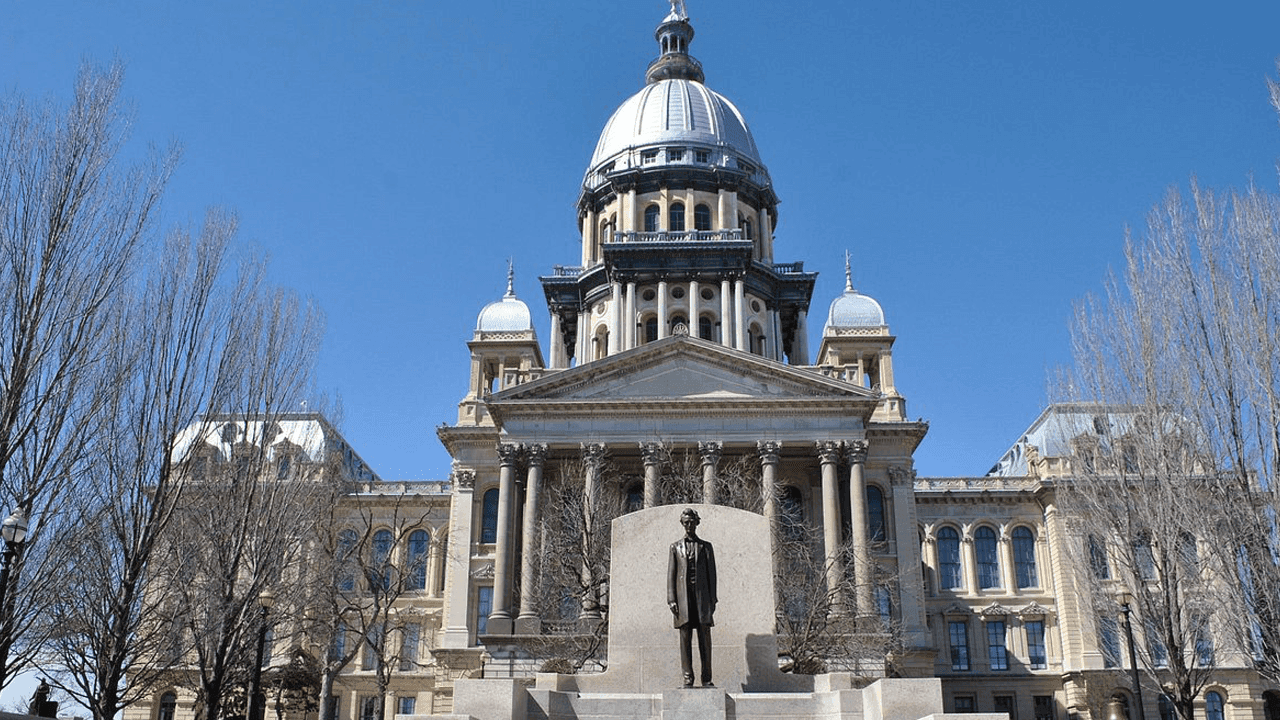
The complaint sets out six counts under federal and state law, including claims that the measure violates the federal Internet Tax Freedom Act, the Commerce Clause, and due process protections under the U.S. Constitution.
Under the Commerce Clause claim, the groups argue Illinois has not fairly limited the tax to economic activity within the state, and they say another state could use its own location test for the same transaction, creating the possibility of double taxation.
Summer Mersinger, CEO of the Blockchain Association, said states can support new industries but must remain within constitutional limits, warning that "Illinois cannot impose a novel tax regime that discriminates against digital commerce".
Precedent and uncertainty
The dispute is part of a broader push by digital asset groups to block state-level rules during an election year when cryptocurrency policy and regulation could influence voters, and it follows a similar challenge filed by the Digital Chamber in July. The Digital Chamber’s earlier lawsuit argued that Illinois’ tax "discriminates against people who transact in digital assets," and the new case adds to that parallel legal effort aimed at stopping the tax before it begins in 2027. The plaintiffs also argue the tax could expose market participants to civil and criminal penalties, because the filing says statutory violations could expose a broker to a Class 3 felony.
The complaint describes how Illinois would treat a transaction as occurring in Illinois by relying on details such as a customer’s address, account records, or IP address, and it says Illinois lacks a credit for comparable tax paid to another state. If the case succeeds, the outcome could influence how other states approach taxing digital assets, and the lawsuit is framed as a potential benchmark for whether other states consider similar transaction taxes after Illinois’ attempt to tax digital assets is challenged in court.