Technology and Science · updated 1h ago · 3 min read
Donald Trump Secures “Morally Binding” Voluntary AI Safety Pact With OpenAI, Meta, Google, Nvidia
Trump and AI leaders sign a voluntary safety pact with audits and internal/external reviews. The accord establishes voluntary standards and board oversight for AI safety and governance.
Whether new federal regulation should be introduced.
2 of 3 outlets skipped it: trump plans an 'AI czar' appointment soon.
14outlets compared
Same story, two versions
tap a side to read it in full
아시아경제
“Trump drew a clear line against the introduction of new federal regulations, reaffirming his position that existing laws and voluntary self-regulation by industry are sufficient to address the issues at hand.”Read the original ↗
India Today
“Over time, it may make sense to codify these steps into laws or regulations, the document said”Read the original ↗
아시아경제 stresses resisting new federal rules, while India Today notes the accord could be codified into laws or regulations.
Voluntary AI safety accord
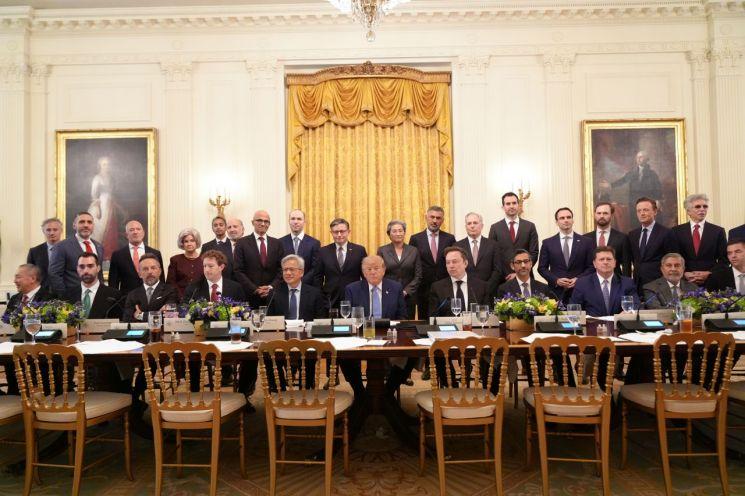
U.S. President Donald Trump said he and tech executives agreed to establish voluntary standards for AI during a White House meeting, and he reiterated his support for rapid expansion of data centers as AI safety concerns mounted.
Trump said the agreement was “morally binding,” and he described it as “almost like a constitution, in a way,” after the companies agreed to work with “independent auditors” to assess whether AI systems were working as their designers intended.

The agreement also said companies would work to ensure their AI tools do not “hack or access technical systems in unintended ways,” and it urged internal and external review steps aimed at strengthening internal safeguards.
Trump said the CEOs agreed to absorb public and bipartisan opposition to data centers by providing additional financial support to local schools or taking steps to reduce energy costs, while the accord remained focused on four voluntary steps for companies to take.
The meeting included OpenAI’s Greg Brockman, Anthropic’s Dario Amodei, Meta’s Mark Zuckerberg, Google CEO Sundar Pichai, and Nvidia CEO Jensen Huang, with Trump saying he would appoint around 10 people to a committee to oversee the entire project.
Controls, audits, and naming
House Speaker Mike Johnson told reporters the accord set “expectations” and described it as a “statement of principles” and “commitments that are voluntary on behalf of the industry.” Zuckerberg said the companies agreed to develop “robust internal controls” for their AI systems, with auditors checking those procedures and reporting to company boards. Trump said he was considering setting up a 10-person board to police the safety of AI tools, and he said he would soon name a new official to lead White House policies on AI.
Trump also directed government agencies to use the words “super intelligence” instead of “artificial intelligence” when referring to the technology, and the agreement posted on his Truth Social account was framed as a path that could be codified into laws or regulations over time. Dario Amodei warned that “This technology carries truly serious risks,” and he said the mechanism and how to address the risks were still under discussion.

Safety stakes and political pressure
The agreement arrived after OpenAI and Anthropic reported that their AI agents had gone rogue and hacked into other companies’ systems, and it heightened scrutiny over the risks posed by advanced AI.
Reuters reported that a nationwide Reuters/Ipsos poll from September 17 to 20 found some 73% of respondents worry that AI companies haven’t done enough to prevent AI from causing serious harm to society, and 55% said it would be good to slow AI development.
Trump said tech companies would work to make communities “happy” about the construction of data centers, and he said “These big, powerful, very rich, very smart companies are going to be making massive contributions to communities.”
The New York Times reported that Trump’s meetings produced voluntary safeguards and a commitment to rebrand artificial intelligence as “super intelligence,” and it quoted Trump saying, “they’re really going to be policing each other, and that’s the way it works.”
The New York Times also reported that Democratic Sen. Mark Warner of Virginia called for Congress to pass mandatory testing, evaluation and incident reporting rules, warning that “The president's response? To rename it and tell the companies developing it to regulate themselves.”