Business07 June, 20262 min read
Embraer CEO Says E2 Jets Will Eventually Enter China After CAAC Certification
This article is an automated aggregation of coverage from news outlets. Our editorials offer in-depth analysis curated by the NewsCord team.
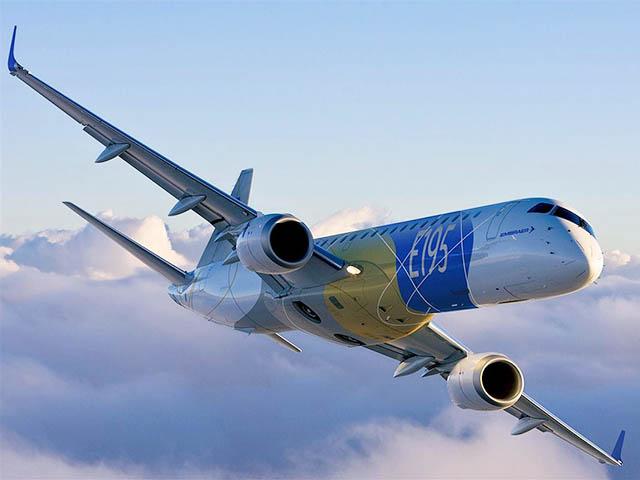
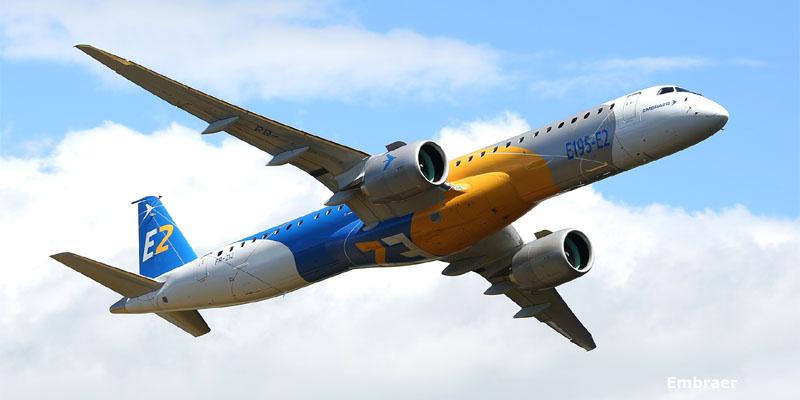
CAAC granted Type Certificate to Embraer E195-E2 in China. Certification paves the way for E195-E2 sales in the Chinese market.

Embraer eyes China E2
Embraer Commercial Aviation CEO Arjan Meijer said the company expects to eventually bring its E2 jets into China, framing the E2 family as a complement to China’s domestically developed models. Meijer told Reuters that “We have a dedicated team in Beijing, they’re day-to-day working in China,” while speaking on the sidelines of a global gathering of top airline executives in Rio de Janeiro. He added, “We believe the E2 family is the ideal complement to the indigenous products of China,” and said the E190-E2 and E195-E2 would fit between China’s smaller C909 and the larger C919.
The E195-E2’s path to commercialization in China is tied to Civil Aviation Administration of China (CAAC) certification, which Air Journal said was granted to the Embraer E195-E2. Air Journal also said the E190-E2 received CAAC certification in November of last year at the Zhuhai Airshow.
CAAC certification and seats
Aviación al Día said the Embraer E195-E2 received Type Certification from the Civil Aviation Administration of China (CAAC), following the E190-E2 certification received in November of last year at the Zhuhai International Air Show. Arjan Meijer said, “We are very pleased that both the E190-E2 and the E195-E2 have been certified by the CAAC, paving the way for sales in the Chinese market,” linking the milestone to sales plans. Hispaviación similarly described the CAAC certification as a milestone for Embraer’s “largest airplane, the E195-E2,” and quoted Guo Qing saying, “It is another milestone that Embraer's largest airplane, the E195-E2, has been certified by CAAC.”
Hispaviación said the E195-E2 seats between 120 and 146 passengers as the largest member of the E-Jet family. It also stated that in June 2022 the E195-E2 successfully tested with 100% SAF, confirming the E-Jets E2 family can fly on blends of up to 100% SAF with no compromise to safety or performance.
Fuel efficiency and market growth
Air Journal said the E195-E2 is “the most fuel-efficient single-aisle aircraft flying today,” delivering a per-seat energy efficiency 25% higher than the previous generation of E-Jets. It added that in June 2022 the E195-E2 was successfully tested with 100% SAF, and that “Today, the E2 emits 25% less CO2 than aircraft of the previous generation; this reduction can be increased to 85% with SAF.” The same outlet tied the certification push to demand forecasts, citing Embraer’s latest 20-year market outlook published in June that Asia-Pacific, including China, is expected to show strong growth with RPKs rising by 4.4% per year over the next 20 years.
Air Journal also said the need for flexibility is driving demand in the up-to-150-seat segment in China, while CAAC data showed China’s domestic passenger traffic volume reached 224.8 million during the first five months of 2023, up 135% from 2022. In parallel, marketscreener carried a Reuters item saying All Nippon Airways CEO expects to take Boeing 777X in 2027, underscoring how airline fleets are planning ahead even as Embraer’s E2 certification advances in China.