Published

Lebanon

Erdogan Tells Al Jazeera Israeli Attacks on Lebanon Threaten Türkiye, Urges Hormuz Strait Reopening

Erdogan flags Lebanon risk

Turkish President Recep Tayyip Erdogan told Al Jazeera in an exclusive interview for ‘Al Muqabala’ that continued Israeli attacks on Lebanon are a source of serious concern for Ankara.

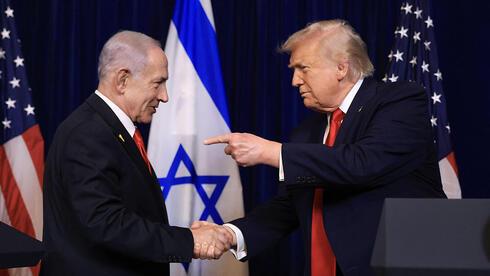
Image via Ynetnews

Consistent coverage

Where the coverage agrees

Al Jazeera and others largely agree on Erdoğan’s Lebanon concern and Hormuz priority

At a glance

  1. Erdogan says Israeli attacks on Lebanon are a major concern for Türkiye.
  2. Egypt could join Türkiye-Saudi-Pakistan defense pact; Hormuz Strait opening emphasized.
  3. Turkey will stand with Syria, Gaza, Lebanon to ensure regional stability.

Erdogan said he discussed the necessity of stopping the war on Lebanon with U.S. President Donald Trump during his last visit to Turkey, and he pointed to the importance of Washington’s role in stopping this war.

In the same Al Jazeera interview, Erdogan said Turkey prioritizes reopening the Hormuz Strait because keeping it closed serves no one.

Erdogan also said he expects Turkey will not leave Syria and Gaza to their own devices, while emphasizing that Qatar played an important role in mediation efforts to stop the war in the region.

Mecca pact and regional ties

Erdogan told Al Jazeera that the Makkah Joint Defence Agreement, signed in the Saudi holy city last Friday by Erdogan, Saudi Crown Prince Mohammed bin Salman and Pakistani Prime Minister Shehbaz Sharif, “has sent an important message to the world.”

In that same interview, Erdogan said the agreement remained open to additional members and indicated that Egypt’s participation was possible.

Erdogan also said he had raised the need to end the war in Lebanon with Donald Trump during Trump’s recent visit to Türkiye, and he said Washington had an important role to play in bringing the fighting to an end.

The Al Jazeera interview further linked Lebanon to broader regional tensions, with Erdogan speaking about conflicts in Gaza, Lebanon and Syria alongside tensions in the Strait of Hormuz.

What Ankara says it will do

Erdogan told Al Jazeera that Turkey will continue to support Syrian stability and said he plans to visit Syria in the future, while also stressing that Syria will not be left alone.

Regarding Lebanon, Erdogan framed Israeli attacks as a major concern for Ankara and urged the urgent need to halt the war on Lebanon in remarks carried by ISNA News Agency.

ISNA also said Erdogan stated that Turkey prioritizes reopening the Strait of Hormuz and that its continued closure serves no country’s interests.

In the same set of remarks, Erdogan said Turkey cannot leave Gaza isolated and will extend all necessary support, while accusing Israel of continuing hostilities and asserting that Hamas adhered to its commitments in good faith.

Explore the original reporting

Compare all 24 sources

How each outlet frames it

Every outlet we compared, the headline it ran, and a link to the original article.

We scored these line by line

Our Watchdog read these 3 articles sentence by sentence. 0 means no framing found, 10 means severe. How we score.

Ynetnews
Ynetnews4.2 / 10

Netanyahu, Kushner agree Hamas must disarm before Gaza reconstruction

17 August, 2026

The Jerusalem Post

Iraqi Kurdistan emerges as a key diplomatic bridge between US and Iran - analysis

17 August, 2026

The Jerusalem Post

Palestinian Authority officials accuse US of pushing Abbas aside after Kushner meeting in Cairo

17 August, 2026

West Asian

Al Jazeera
Al Jazeera

Erdogan says Israeli attacks on Lebanon are a serious concern for Türkiye | Israel attacks Lebanon

16 August, 2026

Al-Jazirah Net
Al-Jazirah Net

Erdoğan to Al Jazeera: Egypt’s accession to Mecca Agreement is possible, and we will not leave Syria and Gaza alone.

15 August, 2026

Arab News
Arab News

Erdogan says Egypt could join Turkiye-Saudi-Pakistan defence pact

16 August, 2026

Daily Sabah
Daily Sabah

Erdoğan vows to stand with Syria, Gaza, Lebanon for their stability

16 August, 2026

Elsiyasa
Elsiyasa

Turkey takes the initiative in Lebanon after Syria, with a forthcoming visit: Arms and withdrawal

17 August, 2026

Hürriyet Daily News
Hürriyet Daily News

Erdoğan says Egypt could join regional defense pact

16 August, 2026

MTV Lebanon
MTV Lebanon

From Tehran to Ankara: Who inherits influence in Lebanon?

17 August, 2026

Turk Beyez
Turk Beyez

Turkey and Lebanon in a New Phase: The Regional Geopolitics and Strategic Convergence

17 August, 2026

Turk Blick
Turk Blick

Erdogan Reveals an Expected Visit to Syria and Affirms Continued Support for Gaza

17 August, 2026

Türkiye Today
Türkiye Today

Arab League warns Israeli strikes in Lebanon could derail peace efforts

16 August, 2026

Israeli

Haaretz
Haaretz

U.S. Envoy to Syria Condemns Israeli Strikes on Military Base in Country

18 August, 2026

Haaretz
Haaretz

Report: Israel's Syria strike risked direct conflict with Turkey, envoy says

19 August, 2026

The Jerusalem Post
The Jerusalem Post

Saudi textbooks continue reforms, remove antisemitic content - report

17 August, 2026

The Jerusalem Post
The Jerusalem Post

Live Updates: Latest from Israel, Iran, and the Middle East

18 August, 2026

The Jerusalem Post
The Jerusalem Post

Syria, US envoy Barrack accuse Israel of overnight strike on Idlib airbase

18 August, 2026

The Jerusalem Post
The Jerusalem Post

Could Israel and Turkey clash in Syria as tensions over military presence grow?

19 August, 2026

The Times of Israel
The Times of Israel

Cohen, Ohana, Levin and Regev top Likud party primary; Netanyahu ‘very satisfied’ with results

18 August, 2026

The Times of Israel
The Times of Israel

Remains of Yehuda Katz, IDF soldier who went missing in 1982 battle, returned to Israel

18 August, 2026

Ynetnews
Ynetnews

Israel keeps testing America’s red lines and Trump keeps deciding which ones matter

18 August, 2026

Other

ISNA News Agency
ISNA News Agency

Erdogan expresses concern over Israeli strikes on Lebanon, urges reopening of Strait of Hormuz

15 August, 2026

SyriacPress
SyriacPress

Erdogan warns Turkey wants peace but will fight if attacked as Ankara expands regional role

17 August, 2026

Read stored source text: Al Jazeera

!. Toggle Play Turkish President Erdogan says Israeli attacks on Lebanon are a serious concern for Türkiye Speaking to Al Jazeera in an exclusive interview for ‘Al Muqabala’, Turkish President Recep Tayyip Erdogan said continued Israeli attacks on Lebanon are a source of serious concern for Ankara. Published On 16 Aug 202616 Aug 2026 Save Click here to share on social media share-nodes Share googleAdd Al Jazeera on Googleinfo More from the same show Israelis harass Palestinian-owned cafe in Iceland, tear down Palestine map !. Video Duration 00 minutes 27 seconds play-arrow00:27 Erdogan says Hamas acted sincerely, criticises Israeli attacks Video Duration 00 minutes 50 seconds play-arrow00:50 Senegal’s Saint-Louis Regatta keeps centuries of tradition alive Video Duration 01 minutes 30 seconds play-arrow01:30 Anti-corruption raids in Baghdad as dozens of officials arrested Video Duration 00 minutes 41 seconds play-arrow00:41 Erdogan calls for Strait of Hormuz reopening amid oil disruption Video Duration 00 minutes 55 seconds play-arrow00:55 Former Israeli captive asks Ben-Gvir to let him execute Palestinian prisone !. Video Duration 01 minutes 02 seconds play-arrow01:02 Israeli army besieges Palestinian homes in occupied West Bank !Israeli troops patrolling in Qusra, occupied West Bank. Video Duration 01 minutes 55 seconds play-arrow01:55 [](https://www.aljazeera.com/) Your browser does not support the audio element. audio-rewind audio-play audio-forward * audio-volume-mute close You rely on Al Jazeera for truth and transparency We and our 1015 partners store and access personal data, like browsing data or unique identifiers, on your device. Selecting Allow all enables tracking technologies to support the purposes shown under we and our partners process data to provide. Selecting Reject all or withdrawing your consent will disable them. If trackers are disabled, some content and ads you see may not be as relevant to you. You can resurface this menu to change your choices or withdraw consent at any time by clicking the Manage preferences link on the bottom of the webpage. Your choices will have effect within our Website. For more details, refer to our Privacy Policy. We and our partners process data to provide: Use precise geolocation data. Actively scan device characteristics for identification. Store and/or access information on a device. Personalised advertising and content, advertising and content measurement, audience research and services development. List of Partners (vendors) Allow all Reject all Manage preferences

Read stored source text: Al-Jazirah Net

Turkish President Recep Tayyip Erdoğan told Al Jazeera that Egypt joining the collective defense agreement, which his country recently signed with Saudi Arabia and Pakistan, is possible, and he stressed that Turkey will not leave Syria and Gaza to their own devices, emphasizing the importance of opening the Hormuz Strait. In a private interview for the program "The Interview," set to air this Sunday evening, Erdoğan said the Mecca Agreement allows other countries to join in the future, adding that Egypt’s participation is possible. He continued that the agreement calls for the signatory states to take unified steps if any one of them faces external aggression, noting that it sent an important message to the world. In the private Al Jazeera interview, the Turkish president spoke about several regional issues, including tensions in the Hormuz Strait, Syria, Gaza, and Lebanon. Erdoğan said his country prioritizes reopening the Hormuz Strait, because keeping it closed serves no one. He added that Qatar played an important role in mediation efforts to stop the war in the region. Syria, Gaza, and Lebanon. The Turkish president stressed that Syria will not be left alone, and his country will do all it can to support its stability, noting that he will visit it in the coming period. He added that Kurds in Syria will have a share of peace and stability, stressing that Ankara will continue to strengthen its relations with the Kurds and safeguard their rights in various countries in the region. Erdoğan also said that "Turkey cannot leave Gaza alone, and we will do whatever is necessary to support it," noting that Hamas is fulfilling its commitments faithfully while Israel continues its war. Regarding Lebanon, the Turkish president explained to Al Jazeera that continued Israeli attacks on Lebanon are a major concern for Turkey. He said he discussed with U.S. President Donald Trump during his last visit to Turkey the necessity of stopping the war on Lebanon, pointing to the importance of Washington’s role in stopping this war. He also affirmed that Turkey will continue to support Sudan, and described relations with Sudan’s Sovereign Council leader Abdel Fattah al-Burhan as good. He further emphasized that Turkey’s relations with Libya are stable and will not be left alone. Erdoğan said Europe does not appear willing to admit Turkey into the European Union, noting that Ankara’s accession to this continental bloc is not a priority, and that Europe is the loser in this case. Separately, the Turkish president told Al Jazeera that he received a promise from Trump regarding F-35 fighter jets, and he expects him to fulfill it.

Read stored source text: Arab News

- Erdogan told Al Jazeera the agreement remained open to additional members and indicated that Egypt’s participation was possible DOHA: Turkish President Recep Tayyip Erdogan has said Egypt could become the next country to join a newly established mutual defence pact between Turkiye, Saudi Arabia and Pakistan. In an interview with Al Jazeera, Erdogan described Cairo’s possible accession as one of several options being considered as the alliance looks to expand its membership. The agreement, formally known as the Makkah Joint Defence Agreement, was signed in the Saudi holy city last Friday by Erdogan, Saudi Crown Prince Mohammed bin Salman and Pakistani Prime Minister Shehbaz Sharif. Under the pact, an armed attack against any one of the three signatory states would be treated as an attack against all of them, committing the countries to a coordinated response in the event of an external threat. “This agreement has sent an important message to the world,” Erdogan told Al Jazeera’s Ali Al Dafiri during an interview for the programme Al Muqabala. While the collective defence clause has prompted comparisons with NATO’s Article 5, Pakistani officials have cautioned against describing the agreement as a regional equivalent of the Western military alliance. Islamabad has also said the pact is not aimed at any particular country. Erdogan said the agreement remained open to additional members and indicated that Egypt’s participation was possible. His comments come as regional governments seek to deepen security cooperation amid continuing wars and political instability across the Middle East. During the interview, the Turkish president also addressed tensions surrounding the Strait of Hormuz, as well as the conflicts in Gaza, Lebanon and Syria. Erdogan said reopening the Strait of Hormuz was a priority for Ankara, arguing that the continued disruption of the strategic waterway was damaging to all sides. The strait is one of the world’s most important energy corridors, linking Gulf oil and gas producers with international markets. He also praised Qatar’s role in regional mediation efforts, saying Doha had contributed significantly to attempts to reduce tensions and bring an end to ongoing fighting. On Syria, Erdogan said Turkiye would continue to support efforts to restore stability and would not abandon its neighbours during a period of regional turmoil. He said he planned to visit Syria and stressed that the country’s Kurdish population should share in any future peace and stability. According to Erdogan, Turkiye would continue strengthening its relations with Kurdish communities and supporting their rights across the region. Turning to Gaza, he said Ankara could not leave Palestinians in the territory to face the conflict alone. “Turkiye cannot leave Gaza alone,” Erdogan said, adding that his government would continue to provide political and humanitarian support. He said Hamas was acting in good faith and meeting its commitments, while accusing Israel of continuing its military campaign. Erdogan also expressed concern over Israeli attacks on Lebanon and said he had discussed the conflict with US President Donald Trump during Trump’s recent visit to Turkiye. The Turkish leader said Washington had an important role to play in bringing the fighting to an end and that he had urged the US president to support efforts to halt the war. Erdogan also addressed developments in Sudan and Libya. He said Turkiye would continue supporting Sudan and described his relationship with Abdel Fattah Al-Burhan, the head of Sudan’s Sovereignty Council, as positive. On Libya, he said relations between Ankara and Tripoli remained stable and insisted that Turkiye would not abandon the country. Erdogan also used the interview to signal a further shift in Turkiye’s relationship with the European Union. He said EU membership was no longer a major priority for Ankara and accused European leaders of lacking the political will to admit Turkiye. According to Erdogan, Europe would ultimately lose more than Turkiye if accession efforts remained stalled. Turkiye has been formally recognised as a candidate for EU membership since 1999, but negotiations have been frozen for years amid disagreements over democratic standards, regional disputes and foreign policy. The Turkish president also spoke about Ankara’s long-running attempt to rejoin the US-led F-35 fighter jet programme. Erdogan said Trump had made a commitment regarding the aircraft and that Turkiye was waiting for the US administration to honour it. Washington expelled Turkiye from the multinational F-35 programme in 2019 after Ankara purchased the Russian-made S-400 air defence system. US officials argued that the S-400 could collect sensitive information about the F-35’s stealth capabilities and compromise the security of the wider programme. The United States subsequently imposed sanctions on Turkiye under the Countering America’s Adversaries Through Sanctions Act in December 2020. During a NATO summit in Ankara last month, Trump said his administration planned to lift those sanctions and would consider allowing Turkiye to return to the F-35 programme. However, any agreement is likely to encounter opposition in the US Congress. A law passed in 2020 prevents the Pentagon from transferring F-35 aircraft to Turkiye for as long as Ankara retains the S-400 system. Erdogan’s comments underline Turkiye’s efforts to strengthen its regional alliances while pursuing a more independent defence and foreign policy. The possible inclusion of Egypt in the Mecca pact would bring together four of the region’s most influential military powers and could significantly reshape security cooperation across the Middle East and the wider Islamic world.

Read stored source text: Daily Sabah

In an interview with Al-Jazeera Arabic, President Erdoğan highlighted Ankara’s support for stability in Syria, Lebanon and Gaza, and signaled that Egypt may join a landmark Mecca pact with Saudi Arabia and Pakistan President Recep Tayyip Erdoğan sat down with Al-Jazeera Arabic as his Justice and Development Party (AK Party) marks its 25th anniversary and the Turkish leader boosts his influence in the wider region. The interview, scheduled to be broadcast on Sunday evening, touched upon regional issues and Türkiye’s role amid tensions in the Middle East. On the landmark Mecca Joint Defense Agreement with Saudi Arabia and Pakistan that he signed earlier this month, Erdoğan underlined that Egypt might join the pact. The president also renewed Ankara’s commitment to the stability of Lebanon, Syria and Gaza, while hinting that he may visit Syria soon, two years after the fall of the Baathist regime following a popular revolution. Under Erdoğan, Türkiye has pivoted toward a greater role in the Middle East, with which it shares a common heritage. Over the past two decades, it has evolved into a key diplomatic actor rather than a mere bystander. The Mecca Joint Defense Agreement, which Erdoğan signed in the birthplace of Islam alongside Saudi Crown Prince Mohammed bin Salman and Pakistani Prime Minister Shahbaz Sharif, is one result of Türkiye’s rising diplomatic profile. Under the pact, the three countries plan to establish strategic political and military mechanisms involving their defense and foreign ministers, as well as their chiefs of general staff or armed forces commanders. Military cooperation is expected to expand gradually, beginning with command-post and field exercises before progressing to joint drills involving land, naval and air forces, air defense assets and unmanned systems. One highlight of the agreement is that an attack on one party will be viewed as an attack on all. The signatories reject claims that it poses a threat to other regional countries, and since the signing, Turkish officials, primarily Foreign Minister Hakan Fidan, have emphasized that the pact is open to expansion. Egypt, another key actor in the region, emerged in rumors regarding potential expansion. Erdoğan confirmed this in his interview with Al-Jazeera Arabic, stating that Cairo could join them. "This agreement has sent an important message to the world,” Erdoğan was quoted as saying. The three countries in the defense agreement have been stepping up relations in recent years. To an extent, the deal is part of Türkiye’s vision of cementing unity among Muslim countries. Erdoğan himself has repeatedly highlighted the need to achieve this unity, particularly in the face of Israel’s expansionist policies that target more and more countries in the region. At one point, Erdoğan implied in a speech that Türkiye may very well be a future target for Israel’s genocidal regime. The president vowed that Türkiye would not abandon its neighbors, especially amid regional turmoil. On Syria, he said they were doing everything to support stability in the post-Assad period. He also declared his plans to visit Syria. Erdoğan had earlier hinted at a visit to the country; if it happens, it will be his first visit to Syria as president. Türkiye enjoys good relations with its southern neighbor, Syria, following the ousting of the Baathist regime in 2024. Most Turkish ministers, including Fidan, have visited Damascus over the past two years. Turkish Ambassador to Syria Nuh Yılmaz also confirmed plans for Erdoğan’s visit in an interview with Al-Jazeera on Saturday. "We hope that our president will be in Damascus before the end of this year,” Yılmaz stated, noting that Erdoğan loved Damascus and its landmark Umayyad Mosque. "Seeing Mr. Erdoğan and Mr. (Syrian President Ahmed) al-Sharaa together in the Umayyad Mosque would be a historic sight, a declaration of the two countries’ strategic partnership,” Yılmaz added. In the Al-Jazeera interview, Erdoğan also highlighted the importance of Syria’s Kurdish community having a share of peace and stability in the new era, underlining that they would continue strengthening ties with Kurdish communities across the region. Syria recently made progress on a deal with the YPG, the Syrian wing of the PKK terrorist group, for its integration into the post-Assad state. Damascus also started restoring the rights of the Kurdish community, which the YPG claimed to represent. Türkiye itself is pursuing a "terror-free Türkiye” initiative for the disarmament of the PKK, which has exploited disadvantaged Kurds for decades to cultivate recruits for its cause of a so-called "Kurdistan” in southeastern Türkiye. The "terror-free Türkiye” initiative, first proposed by government ally Devlet Bahçeli of the Nationalist Movement Party (MHP), primarily aims to "reinforce the home front against external threats through Turkish-Kurdish unity,” as Bahçeli and Erdoğan have repeatedly emphasized in the past. On Gaza, Erdoğan said that Ankara will continue to back Palestine and will continue its support. He criticized Israel for failing to adhere to the cease-fire and underlined that Hamas, on the other hand, met its commitments in good faith. On Lebanon, Erdoğan stated that Israel’s ongoing attacks on the country were a serious source of concern, noting that he raised the issue with U.S. President Donald Trump during the latter’s visit to Ankara last month for a NATO summit.

Read stored source text: Elsiyasa

Follow our most important news via the WhatsApp application Special Local news Security and Justice Miscellaneous Regional and International Economy Entertainment Sports Technology Arts August 17, 2026 07:18 AM Written by Mounir Rabee in Al-Madina: Turkey is preparing an initiative it will advance for the Levant region. It seeks to coordinate it and discuss it with several Arab countries, especially with Saudi Arabia, Egypt, Qatar, and the United States. The initiative’s headlines and features are containing Iranian influence, opposing the Israeli project, and preventing Israel from dividing, fragmenting, or monopolizing states. Syria, Lebanon, Gaza, and the West Bank are central elements of this initiative, especially since Turkish President Recep Tayyip Erdoğan places it in the category of Turkish national security. One of the foundations of this initiative is the demand for Israel to withdraw from the Gaza Strip, southern Syria, and southern Lebanon, with Ankara leading a process to dismantle armed factions and resistance groups and place them under state control, in addition to setting up a coordinating framework among regional countries in negotiating with Israel. The containment option The Turkish move in the region comes with non-confrontational intent, as Erdoğan himself expressed when talking about the Mecca agreement or the agreement among Turkey, Saudi Arabia, and Pakistan, describing it as a defensive alliance with the aim of peace, but if war is imposed on him, he will be ready for it. In the geopolitical view of this alliance, it is expected to provide immunity for many countries in the region, without overlooking some differences in each country’s calculations, noting that Turkey does not want a confrontation with Iran and does not endorse war against it; it seeks to adopt the containment option and to continue dialogue with Tehran. New balances Erdoğan spoke of Turkey’s security beginning in Aleppo, Damascus, and Beirut. This clearly signals Turkey’s focus on playing a key role in the Levant or the Fertile Crescent, tying this region together not only geographically but politically and economically, turning it into the primary springboard for trade and oil corridors. Turkey’s focus is on forming a coalition with Saudi Arabia to build this new axis. As for the Americans, they support it alongside their full and unconditional support for Israel and pushing toward signing peace agreements with it or persuading these states to join the Abraham Accords. Regarding the conflict between two projects on trade and oil routes, the Turks believe that one route does not necessarily have to dominate and erase the others. For years, Ankara has been presenting its regional and global vision, considering that the regional order will be capable of change, and this is one of its stages of change, which will establish new balances for years or decades to come. What Ankara proposes within its regional vision is not to cancel any party, isolate it, or exclude it, meaning that Israel cannot construct routes and corridors by itself to the detriment of others, especially the idea of the India Road proposed to come at the expense of Turkey, Egypt, and many countries in the region. Iran also cannot be the sole controller of trade and energy routes, not through the Hormuz Strait nor through influence over the Bab al-Mandab strait, and there is serious work to create alternatives, where the Fertile Crescent will be the biggest beneficiary. The crown jewel of national security The Turkish stance comes amid stalled negotiations between Iran and the United States, and amid the possibility of renewed escalation. Turkish estimates indicate that if war renews, it will be broad and include various countries, especially since Iran may seek to push all of its allies to participate in this war. In contrast, there is intense discussion between Turkey, Pakistan, and Saudi Arabia to prevent Iran from targeting regional states, with efforts to strengthen military capabilities in Yemen to undermine Houthi movements, and Turkey shows extraordinary interest in Syria, which it considers the crown jewel of Turkish national security and will prevent any attempt to destabilize Syria. Therefore, Ankara has worked to strengthen its air defenses in Syria, and continues to bolster the Syrian army’s military and defensive capabilities, including the air force, and Turkey is expanding its military presence in Syria in agreement with the Americans to include the Syrian-Iraqi border and the capital Damascus, with attempts to deploy more reinforcements in southern Syria, forming a protective umbrella for Damascus against external attacks, and reinforcing internal security and military control, and most importantly taking necessary steps to protect the Syrian land, especially the road that connects southern Syria to its north. All of this will culminate in Erdoğan’s upcoming visit to Syria in the near future. Security agreement We must also pause at the strikes carried out by the Saudis against some Iraqi factions earlier, in response to the attack on Saudi Arabia. These strikes carried more than one meaning, one being to reinforce the protective umbrella around Damascus in facing any threat from certain Iraqi factions, noting that American-Turkish-Saudi joint efforts seek to develop Iraqi-Syrian relations and push toward joint projects and investments between the two countries. This comes amid international efforts to stabilize the situation in Syria, whether in the Syrian coast through a memorandum of understanding with Russia or by focusing the Turkish role in those areas, alongside pursuing solutions to the issue of the Syrian Democratic Forces and completing the integration process, while focusing on the Suwayda file, which will require serious understandings that Americans work to provide through pressure on Israel. Washington seeks to arrange this file alongside pursuing a security agreement between Syria and Israel. But Damascus, supported by Ankara, Saudi Arabia, Qatar, and Egypt, stresses Israel’s withdrawal from territories it occupied after the fall of the Assad regime, while Israel does not seem ready for that. Meanwhile, Syrian movements continue to address the Suwayda file through ongoing negotiations. Promising visits Lebanon is at the heart of Turkish attention as well, especially after the visits of Presidents of the Republic Joseph Aoun and Prime Minister Najib Mikati to Ankara. It should not be overlooked that the Turkish movement on the Lebanese scene is coordinated with the Americans, Saudi Arabia, and Qatar, and Ankara is actively pursuing multiple tracks: first, with the state to strengthen its position against Israeli incursions; second, with the army, as Turkey expresses willingness to provide more aid and strengthen its capabilities; third, offering to send multifaceted aid at the medical, nutritional, shelter, and reconstruction levels; fourth, with Hezbollah, aiming to persuade it to limit weapons to the state in exchange for full Israeli withdrawal and guarantees not to continue the war and attacks, and to reach serious and final understandings to prevent Hezbollah from forming any threat to Syria, while strengthening Syrian-Lebanese relations on the basis of parity and economic and investment integration to capitalize on the Fertile Crescent opportunity, with an essential portion of these matters to be presented during the visit of Turkish intelligence chief Ibrahim Kalin to Lebanon. Source: Al-Madina Posted by Mounir Rabee in Al-Madina: Turkey is preparing a initiative it will advance for the Levant region. It seeks to coordinate it and discuss it with several Arab countries, especially Saudi Arabia, Egypt, Qatar, and the United States. The initiative’s headlines and features are containing Iranian influence, opposing the Israeli project, and preventing Israel from dividing, fragmenting, or monopolizing states. Syria, Lebanon, Gaza, and the West Bank are central elements of this initiative, especially since Turkish President Recep Tayyip Erdoğan places it in the category of Turkish national security. One of the foundations of this initiative is the demand for Israel to withdraw from the Gaza Strip, southern Syria, and southern Lebanon, with Ankara leading a process to dismantle armed factions and resistance groups and place them under state control, in addition to setting up a coordinating framework among regional countries in negotiating with Israel. Containment option The Turkish move in the region comes with non-confrontational intent, as Erdoğan himself expressed when talking about the Mecca agreement or the agreement among Turkey, Saudi Arabia, and Pakistan, describing it as a defensive alliance with the aim of peace, but if war is imposed on him, he will be ready for it. In the geopolitical view of this alliance, it is expected to provide immunity for many countries in the region, without overlooking some differences in each country’s calculations, noting that Turkey does not want a confrontation with Iran and does not endorse war against it; it seeks to adopt the containment option and to continue dialogue with Tehran. New balances Erdoğan spoke of Turkey’s security beginning in Aleppo, Damascus, and Beirut. This clearly signals Turkey’s focus on playing a key role in the Levant, or in the Fertile Crescent, and tying this region together not only geographically but politically and economically, turning it into the main springboard for trade and oil routes. Turkey focuses on allying with Saudi Arabia to build this new axis. For the Americans, they support it alongside their full and unconditional support for Israel and press toward signing peace agreements with it or persuading these states to join the Abraham Accords. Regarding the conflict between two projects on trade and oil routes, the Turks believe that it is not necessary for one route to dominate and erase the others. For years, Ankara has been presenting its regional and global vision, believing the regional order will be capable of change, and this is one of its stages of change, which will establish new balances for years or decades to come. What Ankara proposes within its regional vision is not to cancel any party or isolate it or exclude it, meaning that Israel cannot work to create lines and corridors by itself at the expense of others, especially the India Road idea that was proposed to be at the expense of Turkey, Egypt, and many countries in the region. It is also impossible for Iran to be the sole controller of trade and energy routes, neither via the Hormuz Strait nor through influence over the Bab al-Mandab Strait, and there is serious work to create alternatives, and here the Fertile Crescent will be the greatest beneficiary. The crown jewel of national security The Turkish stance comes amid stalled negotiations between Iran and the United States, and amid the possibility of renewed escalation. Turkish estimates indicate that if war renews, it will be broad and include various countries, especially since Iran may seek to push all its allies to participate in this war. In contrast, there is intense discussion between Turkey, Pakistan, and Saudi Arabia to prevent Iran from targeting regional states, with efforts to strengthen military capabilities in Yemen to undermine Houthi movements; Turkey also shows exceptional interest in Syria, which it considers the crown jewel of Turkish national security, and it will prevent any attempt to destabilize Syria. Therefore, Ankara has worked to strengthen its air defenses in Syria, and continues to bolster the Syrian army’s military and defensive capabilities, including the air force, and Turkey is expanding its military presence in Syria in agreement with the Americans to cover the Syrian-Iraqi border and the capital Damascus, with efforts to deploy more reinforcements in southern Syria, forming a protective umbrella for Damascus against external attacks, and reinforcing internal security and military control, and most importantly taking the necessary steps to protect Syrian land, especially the road that connects southern Syria to its north. All of this will culminate in Erdoğan’s upcoming visit to Syria in the near future. Security agreement There is also a need to pause at the strikes carried out by the Saudis against some Iraqi factions earlier, in response to the attack on Saudi Arabia. These strikes carried more than one meaning, one being to reinforce the protective umbrella around Damascus against any threat from certain Iraqi factions, noting that American-Turkish-Saudi joint efforts seek to develop Iraqi-Syrian relations and push toward joint projects and investments between the two countries. This comes amid international efforts to stabilize the situation in Syria, whether in the Syrian coast through a memorandum of understanding with Russia or by focusing the Turkish role in those areas, alongside seeking a solution to the issue of the Syrian Democratic Forces and completing the integration process, while focusing on the Suwayda file, which will require serious understandings that Americans work to provide through pressure on Israel. Washington seeks to organize this file along with pursuing a security agreement between Syria and Israel. But Damascus, supported by Ankara, Saudi Arabia, Qatar, and Egypt, emphasizes Israel’s withdrawal from territories it occupied after the fall of the Assad regime, while Israel does not seem ready for that. Yet, in parallel, Syrian moves continue to address the Suwayda file through ongoing negotiations. Promising visits Lebanon is at the heart of Turkish attention as well, especially after the visits of the heads of state Joseph Aoun and Prime Minister Najib Mikati to Ankara. It should not be overlooked that the Turkish movement on the Lebanese scene is coordinated with the Americans, Saudi Arabia, and Qatar, and Ankara is pursuing multiple tracks, first, with the state to strengthen its position against Israeli aggressions; second, with the army, as Turkey shows willingness to provide more aid and strengthen its capabilities; third, offering to send multifaceted assistance at the medical, nutritional, shelter, and reconstruction levels; fourth, with Hezbollah, through an effort to persuade it to keep weapons in the hands of the state in exchange for full Israeli withdrawal and guarantees not to continue the war and attacks, in addition to reaching serious and final understandings to prevent the party from forming any threat to Syria, and to strengthen Syrian-Lebanese relations on the basis of parity and economic and investment integration to take advantage of the available opportunity in the Fertile Crescent, with a key portion of these matters to be addressed in the visit of Turkish intelligence chief Ibrahim Kalin to Lebanon. Source: Al-Madina News by Mounir Rabee in Al-Madina: Turkey is preparing a initiative it will advance for the Levant region. It seeks to coordinate it and discuss it with several Arab countries, especially Saudi Arabia, Egypt, Qatar, and the United States. The initiative’s headlines and features are containing Iranian influence, opposing the Israeli project, and preventing Israel from dividing, fragmenting, or monopolizing states. Syria, Lebanon, Gaza, and the West Bank are central elements of this initiative, especially since Turkish President Recep Tayyip Erdoğan places it in the category of Turkish national security. One of the foundations of this initiative is the demand for Israel to withdraw from the Gaza Strip, southern Syria, and southern Lebanon, with Ankara leading a process to dismantle armed factions and resistance groups and place them under state control, in addition to setting up a coordinating framework among regional countries in negotiating with Israel. Containment option The Turkish move in the region comes with non-confrontational intent, as Erdoğan himself expressed when talking about the Mecca agreement or the agreement among Turkey, Saudi Arabia, and Pakistan, describing it as a defensive alliance with the aim of peace, but if war is imposed on him, he will be ready for it. In the geopolitical view of this alliance, it is expected to provide immunity for many countries in the region, without overlooking some differences in each country’s calculations, noting that Turkey does not want a confrontation with Iran and does not endorse war against it; it seeks to adopt the containment option and to continue dialogue with Tehran. New balances Erdoğan spoke of Turkey’s security beginning in Aleppo, Damascus, and Beirut. This clearly signals Turkey’s focus on playing a key role in the Levant, or in the Fertile Crescent, and tying this region together not only geographically but politically and economically, turning it into the main springboard for trade and oil routes. Turkey focuses on allying with Saudi Arabia to build this new axis. For the Americans, they support it alongside their full and unconditional support for Israel and press toward signing peace agreements with it or persuading these states to join the Abraham Accords. Regarding the conflict between two projects on trade and oil routes, the Turks believe that it is not necessary for one route to dominate and erase the others. For years, Ankara has been presenting its regional and global vision, believing the regional order will be capable of change, and this is one of its stages of change, which will establish new balances for years or decades to come. What Ankara proposes within its regional vision is not to cancel any party or isolate it or exclude it, meaning that Israel cannot work to create lines and corridors by itself at the expense of others, especially the India Road idea that was proposed to be at the expense of Turkey, Egypt, and many countries in the region. It is also impossible for Iran to be the sole controller of trade and energy routes, neither via the Hormuz Strait nor through influence over the Bab al-Mandab Strait, and there is serious work to create alternatives, and here the Fertile Crescent will be the greatest beneficiary. The crown jewel of national security The Turkish stance comes amid stalled negotiations between Iran and the United States, and amid the possibility of renewed escalation. Turkish estimates indicate that if war renews, it will be broad and include various countries, especially since Iran may seek to push all its allies to participate in this war. In contrast, there is intense discussion between Turkey, Pakistan, and Saudi Arabia to prevent Iran from targeting regional states, with efforts to strengthen military capabilities in Yemen to undermine Houthi movements, and Turkey shows exceptional interest in Syria, which it considers the crown jewel of Turkish national security, and it will prevent any attempt to destabilize Syria. Therefore, Ankara has worked to strengthen its air defenses in Syria, and continues to bolster the Syrian army’s military and defensive capabilities, including the air force, and Turkey is expanding its military presence in Syria in agreement with the Americans to cover the Syrian-Iraqi border and the capital Damascus, with efforts to deploy more reinforcements in southern Syria, forming a protective umbrella for Damascus against external attacks, and reinforcing internal security and military control, and most importantly taking the necessary steps to protect Syrian land, especially the road that connects southern Syria to its north. All of this will culminate in Erdoğan’s upcoming visit to Syria in the near future. Security agreement There is also a need to pause at the strikes carried out by the Saudis against some Iraqi factions earlier, in response to the attack on Saudi Arabia. These strikes carried more than one meaning, one being to reinforce the protective umbrella around Damascus against any threat from certain Iraqi factions, noting that American-Turkish-Saudi joint efforts seek to develop Iraqi-Syrian relations and push toward joint projects and investments between the two countries. This comes amid international efforts to stabilize the situation in Syria, whether in the Syrian coast through a memorandum of understanding with Russia or by focusing the Turkish role in those areas, alongside seeking a solution to the issue of the Syrian Democratic Forces and completing the integration process, while focusing on the Suwayda file, which will require serious understandings that Americans work to provide through pressure on Israel. Washington seeks to organize this file along with pursuing a security agreement between Syria and Israel. But Damascus, supported by Ankara, Saudi Arabia, Qatar, and Egypt, emphasizes Israel’s withdrawal from territories it occupied after the fall of the Assad regime, while Israel does not seem ready for that. Yet, in parallel, Syrian moves continue to address the Suwayda file through ongoing negotiations. Promising visits Lebanon is at the heart of Turkish attention as well, especially after the visits of Presidents of the Republic Joseph Aoun and Prime Minister Najib Mikati to Ankara. It should not be overlooked that the Turkish movement on the Lebanese scene is coordinated with the Americans, Saudi Arabia, and Qatar, and Ankara is pursuing multiple tracks, first, with the state to strengthen its position against Israeli aggressions; second, with the army, as Turkey shows willingness to provide more aid and strengthen its capabilities; third, offering to send multifaceted assistance at the medical, nutritional, shelter, and reconstruction levels; fourth, with Hezbollah, through an effort to persuade it to keep weapons in the hands of the state in exchange for full Israeli withdrawal and guarantees not to continue the war and attacks, in addition to reaching serious and final understandings to prevent the party from forming any threat to Syria, and to strengthen Syrian-Lebanese relations on the basis of parity and economic and investment integration to take advantage of the available opportunity in the Fertile Crescent, with a key portion of these matters to be addressed in the visit of Turkish intelligence chief Ibrahim Kalin to Lebanon.

Read stored source text: Haaretz

Gift this articleShare to FacebookPrint article Article printing is available to subscribers only Print in a simple, ad-free format Subscribe Comments: SaveZen Reading Zen reading is available to subscribers only Ad-free and in a comfortable reading format Subscribe !ג'קי חורי - צרובה!Reuters Jack Khoury and Reuters 08:57 PM • August 18 2026 IDT The United States' special envoy to Syria, Tom Barrack, condemned on Tuesday Israeli airstrikes on an air base in the northwest of the country, calling them an "unnecessary escalation" that does not advance regional stability. Loading... Click the alert icon to follow topics: FollowMiddle East FollowSyria FollowIDF FollowTurkey FollowIsrael - U.S. Comments Your Perspective Belongs Here Want to reply? Subscribe to join the conversation SUBSCRIBE Already signed up? Log in Loading... In the News In the News: Live UpdatesIranLikudJared KushnerIsrael ElectionsNetanyahuAvraham BurgAnan KhalailiAIPACHaaretz Podcast ICYMI Trending Now Trending Now Trending Now Trending Now Trending Now ICYMI

Read stored source text: Haaretz

Gift this articleShare to FacebookPrint article Article printing is available to subscribers only Print in a simple, ad-free format Subscribe Comments: SaveZen Reading Zen reading is available to subscribers only Ad-free and in a comfortable reading format Subscribe !יהונתן ליס Jonathan Lis 03:15 PM • August 19 2026 IDT Israel's strikes on a Syrian air base Tuesday could have escalated into a direct military confrontation with Turkey, U.S. special envoy to Syria and ambassador to Turkey Tom Barrack told Loading... Click the alert icon to follow topics: FollowMiddle East FollowSyria FollowIsrael–Turkey FollowTurkey FollowIsrael - U.S. Comments Your Perspective Belongs Here Want to reply? Subscribe to join the conversation SUBSCRIBE Already signed up? Log in Loading... In the News In the News: Live UpdatesIranLebanonTommy RobinsonWest BankMamdaniAnan KhalailiAIPACHaaretz Podcast ICYMI Trending Now Trending Now Trending Now Trending Now Trending Now ICYMI

Read stored source text: Hürriyet Daily News

(AA photo) President Recep Tayyip Erdoğan has noted that Egypt could join the new joint defense pact alongside Türkiye, Saudi Arabia and Pakistan, signaling that the nascent alliance is open to expanding its reach. “This agreement has sent an important message to the world,” Erdoğan told Al Jazeera in an interview aired Aug. 16. He said Egypt’s participation was among the options for expanding the agreement in the future. The deal, known as the Mecca Pact, was signed in the holy city last week by Erdoğan, Saudi Crown Prince Mohammed bin Salman and Pakistani Prime Minister Shahbaz Sharif. Under the agreement, an armed attack against any one of the three countries would be treated as an attack against all three, establishing a collective-deterrence provision that analysts have compared with NATO’s Article 5. Officials have cautioned, however, against viewing the pact as a NATO equivalent or as being directed against any particular country. Erdoğan’s comments came as he discussed a range of regional issues, including tensions surrounding the Strait of Hormuz and conflicts in Syria, Gaza and Lebanon. He said reopening the Strait of Hormuz was a priority for Ankara, arguing that its continued closure served no one’s interests. Erdoğan also credited Qatar with playing an important role in mediation efforts aimed at ending fighting in the region. “Türkiye cannot leave Gaza alone,” Erdoğan said, pledging that Ankara would do whatever was necessary to support the Palestinian territory. He said Hamas was fulfilling its commitments in good faith while Israel continued its military campaign in Gaza. On Syria, Erdoğan said Turkiye would do everything in its power to support stability and reiterated plans to visit the country. He also said Syria’s Kurds would have “a share of peace and stability,” adding that Türkiye would continue strengthening ties with Kurdish communities and safeguarding their rights across the region. Erdoğan also voiced concern over continued Israeli attacks in Lebanon. He said he had raised the need to end the war in Lebanon with U.S. President Donald Trump during his recent visit to Türkiye. The interview also touched on Türkiye’s efforts to return to the U.S.-led F-35 fighter jet program. Türkiye was removed from the multinational program in 2019 after acquiring Russia’s S-400 air defense system, which Washington said could compromise the aircraft’s technology. Trump said during the NATO summit in Ankara last month that his administration would lift sanctions imposed on Türkiye over the S-400 purchase. He also said a Turkish return to the F-35 program was “something certainly we’d consider.” Any potential sale still faces opposition in Congress. Meanwhile, Erdoğan marked the 25th anniversary of his ruling Justice and Development Party (AKP) at a rally in Ankara on Aug. 14, saying he intended to remain active in politics for years to come. “As Tayyip Erdoğan, I have left behind 50 years in politics. If God grants me life and health, I will continue to serve Türkiye for many more years,” he said. “We are just getting started,” he added, saying the party’s movement would carry Türkiye, “God willing, first to 2053 and then to 2071.” Founded on Aug. 14, 2001, the AKP won 34.3 percent of the vote in its first national election in November 2002, forming a single-party government. Erdoğan was elected president for a third term in May 2023. Under AKP leadership, Türkiye transitioned from a parliamentary system to an executive presidential model in 2018, a change opposition parties have criticized.

Read stored source text: ISNA News Agency

Turkish President Recep Tayyip Erdogan voiced deep concern on Saturday over persistent Israeli strikes on Lebanon, revealing he discussed the necessity of ending the conflict during a recent meeting with U.S. President Donald Trump. Tehran (ISNA) - Erdogan told Al Jazeera in an interview on Saturday that Israel's ongoing attacks against Lebanon represent a major point of concern for Ankara. Erdogan noted that he raised the issue during President Trump's recent visit to Turkey, stressing the urgent need to halt the war on Lebanon. Turning to regional maritime security, Erdogan stated that Turkey prioritizes reopening the Strait of Hormuz, emphasizing that its continued closure serves no country's interests. Addressing regional defense cooperation, the Turkish president highlighted the trilateral "Makkah Agreement" signed between Ankara, Islamabad, and Riyadh. Under the pact, signatory nations will adopt unified measures in the event of foreign aggression against any member state. Erdogan added that the agreement allows for future expansion, noting potential participation by Egypt. Regarding developments in Syria, Erdogan affirmed that Turkey will deploy all efforts to support Syrian stability, adding that he plans to visit the country in the future. On the humanitarian situation in the Gaza Strip, Erdogan stated that Turkey cannot leave Gaza isolated and will extend all necessary support. He accused Israel of continuing hostilites while asserting that Hamas has adhered to its commitments in good faith. Concluding his remarks on defense issues with Washington, Erdogan stated that Turkey had received assurances from Trump regarding the F-35 fighter jet program and is awaiting their implementation. End Article

Read stored source text: MTV Lebanon

Since the Palestinian influence left the decision-making circle, Lebanon went through a phase of Syrian dominance that ended on April 26, 2005, before Iranian influence became stronger through Hizballah’s weapon and its ability to influence institutions and political decision-making. Yet recent regional developments have redrawn the scene. The fall of Bashar al-Assad’s regime, and the severing of the land route linking Iran to Hizballah via Iraq and Syria, along with strikes targeting Tehran and its leaders, as well as the earlier assassination of Hizballah’s secretary-general Hassan Nasrallah and several of its leaders, all weakened Tehran’s ability to manage its Lebanese influence in the way Lebanon had known in past years. With the arrival of President General Joseph Aoun at Baabda Palace and the formation of a government that affirms the state’s responsibility for national decision-making, a different phase began. The priority is now to confine weapons to the army’s hands, to extend the state’s authority over all Lebanese territory, and to prevent Lebanon from being used as a platform for exchanging regional messages. The Lebanese authorities have also become the body that negotiates with Israel about withdrawal, under American auspices, indicating a gradual transition of decision-making from non-state actors to state institutions. However, the decline of Iranian influence does not mean the end of the conflict over Lebanon, but perhaps the beginning of a new chapter, according to diplomatic sources cited by al-Markaziya. Turkey is one of the rising key players. The fall of the ousted president Bashar al-Assad and the rise of President Ahmed al-Sha‘r to power granted Ankara additional leverage in the region, since Syria moved out of the Iranian orbit, and the line of communication between Tehran and Hizballah weakened. The Turkish shift also gave Turkey an indirect Lebanese card, given the historical, geographic, and political ties between Lebanon and Syria. The visit of President Joseph Aoun to Turkey, and before it the visit of Prime Minister Naef Saïsay (Najib Mikati) to emphasize Beirut’s view of Ankara as a non-negligible actor in the next phase. The Istanbul meetings, especially the meeting between U.S. President Donald Trump and Turkish President Recep Tayyip Erdoğan, followed by the meeting with al-Sha‘r, reflect the growing Turkish role in regional arrangements under the American umbrella. In contrast, another power struggle emerges, according to sources. Turkey and Israel compete over Syria and Lebanon. Ankara seeks to consolidate its influence in the Syrian domain and thus in Lebanon, with American approval, translating into continued aid and visits by military and political officials to Beirut in the near term, while Israel works to prevent this influence from expanding south and to maintain its military presence under the pretext of protecting the security of its settlements. As regional arrangements involving Turkey, Saudi Arabia, Egypt, Qatar, and Pakistan take shape, sources say most of these tracks move within a single American ceiling. Washington wants to close the open files in the region and devote itself to bigger issues, from the war in Ukraine to competition with China. Lebanon, therefore, faces a new equation: Iran is retreating, Turkey is advancing, Saudi Arabia is supportive, Syria is returning through a different gateway, and Israel seeks to prevent a loss of its influence, while Washington remains the umbrella-holder with the broadest reach. The question is no longer only: who holds the weapons in Lebanon? but who holds the key to Lebanon in the post-Iranian influence era?

Read stored source text: SyriacPress

You Browser Working London Working syriacpress.com Host Error What happened? The initial connection between Cloudflare's network and the origin web server timed out. As a result, the web page can not be displayed. What can I do? If you're a visitor of this website: Please try again in a few minutes. If you're the owner of this website: Contact your hosting provider letting them know your web server is not completing requests. An Error 522 means that the request was able to connect to your web server, but that the request didn't finish. The most likely cause is that something on your server is hogging resources. Cloudflare Ray ID: a2d0b8633f59ed12 • Your IP: Click to reveal 2600:1900:0:4a04::500 • Performance & security by

Read stored source text: The Jerusalem Post

Saudi Arabia has continued a trajectory of educational reform in its 2025 to 2026 school textbooks, according to a newly published report by the Institute for Monitoring Peace and Cultural Tolerance in School Education (IMPACT-se). The study, which evaluated 136 textbooks across various humanities subjects, indicated that the kingdom’s curriculum aligns with the broader modernization goals outlined in Saudi Arabia’s Vision 2030. Building on curriculum adjustments initiated in previous years, the report alleges that the latest educational materials exhibit a sustained push toward moderation, critical thinking, and peaceful coexistence. According to the findings, the remaining examples of antisemitic content identified in previous IMPACT-se reviews have now been completely removed from Saudi textbooks. The report details that these changes include the removal of a grade 7 “Life and Family Skills” hadith (“narration”) that compared adherents of Judaism, Christianity, and Zoroastrianism to maimed animals; the elimination of passages teaching that Jews are destined for hell and suggesting that Jewish influence contributed to the collapse of the Ottoman Empire. Report highlights expanded religious tolerance in curriculum The report states that the latest curriculum editions demonstrate substantial improvements regarding the broader treatment of religious minorities and historical communities. It notes that critical thinking textbooks for secondary grades emphasize peaceful coexistence and open dialogue as foundational human requirements. According to the report, Saudi Islamic studies textbooks reinforce these themes by highlighting historical precedents, such as the Prophet Mohammed’s peace treaties and pacts with Jewish, Christian, and Arab tribal communities, framing them as models for conflict resolution and social cohesion. The report details specific alterations in which earlier hostile phrasing was addressed: The authors state that previous characterizations describing Shi’a Muslims and Sufis as being of evil nature or practicing idolatry have been systematically removed or softened; while early Islamic historical narratives have been adjusted to remove passages blaming Jews as a collective for plotting against early Muslims, instead attributing actions specifically to individual tribes where relevant. Additionally, lessons strictly forbidding Muslims from befriending Jews and Christians under the rationale that they were enemies of God have been excised, and civic and legal textbooks incorporate contemporary case studies addressing racial incrimination, as well as discrimination toward foreign nationals. The evaluation highlights that the reviewed textbooks continue to emphasize peace, coexistence, and critical thinking across multiple grade levels. Lessons concerning jihad and armed conflict have shifted away from the glorification of violence, with the report noting that a grade 9 Islamic studies textbook explicitly prohibits harm to non-combatants and a grade 12 rhetoric textbook has removed a passage that celebrated martyrdom in battle. At the same time, the study points out that a grade 10 Islamic Studies textbook has reinstated a passage linking jihad to obedience to the King, which partially reversed a prior reform. Additionally, the curriculum maintains a firm stance against extremist organizations, explicitly categorizing groups such as ISIS, al-Qaeda, Hezbollah, the Houthis, and the Muslim Brotherhood as purveyors of terrorism and extremism. Holocaust omission and Israel references remain Despite these reported strides forward, the study points out that certain structural tensions and omissions remain. While the report indicates that the curriculum has successfully removed explicit derogatory tropes, it alleges that the kingdom’s coverage of World War II continues to omit any mention of the Holocaust. According to the findings, a dedicated chapter covering the 1939 to 1945 world conflict in high-school history textbooks discusses major military developments, such as the German invasion of Russia and Japanese operations in the Pacific, alongside profiles of wartime leaders like Stalin, Hitler, and Mussolini, but fails to reference Nazi atrocities or the systematic extermination of European Jews. The evaluation also details what it describes as the gradual moderation of anti-Israel content across the curriculum. Building on revisions identified in previous assessments, the report states that additional maps, such as those found in grade 5 social studies textbooks that previously omitted Israel and labeled the entire territory as “Palestine,” have been revised to remove the explicit Palestine label alongside the labels of other countries not bordering Saudi Arabia, while Israel remains unidentified on official maps. According to the study, further hostile terminology has also been removed from historical texts, including instances where previous editions asserted that “Muslims will not give up Jerusalem,” which was removed entirely to eliminate politically and religiously contentious framing; alongside replacing direct labels like “the Zionist enemy” or “the Israeli enemy” with neutral or descriptive phrases such as “the Israeli occupation.” In broader regional contexts, textbooks maintain critical portrayals of Iran, including referring to the Persian Gulf as the Arab Gulf, and continue to characterize revolutionary and separatist movements as sources of instability. Curriculum reforms advance Vision 2030 goals Reflecting Saudi Vision 2030 objectives, the curriculum has expanded the portrayal of women as active participants in social and economic development. Revisions cited in the report include removing traditional stereotypes, such as presenting household chores as exclusively female responsibilities, and eliminating passages detailing traditional views on marital obedience. Commenting on the findings, IMPACT-se CEO Marcus Sheff said that “the continuous reforms demonstrate an encouraging path forward,” noting that the curriculum has “never been more positive in its portrayal of religious minorities or more encouraging of peace and tolerance.” The review captures what the authors characterize as a “national educational ecosystem” actively navigating the complex balance between traditional religious frameworks and modern structural reforms. While the report concludes that areas for further alignment with international tolerance standards remain, it alleges that the cumulative removal of extremist narratives marks a notable evolution in Saudi Arabia’s educational content.

Read stored source text: The Jerusalem Post

Live Updates: Kushner says US will be 'very patient' with Iran, Turkey asks Trump to continue diplomatic efforts Israel strikes Syrian military airport, local media reports • Trump's approval rating drops as Americans fear prolonged Iran conflict • US State Department says Hezbollah 'biggest threat' to Lebanon Follow us on GoogleTurkish President Recep Tayyip Erdogan welcomes US President Donald Trump, who is paying an official visit to Turkiye ahead of the 36th NATO Heads of State and Government Summit, at Ankara Airport in Ankara, Turkiye, on July 7, 2026.(photo credit: Osmancan Gurdogan/Pool via REUTERS) Iran's drone strike on KRG may be warning over Trump administration's backchannel, analyst says Two drones targeted the office of Masrour Barzani, the Kurdistan Regional Government's prime minister, and the home of the region's intelligence chief in northern Iraq on Monday. ByDANIELLE GREYMAN-KENNARDNechirvan Barzani, President of Iraq's autonomous Kurdistan Region, gives a joint press conference with France's Foreign Minister in Arbil, the regional capital, on February 5, 2026.(photo credit: SAFIN HAMID/AFP via Getty Images)Go to the full article > > Kushner: US will back Israeli resumption of war if Hamas fails to honor disarmament commitments Kushner said Hamas could surrender weapons and tunnels within 60 to 90 days, calling demilitarization a potential major security gain for Israel. ByJAMES GENNJared Kushner speaks at the Board of Peace meeting during the World Economic Forum (WEF) annual meeting in Davos on January 22, 2026; illustrative.(photo credit: Fabrice Coffrini/AFP via Getty Images)Go to the full article > > Hormuz Strait to remain closed until US meets interim deal conditions, Iran's top negotiator says Ghalibaf claimed that the US only agreed to the original Islamabad Memorandum of Understanding “out of desperation,” alleging that the US has experienced “heavy political defeat.” ByREUTERS, JERUSALEM POST STAFFA security personnel stands guard as Iranians take part in a protest marking the annual al-Quds Day, on the last Friday of the holy month of Ramadan, in Tehran, Iran, March 13, 2026(photo credit: MAJID ASGARIPOUR/WANA (WEST ASIA NEWS AGENCY) VIA REUTERS)Go to the full article > > Hormuz Strait to remain closed until US meets interim deal conditions, Iran's top negotiator says ByREUTERS Houthis claim to have attacked Saudi Aramco oil refinery with drones Hormuz crossings rise slightly from weekend, remain in single digits, data shows Some vessels could be passing through the strait with their transponders switched off and they are not considered in the tally. ByREUTERSVessels at the Strait of Hormuz, as seen from Musandam, Oman, June 18, 2026.(photo credit: REUTERS/STRINGER/FILE PHOTO)Go to the full article > >Operation Roaring Lion: What you need to know Israel and the US launched Operations Roaring Lion and Epic Fury on February 28, with the stated aim of creating conditions for regime change Ayatollah Ali Khamenei was killed by an Israeli strike on a Tehran bunker. Iran’s defense minister and several IRGC generals were also killed in the largest-ever aerial attack by the IAF Iran retaliated by firing across the Middle East at Gulf nations and US military bases in the region Thirty-nine IDF soldiers and 23 civilians have been killed, and at least 7,693 more injured in ballistic missile attacks across Israel since February 28 • 18 US soldiers killed, CENTCOM says A ceasefire deal was announced on April 7 and went into effect on April 8

Read stored source text: The Jerusalem Post

The Syrian government and US Envoy to Iraq and Syria Tom Barrack accused Israel on Tuesday of carrying out overnight strikes on the Abu al-Duhur military airfield in Idlib province in northwestern Syria, calling the attacks an unnecessary escalation that threatens regional stability. Israeli sources declined to take responsibility for the strikes and insisted that Israel was not involved in the attack. However, a source familiar with the details told The Jerusalem Post that Israel recently provided the US with intelligence on attempts by Syria to build up its military capabilities. "The Syrian Arab Republic condemns in the strongest terms the Israeli airstrikes targeting Abu al-Duhur Military Airbase in Idlib Governorate, and considers them an unjustified act of aggression, a flagrant violation of Syria's sovereignty and territorial integrity, and a dangerous escalation that threatens security and stability in the region," a statement from the Syrian foreign ministry read. The strikes demonstrate Israel's "attempts to undermine these efforts and drag the region towards further tension and instability," it added. US Envoy to Iraq and Syria Tom Barrack echoed the Syrian statement, noting that the US is "deeply concerned" about the airstrikes in a post to X/Twitter. He added that the strikes "constitute an unnecessary escalation that does not advance regional stability," and that Syrian President Ahmed al-Shaara's government has "neither adopted a predatory posture nor maintained proxy forces. It has, in fact, repeatedly indicated a preference for de-escalation with Israel." "Enduring de-escalation agreements are built through sustained dialogues with all concerned nations and principals." "The United States continues to believe that restraint and engagement offer the more constructive course. We encourage all parties to prioritize logical discourse over further military incidents," he wrote. Strikes reportedly target Syrian base's runway Earlier in the day, Arab media reported that four aircraft carried out the strikes, which took place about 70 kilometers from the Turkish border. A correspondent for the Qatari Al Jazeera network reported that the four strikes targeted the runway of the military base, located in the eastern Idlib countryside. The network's correspondent in Damascus said that information about the incident remained scarce and that Syrian authorities had not issued an official response. Other Arab media outlets also reported that the strikes were carried out by "unidentified fighter jets." Hezbollah-affiliated Al Mayadeen network suggested that Israel was behind the attack, though the IDF has not addressed any recent strikes in Syria, and other reports in the region did not determine that the Israeli Air Force had carried out the strikes. The Abu al-Duhur airfield is located east of the city of Idlib and dozens of kilometers from the Turkish border. The military base changed hands several times during the Syrian civil war. In 2015, rebel forces captured it following a prolonged siege, and in early 2018 it returned to the control of forces loyal to Bashar al-Assad's regime. In November 2024, rebel forces recaptured it during the offensive that ultimately led to the collapse of the Assad regime. Since Assad's fall, the area has been under the control of Syria's new government, led by Ahmed al-Sharaa. As of Tuesday morning, there have been no reports of casualties from the strikes or of the extent of damage to the runway and facilities at the airfield. Turkish FM claims Israeli strikes in Syria are threat to stability Turkey on Tuesday strongly condemned Israeli air strikes on the Abu al-Duhur air base in northwestern Syria, and called on the international community to ensure Israel is held accountable for actions which it said violated international laws. In an August 6 joint news conference with Syrian Foreign Minister Asaad Hassan al-Shaibani, Turkey's Foreign Minister Hakan Fidan claimed that Israel's attacks against Syria are one of the greatest destabilizing factors for the country. "Israel's attacks targeting Syria's sovereignty and territorial integrity are among the greatest threats to the country's stability," he said, adding that Syria's stability was a shared responsibility for all the countries in the region. "We call on the international community to take a more decisive stance to end Israel's escalating aggression against Syria," Turkey's foreign ministry said in a statement. At the time, Foreign Minister Gideon Sa'ar had pushed back against Fidan's statements on Israeli action in Syria, accusing Turkey of spending decades "violating the sovereignty of Syria while cynically lecturing others on international law." According to Sa'ar, Turkey occupies 5% of Syria and intends to use the space to undermine Israeli security, while Israel only holds "one-tenth of one percent of Syrian territory" in the form of a buffer zone to protect itself from terror attacks. Amichai Stein, Tzvi Jasper, and Eli Leon contributed to this report.

Read stored source text: The Jerusalem Post

The Kurdistan Region of Iraq is uniquely placed at the intersection of several powerful states and regional trends, enabling it to play an important role beyond the size of the autonomous region. Rarely do states or autonomous regions play such an important role in international relations and regional stability. According to Iran International, “Iraqi Kurdistan President Nechirvan Barzani played a role in relaying messages between the United States and Iran and in efforts to ease tensions, a spokesperson confirmed to Iran International on Sunday.” This is an important development. It confirms reporting by Axios that said in “mid-May, US negotiators trying to reach a deal with Iran to end the war ran into a problem: They couldn’t tell if the people across the table actually spoke for the country’s powerful Islamic Revolutionary Guard Corps (IRGC).” That report noted that the Trump administration “went around Iran’s negotiators and reached out directly to IRGC leadership. The person they tapped for the back channel was Nechirvan Barzani, the president of the Kurdistan region in Iraq, who had something very few others do: the trust of both US and IRGC leaders.” Barzani’s regional diplomatic role Barzani is a highly competent leader who has been president of the Kurdistan Region (KRG) for most of the last decade. He has long been seen as a figure who prefers diplomacy and quiet work behind the scenes. Barzani has often sought to advance the region’s interests through economic development. He came to power when the region was under pressure from Iran and Baghdad. This was in the wake of an independence referendum that saw the KRG isolated. Today the KRG has good relations with Turkey, Baghdad, the US, the Gulf, Europe and many countries. It also has relatively decent ties with Iran. These ties are tested by the fact that Iran has backed more than 1,000 attacks on the Kurdistan Region. Barzani has sought to prevent the attacks while not escalating tensions. What we now know is that Nechirvan Barzani was also playing a role behind the scenes to try to reduce tensions in the region. As Iran International noted, “the confirmation follows an earlier Axios report that the Trump administration turned to Barzani in May to establish a direct channel with the leadership of Iran’s Revolutionary Guards.” “One of the consistent principles of Barzani’s policy is that problems and disagreements should be resolved through dialogue and negotiations,” a KRG spokesperson named Dilshad Shahab said. “The Kurdistan Region of Iraq, before the war, during the war and afterward, has consistently emphasized that dialogue and negotiations are the only way to resolve existing disputes and tensions,” he said, according to Iran International. “A Kurdistan Regional Government official separately told Iran International that Barzani had been asked to play the role because of his good relations with both the United States and Iran.” Barzani had to flee with his family when he was younger, leaving Iraq to move to Iran because of suppression of Kurds. He studied in Iran and is very knowledgeable about the country. Kurds are a large minority group who reside in Iraq, Syria, Iran, and Turkey. As such, the Kurdistan Region in Iraq sits as a kind of hinge between Turkey, Iran, and Iraq. Kurdistan’s role in Syria and Turkey Barzani has played a role not only in working with the US and Iran but also in trying to ease issues in Syria. In Syria, the Kurdish-led Syrian Democratic Forces (SDF) are supposed to integrate into the new Syrian government’s security forces. However, this process has been fraught with challenges. The Kurdistan Region of Iraq has stepped in to help smooth things over in Syria. One issue is that the SDF’s political arm had often suppressed Kurdish groups linked to the KRG. The KRG’s leading party is the KDP, which the Barzani family leads. The SDF and its political arm were far-left-leaning in their outlook and were accused of being linked to the PKK. The PKK and KDP are rivals, with the KDP expressing a more nationalist and centrist form of Kurdish politics, in contrast to the PKK’s far-left communist background. The KRG and KDP enjoy amicable relations with Turkey, while Ankara views the PKK as a terrorist group. This all matters because Barzani has played a role in trying to smooth these tensions in Syria and also in northern Iraq, where the Turkish army operates against the PKK. The PKK is supposed to disarm and dissolve itself. As such, the Kurdistan Region today has a role to play not only in easing friction with Turkey, but also in Syria and Iran. It also has a role to play in backing Baghdad’s attempt to disarm Iranian-backed militias. Therefore, Barzani, and to a larger extent the region he leads, can be a key to peace in the region.

Read stored source text: The Jerusalem Post

Sunday’s meeting in Cairo between US envoy Jared Kushner and senior Hamas leaders has left Palestinian Authority officials in Ramallah perplexed, deepening their concerns over Washington’s approach to the Palestinian issue and the PLO as the “sole legitimate representative of the Palestinian people.” Several Palestinian officials in Ramallah described the meeting, which marked the latest in a series of direct contacts between the American administration and Hamas, as “troubling.” They said this ongoing open channel with Hamas was contributing to sidelining the PA, and they accused Israel and the United States of following the same old “divide and rule” policy to enhance splits between Gaza and the West Bank and among the Palestinian factions. “This looks like a continuation of the same old approach that Israel has taken for years – bolstering Hamas while weakening the PA,” one senior Palestinian official argued in comments to The Jerusalem Post. “Since President Trump was elected, we haven’t seen intense, direct, and serious talks with President Mahmoud Abbas,” he charged. “We haven’t heard the Americans speak clearly about establishing a Palestinian state,” he added. He noted that it was jarring to see US President Donald Trump’s envoy holding discussions with Hamas in Cairo and with the Israelis in Jerusalem but not meeting PA’s Abbas in Ramallah. Core issue is not engaging primarily with PA The Cairo talks reportedly touched on disarming Hamas and pushing the terror organization to hand over its weapons, which is a long-standing PA demand. Although the Cairo talks reportedly touched on disarming Hamas and pushing it to hand over its weapons, a long-standing PA demand, the officials explained that the core issue is not about the details, but the principle of not engaging primarily with the PA, paving the way for “double representation" for the Palestinian people. “This is not the first meeting between the current American administration and Hamas. It looks like a practical move, part of which was meant to discuss the option of enabling Hamas to integrate into the political system,” another Palestinian official said. But, at the same time, it raises questions about where the PA stands in the priorities, he said. “It harms the PA’s representational status and gives Hamas new cards to play,” he warned. One of the officials noted that while there is no anger over the meeting itself, there is discontent about pushing the PA aside. “We don’t understand what the Israelis and the Americans are trying to achieve. Do they want to give Hamas more than they have given the Palestinian Authority?” he asked. “If you want to achieve political stability and open a horizon for peace, you must first talk to the Palestinian Authority and President Abbas, unless Hamas is simply the easier option,” he said. “This approach, if it continues, will bring more disaster for our people and the region.” Criticizing Hamas, the source said, “There is no Palestinian address more respectful of international law than the Palestinian Authority.”

Read stored source text: The Jerusalem Post

Israel’s recent airstrike on Syria forms part of a larger context of tensions between Israel and Turkey over Syria. Some Israeli officials believe that there could be a future clash in Syria. This kind of rhetoric has led to predictions in Jerusalem that there will be a war either with Syria or possibly with both Syria and Turkey. The argument is that Syria is dominated by a right-leaning Sunni Muslim government. For Israel’s critics of Syria, the perception is that Damascus is led by “jihadists,” and these are allied with Turkey’s ruling AKP party. The AKP has roots in the Muslim Brotherhood. Therefore, the perception in Jerusalem is that Israel potentially faces a Muslim Brotherhood axis that will replace the Iranian-led axis. This “Sunni” threat is increasingly being discussed. Israel's evolving policy in Syria Rhetoric is one thing. Action is another. The bombing of Syria is not entirely new. Israel carried out thousands of airstrikes before the fall of the Assad regime in December 2024. Those strikes were aimed at preventing Iranian entrenchment in Syria. This was called the Campaign Between the Wars. It became a campaign of precision strikes. This showed the limitations of using air power. The strikes didn’t stop Iran’s weapon smuggling to Hezbollah via Syria. All the airstrikes did was reduce the threat. Israel didn’t entirely learn the lessons of the Campaign Between the Wars. Instead, the policy was extended after the fall of the Assad regime. Instead of doing outreach to the new government in Damascus, Jerusalem preferred to continue attacks on Syria and to extend Israeli control on the ground into a buffer zone along the border. Tensions grew in 2025. Israel said it would protect the Druze minority in southern Syria. This led to some Druze leaders believing they could potentially create an independent Druze state in Suwayda. Damascus, Amman, and others oppose this initiative. However, Israel’s mission creep in Syria, from fighting Iran to attacking the new government to backing the Druze, has led to an open-ended policy that could grow to also include clashes with Turkey. Turkey's growing role in post-Assad Syria Why would there be clashes with Turkey? Turkey has been a major supporter of the new government in Damascus. Ankara had been backing some Syrian rebels before the fall of Assad. However, Ankara cynically used these rebels to fight Kurdish forces. After the fall of Assad, Turkey seized the opportunity to work with Ahmed al-Shara’a, the president of Syria. Turkey’s policy was joined by Saudi Arabia, Qatar, and other countries in embracing Damascus. This led to meetings between US President Donald Trump and Shara’a. Trump has embraced the new Syrian leadership. Turkey is a NATO ally of the US, and Qatar is a major non-NATO ally. Trump is also close with Saudi Arabia’s leadership. The US has opposed Israel’s strikes on Syria in the past. In fact, after strikes in Damascus in the summer of 2025, the Trump administration sought to prevent further tensions. Trump wants Syria to be stable. The administration worked toward trilateral meetings between Syria, Israel, and the US. However, the White House has also had to juggle policies in Gaza and Lebanon, where the US is working on peace deals. The US can’t be involved on all of Israel’s borders. This leaves room for tensions to grow with Turkey in Syria. Israel’s current leadership wants to send Ankara a message that Turkey should not expand its role. Israel’s foreign ministry has often condemned Turkey’s role in northern Syria. Turkey invaded northern Syria several times since 2016. After the fall of Assad, Turkey has shifted its role to back the new government. Israel’s main concern appears to be that Turkey may rehabilitate strategic sites, such as air bases. The Prime Minister's Office said Tuesday that Syria nearly breached the "status quo" the two countries reached after Assad's fall because of the reported Turkish military presence in Syria. “Israel and Syria agreed to a status quo in security matters, which Syria was on the verge of breaching by permitting Turkish troops to deploy at an airbase near Aleppo," the PMO said in a statement. "Israel repeatedly warned Syria that such a deployment would pose a threat to Israel's security. Syria chose to ignore these warnings.” Meanwhile, Israel’s Chief of the General Staff went to the Security Zone in Syria on Wednesday. “We see what is happening and are monitoring the changes on the Syrian front; we will not allow hostile forces to establish themselves on our borders, and we will know how to use our operational capabilities precisely where and when needed,” he said. “We must prevent the development of terrorist threats, while also preventing the formation of a significant military threat on our borders” Zamir added that “we are still in a multi-front war, alert and operating in all arenas, escalation can develop in any one of them, and we must remain in constant readiness for that.” Ankara seeks to downplay potential confrontation Turkey is currently trying to downplay the potential clash. Turkish media views the Israeli strike as being related to Israel’s upcoming elections. Turkey’s Foreign Minister Hakan Fidan has been at the forefront of discussions about Israel. Turkey’s pro-government Daily Sabah noted last week that “Foreign Minister Hakan Fidan’s remarks in recent days can be regarded as one of the strongest warnings Turkey has delivered to Israel to date. Fidan warned Israel not to undermine the Gaza agreement, stating that Türkiye, Qatar and Egypt could take “radical measures” if Israel attempts to derail the agreement. His remarks offer an important indication of how Ankara intends to approach the Gaza issue in the period ahead.” A recent article in Al-Hurra noted that Israel is watching Hakan Fidan as a potential successor to Turkey’s long-time leader Recep Tayyip Erdogan. The challenge for Israel and Turkey in Syria is that both countries have been led by the same leadership for most of the last two decades. Israel is led by a right-leaning nationalist and religious government, and so is Turkey. While Israel’s government is a coalition, and Turkey’s is primarily led by the AKP, the reality is that both countries have a natural tendency to see the region in Manichean terms. Erdogan’s anti-Israel comments go back many years. The clash over the Mavi Marmara, a large ship used by Turkish activists to try to reach Gaza in 2010, is one example of how Turkey-Israel relations soured. Another reason was the 2009 war in Gaza. Ankara has also hosted Hamas leaders in the past. Could Israel and Turkey clash in Syria? There is now a sense that a clash in Syria is inevitable. Turkey is maneuvering with caution. It doesn’t want to fight Israel yet. Damascus is very pragmatic. It doesn’t want a clash with Israel. However, Jerusalem's rhetoric is clear. Leading voices expect a war with Syria. Others view Turkey as the “new Iran.” This means that even though Iran is not yet defeated, and neither are Hezbollah and Hamas, Turkey could be dragged into a potential conflict. On the ground on the Golan, the view is more tactical. As Israel’s Chief of Staff noted, the goal is to prevent threats reaching the border. This is part of the post-October 7 tactic of creating buffer zones in Gaza, Lebanon and Syria. Turkey is nowhere near the Golan yet. However, the messaging to Ankara is similar to the messaging to Iran before the fall of the Assad regime. Israel wants to prevent foreign forces from entrenching in Syria. Syria is now seen as Israel’s “near abroad” and basically an area where Israel wants a zone of influence or even control. This will likely also mean Jerusalem demanding freedom of action in Syria’s skies. It is unclear when Turkey will seek to extend its own zone of influence. However, if Ankara asserts its right to do so, a clash could follow. Israel de-conflicted with Russia in Syria in the Assad era. In fact, Israeli officials went to Russia in 2015 when Russia intervened in Syria to back Assad during the civil war. Not everything worked in Syria with Russia. Syrian air defense shot down a Russian military aircraft while trying to strike at Israeli planes in 2018. This led to a crisis. Russia and Turkey also had several small crises in Syria. US could play a role in reducing tensions It remains to be seen how Turkey and Israel will manage their policy in Syria. The US could help broker a deal and reduce tensions. However, the US is focused also on Iran, Gaza, Lebanon and many other issues in the region. US Ambassador to Turkey Tom Barrack, who is also envoy to Syria and Iraq, noted on X/ Twitter on August 18 “We are deeply concerned that the confirmed Israeli airstrikes on Abu al-Duhur Airbase constitute an unnecessary escalation that does not advance regional stability. The Al-Sharra government has neither adopted a predatory posture nor maintained proxy forces. It has, in fact, repeatedly indicated a preference for de-escalation with Israel. The United States has in the past, and will continue in the future, to host discussions to encourage diplomatic cadence over kinetic frustration for both nations.” He added that “the United States continues to believe that restraint and engagement offer the more constructive course. We encourage all parties to prioritize logical discourse over further military incidents.”

Read stored source text: The Times of Israel

Energy Minister Eli Cohen won first place in the Likud party primary, according to final results published Tuesday morning, with 100% of the vote counted. Cohen was followed by Knesset Speaker Amir Ohana, Justice Minister Yariv Levin, Transportation Minister Miri Regev and coalition whip Ofir Katz. In a statement, Likud said Prime Minister Benjamin Netanyahu was “very satisfied” with the results and declared it would achieve a “big victory” in the October  27 election. “This is the only way to prevent a leftist government of [Yashar party leader Gadi] Eisenkot, [Democrats party leader] Yair Golan, [Yisrael Beytenu leader Avigdor] Liberman, and the Arab parties,” it asserted. Gadi Eisenkot, the opposition Yashar party leader who has emerged as Netanyahu’s main election rival, denounced Likud following the announcement of the primary results, declaring that “no festive message or ‘victory’ parties will hide the fact that the Likud list for the 26th Knesset is, in practice, the October 7 list” — a reference to the Hamas invasion and massacre in southern Israel on October 7, 2023. “These are exactly the same people who shamelessly divided Israeli society, who blindly led Israel to the worst disaster since the founding of the state” and who, “instead of taking responsibility, clung to their seats at all costs and added insult to injury by enabling mass draft evasion during wartime,” Eisenkot posted on X, arguing that the current Likud slate’s members “don’t know how to lead Israel to victory,” cannot unite the country and “are not worthy” of leadership. Eisenkot’s Yashar, a new party unveiled in September that isslightly ahead of Likudin recent polls, is not holding a primary. Eisenkot is selecting its Knesset slate. The primary results will be used to form Likud’s Knesset slate, alongside politicians Netanyahu himself is selecting in reserved places. Our combo photo shows the near-final top 25 on Likud’s Knesset slate, with silhouettes showing slots reserved for Netanyahu’s yet-to-be-named personal choices. Based on the results, outgoing ministers Ze’ev Elkin, May Golan, Idit Silman and Avi Dichter are likely to be out of a job come October, along with MKs Hanoch Milwidsky, Keti Shitrit, Ariel Kallner, Amit Halevi, Avichai Boaron and Nissim Vaturi. After ballots from all 501 polling stations across the country were counted, the primary results were as follows: 1. Eli Cohen2. Amir Ohana3. Yariv Levin4. Miri Regev5. Ofir Katz6. Yoav Kisch7. Miki Zohar8. Almog Cohen9. Amichai Chikli10. David Amsalem11. Moshe Saada12. Tally Gotliv13. Shlomo Karhi14. David Bitan15. Boaz Bismuth16. Nir Barkat17. Ze’ev Elkin18. Gila Gamliel Given that Netanyahu’s Likud party has consistently been polling in the low 20s, and given that roughly one-third of the first 30 slots on the Likud slate are reserved for candidates handpicked by the premier, almost all of those who did not finish in the primary’s top 16 in the primary are not expected to make it into the next Knesset. However, outgoing Innovation Minister Gamliel is set to be placed at 25 on the final slate because Likud regulations mandate that at least five women are placed within the top 40 of the list, at slots 10, 20, 25, 34 and 40. Netanyahu may also reportedly seek to maneuver Economics Minister Barkat, an internal rival who is set for 24th slot, to a position further down the slate. Polls closed in the Likud primary after 11 hours of voting on Monday with 53.5 percent of the party’s roughly 140,000 members having cast ballots, according to a party spokesman. They said 75,177 ballots were cast. The turnout marked a decrease in voter participation since the last Likud primary in 2022, when close to 58% of members voted. In the hours before voting ended, Likud ministers and MKs gathered at their respective voting centers across Israel to make a last-minute appeal to voters. One of the few parties to determine its electoral lineup through a primary, Likud has long prided itself on its internal democratic process. However, changes to the system this year have shrunk the number of open spots on the roster, after Netanyahu was granted the ability to handpick eight candidates in the top 30 spots, and another reserved slot was allocated to Defense Minister Israel Katz. That Likud is slated to win significantly fewer seats than it currently holds has further tightened the race. Opinion polls have suggested that Netanyahu’s party will win between 22 and 24 seats, meaning that many of the 32 Likud lawmakers currently serving in the Knesset are likely to leave the Knesset. Both these factors combined meant that a host of veteran lawmakers and newcomers were competing for a drastically reduced number of realistic slots on the list. Apart from his own slot atop the slate, which was not up for grabs in Monday’s vote, Netanyahu controls the 3rd, 5th, 9th, 11th, 15th, 18th, 26th and 29th slots on the list. So far, he has tapped Foreign Minister Gideon Sa’ar, Likud Central Committee chair Haim Katz, and political newcomer Oren Dobronsky to fill three of these eight slots, although he hasn’t definitively clarified their exact placements. According to Hebrew media reports, the premier’s push for reserved slots was based on concerns that the primary could elevate candidates who arehighly popular among the Likud base— including firebrandLikud MK Tally Gotlivand ministers Shlomo Karhi and May Golan — but who internal party polling suggests areless appealingto moderate right-wing and swing voters whose support could prove decisive in the upcoming national election. It was also reportedly motivated by Netanyahu’s desire tosettle scoreswith internal critics such as Barkat. As a multimedia journalist, my job is to take thequality, fact-based journalismproduced by The Times of Israel newsroom and make it accessible across every platform — from Instagram posts to podcasts to short-form videos. This is how many, especially young people, consume news these days. Butmisinformation is rampanton social media. Our team at ToI producesaccurate, responsibleshort-form reporting on Israel and the Jewish world. If you believe in the importance of factual social media journalism, please consider joining our reader support group,The Times of Israel Community.Your financial support is essential to sustain responsible multimedia reporting. — Gabriella Jacobs, multimedia journalist We’re really pleased that you’ve readXTimes of Israel articlesin the past month. That’s why we started the Times of Israel - to provide discerning readers like you with must-read coverage of Israel and the Jewish world. So now we have a request.Unlike other news outlets, we haven’t put up a paywall. But as the journalism we do is costly, we invite readers for whom The Times of Israel has become important to help support our work by joiningThe Times of Israel Community. For as little as $6 a month you can help support our quality journalism while enjoying The Times of IsraelAD-FREE, as well as accessingexclusive contentavailable only to Times of Israel Community members. Thank you,David Horovitz, Founding Editor of The Times of Israel

Read stored source text: The Times of Israel

Emanuel (Mannie) Fabian is The Times of Israel's military correspondent The remains of Israeli soldier Sgt. First Class Yehuda Katz, who went missing in the First Lebanon War’s battle of Sultan Yacoub in 1982, were returned to Israel on Tuesday, the military announced, with Israeli leaders hailing the country’s commitment to bring back every missing or fallen soldier. The battle, 44 years ago, was a skirmish between the Israel Defense Forces and the Syrian army in Lebanon’s Beqaa Valley. It claimed the lives of 21 Israeli servicemen and injured more than 30. Katz, a tank soldier, went missing during the battle, along with Sgt. First ClassZachary Baumeland Sgt. First ClassZvi Feldman. Baumel’s remains were recovered with Russian assistance and returned to Israel in 2019, and Feldman’s remains were recovered by Mossad agents in May 2025. In a statement, the Israel Defense Forces said that in a special operation led by the Military Intelligence Directorate, in coordination with the Mossad spy agency, Katz’s bones were located and brought to Israel for burial. No details were given on where they were found. The operation was based on intelligence obtained in recent months, according to the military. The IDF added that the finding was made possible due to a “series of intelligence and operational activities that continued for more than four decades, since he fell in battle.” Earlier on Tuesday, the IDF said thatpersonal findingsbelonging to Katz were brought back to Israel during the operation and given to his family for inspection. Meanwhile, Katz’s bones were taken for identification and confirmed on Tuesday evening to belong to the slain soldier. The military said Katz’s family was updated over the years regarding the ongoing efforts to locate his remains and return them to Israel. “Upon completion of the mission, the family was informed of the return of their loved one. Unfortunately, Yehuda’s parents, Sarah and Yosef Katz, did not live to receive the news,” the army said. In a statement, IDF Chief of Staff Lt. Gen. Eyal Zamir said, “The return of Yehuda Katz, the last fallen soldier from the Battle of Sultan Yacoub, is a significant moment for the IDF and for the State of Israel.” “Decades have passed, but our duty toward our fallen has not changed. We will leave none of our people behind,” Zamir added. The military chief later spoke with Katz’s family, which he told, “After 44 years, the Battle of Sultan Yacoub has come to an end.” “All those missing from the battle have been returned to Israel. This is a special day for me, both as chief of the general staff and as a soldier of the Armored Corps,” Zamir was quoted as saying. “From the day I enlisted in the Armored Corps, I was raised on the legacy of that battle and on the moral commitment to bring all of our missing home. An entire nation stands united with you and shares in your emotion today.” The IDF said Katz’s family thanked Zamir for the efforts to bring his remains to Israel for burial, and added that “his funeral would unite the entire nation and would be held in a manner reflecting his unique character.” Prime Minister Benjamin Netanyahu said in a statement that he’d supported covert operations to locate the missing soldiers from Sultan Yacoub “for many years.” He thanked the IDF, Mossad, Shin Bet, and the Missing Persons Directorate for their “determined and courageous work” to return Katz’s remains. President Isaac Herzog, in his statement hailing the operation, which he said marked an end to “44 years of waiting, pain and longing.” Herzog noted that he’d long kept a photo of Katz in his office, serving as “a daily reminder of our holy duty to return our sons home and not leave anyone behind.” “Today I’m thinking in particular of his sister, Prichya, and the whole family,” the president said, in this “painful and emotional moment.” “The State of Israel didn’t forget him and will never forget its children,” he said. Defense Minister Israel Katz thanked “all the members of the defense establishment and the intelligence community, past and present, who have worked over the years with dedication and determination and never ceased their efforts until the mission was completed.” There was no immediate statement from Katz’s family, who have been advocating for efforts to return the missing soldier’s remains for decades. Rabbi Baruch Vider, the head of a prominent Jerusalem yeshiva, who also fought at Sultan Yacoub, spoke in a video shared by the Ynet news site: “For 44 years, I haven’t stopped praying for this day,” and went on to praise the fallen soldier as “a brilliant boy, a prodigy, humble, with great virtues.” Times of Israel Staff contributed to this report As a multimedia journalist, my job is to take thequality, fact-based journalismproduced by The Times of Israel newsroom and make it accessible across every platform — from Instagram posts to podcasts to short-form videos. This is how many, especially young people, consume news these days. Butmisinformation is rampanton social media. Our team at ToI producesaccurate, responsibleshort-form reporting on Israel and the Jewish world. If you believe in the importance of factual social media journalism, please consider joining our reader support group,The Times of Israel Community.Your financial support is essential to sustain responsible multimedia reporting. — Gabriella Jacobs, multimedia journalist We’re really pleased that you’ve readXTimes of Israel articlesin the past month. That’s why we started the Times of Israel - to provide discerning readers like you with must-read coverage of Israel and the Jewish world. So now we have a request.Unlike other news outlets, we haven’t put up a paywall. But as the journalism we do is costly, we invite readers for whom The Times of Israel has become important to help support our work by joiningThe Times of Israel Community. For as little as $6 a month you can help support our quality journalism while enjoying The Times of IsraelAD-FREE, as well as accessingexclusive contentavailable only to Times of Israel Community members. Thank you,David Horovitz, Founding Editor of The Times of Israel

Read stored source text: Turk Beyez

Tabi-yildiz - Fox Plus - TurkishBURC translation and editing The diplomatic momentum that began in early July with the visit of the Lebanese prime minister Nauf Salâm to Turkey, then moved into a new phase with the official visit of President Joseph Aoun to Ankara, shows that the relations between the two countries are not merely undergoing a tightening of diplomatic contacts, but are also moving toward redefining themselves on a more strategic footing. However, understanding the nature of this new phase requires looking comprehensively at the turning points and dynamics that shaped the recent history of Turkish-Lebanese relations. What does the Turkish role mean for Lebanon? The renewed confrontations in early March between Israel and Hezbollah provided important signals that Israeli plans in Lebanon were beginning to make tactical progress. Meanwhile, the war that spread across the region among the United States, Iran, and Israel, along with Lebanon’s accelerating diplomatic efforts to find political solutions, has turned into a complex crisis in which the fighting is being conducted on the ground between Israel and Lebanon while the diplomatic track at the negotiating table continues. In this context, Lebanon, despite continuing negotiations with Israel mediated by Washington, realized that it could obtain the external political support it needs through Turkey’s diplomatic and political weight. The Israeli approach of pressuring the Lebanese government over Hezbollah’s weaponry and pursuing a strategy aimed at weakening the government pushed Beirut to accelerate its search for external political support and to act with greater caution. Hence, Turkey’s priority in Lebanon’s calculations to obtain political support becomes highly significant. During his visit, President Joseph Aoun highlighted, in particular, the losses his country sustained from Israeli attacks, underscoring Beirut’s need for Ankara’s support to implement the “framework agreement” signed with Israel on June 26. Prime Minister Nauf Salâm had raised the same message during his visit on July 10, when he stressed Lebanon’s “independence of decision in negotiations and the need for Israel to withdraw from Lebanese lands as soon as possible,” expressing his country’s desire for Turkey’s support. This reflects Beirut’s desire to hear a stronger voice than Ankara in confronting what it regards as volatility or inconsistency in the American position. On another note, the end of UNIFIL’s temporary presence in Lebanon at the end of 2026 is another sensitive item on Beirut’s agenda. In this context, while Israel prefers after UNIFIL’s mission to have allied forces—such as Italy and Germany—beside the Lebanese army in the south, the presence of a Turkish military force also holds importance in Lebanese security calculations. Consequently, Ankara’s active role not only in military training and technical assistance the Lebanese army desires but also through direct military presence could constitute a key element in deepening security cooperation between the two countries. Such a scenario would make Turkey not only a supporter contributing to Lebanon’s defensive capabilities or assisting reconstruction through economic investment but also an influential actor in strengthening the Lebanese state’s sovereignty and stabilizing southern Lebanon. Other messages carried by President Joseph Aoun to Turkey include the role Ankara could play in the future of strategic relations between Lebanon and Syria. The American administration’s pressure on the Syrian government to confront Hezbollah and to manage this path in coordination with Beirut raises considerable concern in Beirut. After the end of the “master and servant” relationship that prevailed between Lebanon and Syria for 61 years of Baath rule, Lebanon’s priority has become to establish balanced diplomatic relations between the two countries and, above all, to prevent any moves by Israel or Syria that could trigger a new crisis and domestic conflicts. Any potential clash between Hezbollah and Syrian forces across the Beqaa region carries particular sensitivity, as the region’s Shia clans might be driven to move and join Hezbollah. Although the relationship between these clans and Hezbollah is pragmatic, any intervention from the Syrian side could push them to change their tactics. This is precisely why Turkey’s strong ties to the Syrian regime matter and should echo in Beirut as well. Turkey’s Strategy Toward Lebanon Looking at the shared political history of the two countries, it is clear that Turkey’s interest in Lebanon did not emerge with the latest developments; Turkish diplomatic, economic, and political support has remained at moderate to high levels over the past years. In this context, Turkey’s mediation efforts between Lebanon and Israel during the 2006 war, followed by the deployment of about a thousand Turkish troops in Lebanon under the UNIFIL peacekeeping framework, were among the key political steps reflecting Turkey’s sensitivity to Lebanon’s security. Thus, Turkey’s notable presence in Lebanon, especially since the early 2000s, confirms that Beirut has not been absent from Ankara’s concerns and that Turkey has played a significant political role in issues related to Lebanon’s security and stability. In the current phase, the regional realignment shows that Turkey is dealing with the Lebanese file with the same sensitivity. Within this frame, Israel’s attempts to widen violence in the Middle East, the strains on Iranian regional influence, and political shifts in Syria reveal a tendency toward deepening Turkish-Lebanese relations. Although some interpretations see Ankara viewing Lebanon through a Syrian lens, indicators show that Turkey is handling the Lebanese file independently as well. Indeed, while arms smuggling on the Lebanese-Syrian border and possible military tensions there could further destabilize the new Syria, which worries Turkey, the issue of Lebanese sovereignty and Lebanon’s stability itself is of clear interest to Ankara, as Turkey has stated: “We will continue our strong support for Lebanon’s sovereignty and territorial integrity.” At the same time, it should be noted that Ankara has a set of expectations from Lebanon within its strategic objectives. Foremost among these is the issue of delineating maritime zones in the eastern Mediterranean. Although Turkey welcomed the 2022 agreement to demarcate the Lebanon-Israel maritime border and considered it a development likely to reduce regional tensions, it strongly objected to Beirut’s 2025 agreement with the Greek Cypriot administration on the exclusive economic zone’s delineation. Ankara believes this agreement not only undermines Turkish Cypriots’ rights but also does not sufficiently account for Lebanon’s long-term geopolitical and economic interests. Therefore, Turkey expects Beirut to pursue a more coordinated diplomacy in decisions related to the eastern Mediterranean, taking into account Turkish sensitivities regarding security and maritime zones. From this perspective, Ankara links Lebanon’s stability not only to strengthening the security sector but also to establishing an energy system and delineating maritime zones in the eastern Mediterranean that respect mutual interests. In light of recent developments, it becomes clear that the acceleration of diplomatic contacts between Turkey and Lebanon cannot be interpreted as merely a response to current security crises. For Lebanon, Turkey appears as an important partner capable of contributing to reinvigorating its sovereignty and playing a balancing role in regional crises. For Ankara, Lebanon is not viewed merely as an extension of its Syria policy but as an independent component of its regional strategy, with its internal dynamics, its conflict with Israel, and its strategic location in the eastern Mediterranean. Thus, current indicators suggest Turkey and Beirut are moving toward building a new model of partnership, more institutional and multilateral in its dimensions than in previous phases, with regional geopolitical dynamics playing a decisive role. Did you like this topic? Share it with your friends! The authors’ published articles express the writer’s opinion and do not necessarily reflect Turkiye News (TurkPress) views.

Read stored source text: Turk Blick

ISTANBUL (AFP) - President Recep Tayyip Erdogan of Turkey has revealed his intention to visit Syria in the near future, stressing that his country will continue to support Syria's stability while continuing to back the Gaza Strip and not leave it alone amid the Israeli war. In an interview with Qatar's Al Jazeera, Erdogan said Syria “will not be left alone,” underscoring that Turkey will do everything in its power to support its stability and announcing that he will visit Syria in the near future. He added that Kurdish Syrians will have a share of peace and stability, stressing that Ankara will continue to strengthen its relations with the Kurds and uphold their rights in various countries in the region. Regarding the Gaza Strip, the Turkish president stressed that his country will not abandon the territory, saying, “Turkey cannot leave Gaza alone, and we will do whatever is necessary to support it.” Erdogan pointed out that Hamas is faithfully fulfilling its commitments, while Israel continues its war, reaffirming Ankara’s stance in support of the Palestinians. The Turkish president also touched on several regional issues during the interview, including tensions in the Strait of Hormuz, Lebanon, Sudan, and Libya, as well as relations with the United States and Europe. Erdogan confirmed that Ankara prioritizes reopening the Hormuz Strait, deeming its continued closure not in anyone’s interest, and he praised Qatar’s role in mediation efforts to halt the war in the region. On Lebanon, he said ongoing Israeli attacks on Lebanon are a major concern for Turkey, noting that he discussed with U.S. President Donald Trump, during his last visit to Turkey, the need to stop the war on Lebanon and the importance of American involvement in this issue. He also confirmed Turkey’s continued support for Sudan, describing its relations with Sudan’s Chairman of the Sovereignty Council Abdel Fattah al-Burhan as good, and said that Ankara’s relations with Libya are stable and that Turkey will not leave it alone. In a separate note, Erdogan pointed out that Europe does not seem eager to admit Turkey to the European Union, clarifying that joining the Union is no longer a priority for his country, and that Europe stands to lose from it. Regarding relations with Washington, the Turkish president said he had been promised by Trump about F-35 fighter jets and that he is awaiting fulfillment. He also revealed the possibility that Egypt could join the joint defense agreement recently signed by Turkey, Saudi Arabia, and Pakistan, noting that the agreement allows other countries to join and stipulates that signatories take unified steps if any one of them is subjected to external aggression. Did you like the topic? Share it with your friends!

Read stored source text: Türkiye Today

The Arab League strongly condemned Israeli attacks on southern Lebanon that killed civilians, warning that the escalation could undermine efforts to resolve the conflict and end the occupation. In a written statement, Arab League Secretary-General spokesperson Gamal Roshdy said Israeli attacks targeting civilians in Nabatieh and surrounding villages and towns since the morning of Aug. 15 represented “a clear violation of Lebanon’s sovereignty” and a dangerous escalation that could derail efforts to resolve the conflict and end the occupation. “Israel’s policies and practices clearly reveal the occupation’s intention to prolong the conflict, obstruct negotiations and impose a new reality on the ground that is absolutely unacceptable,” the statement said. The Arab League warned that the situation could develop into a wider confrontation unless the international community, particularly the U.S., intervenes. It called for “the Israeli war machine to be stopped immediately” and for Israel to be compelled to comply with U.N. Security Council Resolution 1701. The statement reaffirmed the Arab League’s solidarity with Lebanon and its people and expressed full support for the Lebanese state against attacks targeting the country’s security, stability, sovereignty and internal peace. Israeli warplanes carried out airstrikes Friday on the southern Lebanese towns of Deir al-Zahrani and Ansar despite the ceasefire, killing 11 people, including children, and wounding 19. Hezbollah condemned the attacks in a written statement, criticizing Israel for continuing strikes in southern Lebanon despite the ceasefire and causing civilian deaths. The Israeli Prime Minister’s Office acknowledged that civilians were killed in the strikes but claimed Hezbollah had placed civilians in the area. The Israeli military launched intensive airstrikes on Lebanon on March 2 and occupied several towns in the country’s south. The Lebanese government said more than 1 million people were displaced during the fighting. A ceasefire between Lebanon and Israel took effect on April 17 and was later extended several times. Lebanon’s Health Ministry said Israeli attacks since March 2 have killed 4,335 people.

Read stored source text: Ynetnews

Prime Minister Benjamin Netanyahu met for four hours Monday with Jared Kushner, U.S. President Donald Trump’s son-in-law, as Kushner seeks to finalize a framework for ending the war in Gaza. The meeting began one-on-one before Nikolay Mladenov, head of the U.S.-led Board of Peace, former British Prime Minister Tony Blair and other representatives joined the talks. An Israeli diplomatic official said Lebanon and the West Bank were not discussed during the expanded meeting. It was unclear whether they came up in the private conversation between Netanyahu and Kushner. Netanyahu’s office did not release a photograph from the meeting and issued a statement only in English, saying the prime minister and the Board of Peace had held “deep and constructive discussions.” The sides agreed to establish two working groups. One will address the disarmament of Hamas and demilitarization of Gaza, which Israel and the Board of Peace agreed must be completed quickly before reconstruction begins. The second will focus on sanitation, clean water and other public health issues affecting Gaza residents as well as Israelis. According to the Israeli official, the sides agreed Monday that reconstruction would not begin until Hamas had been disarmed throughout the Gaza Strip. Netanyahu demanded that the first step be for Hamas to surrender its weapons for destruction to Gen. Jasper Jeffers, commander of the International Stabilization Force for Gaza, or ISF, under U.S. supervision. A Board of Peace official confirmed the account, saying Israel had presented its security concerns “professionally” and that the board was taking them seriously. “Everyone agrees on the ultimate goal: the complete dismantling of Hamas’ weapons and rule, the full demilitarization of Gaza and only then a complete Israeli withdrawal,” the official said. “The direction of the meeting was positive, and there is a mutual desire to give this a chance.” Hamas given weeks to show ‘real’ disarmament The Board of Peace official said Hamas would have several weeks to demonstrate tangible steps toward disarming. “Within a few weeks, Hamas will have to show real and concrete steps that it is actually beginning to disarm. Not just ‘on paper,’” the official said. “If it does so, that is a very positive step. If not, it will be clear to everyone that it does not actually intend to implement what it signed. In that case, Israel will have international diplomatic backing to act to disarm Hamas.” “The Israelis are going to give this a chance,” the official added. “Now it depends on Hamas to show whether it really intends to comply.” Israel is also demanding that the IDF remain along the so-called "yellow line," which separates the area of Gaza under Israeli control from territory controlled by Hamas, and retain the ability to act against threats to Israeli troops. U.S. officials have previously expressed unease over Israel’s continued policy of targeted killings in Gaza. Netanyahu, however, told the meeting that anyone involved in the Oct. 7, 2023, Hamas-led massacre would remain a target, as would anyone posing a threat to Israeli troops. The participants also discussed concerns about a potential sanitation crisis in Gaza. They warned of the risk of disease outbreaks and agreed to develop a plan aimed at preventing contamination of groundwater and beaches. ‘I won’t interfere with how you protect yourselves’ According to the Israeli side, the tone of the meeting was positive and Kushner agreed with Israel’s position that reconstruction should not precede demilitarization. “Kushner used the phrase, ‘I won’t interfere with how you protect yourselves,’” the official said. The Israeli delegation also made clear that it would not agree to anything that could pave the way for the establishment of a Palestinian state, the official said. “There was an approach that wanted to begin with pilot programs, but now there are no pilots,” the official said. “Hamas must demonstrate the destruction of weapons.” Israel also insisted that any disarmament process must prevent Hamas from merely turning over defective or unusable weapons to create the appearance of compliance. “The Americans said they are determined to see the plan move forward, and Netanyahu told them that the test of seriousness would be the surrender of the weapons,” the official said. Netanyahu confronts Kushner over Hamas meeting Netanyahu also criticized Kushner during their talks for meeting with Hamas leaders in Egypt. “These are the architects of Oct. 7,” Netanyahu told him, according to the Israeli official. Kushner did not respond. Shin Bet chief David Zini and IDF Military Intelligence chief Maj. Gen. Shlomi Binder presented Kushner and the other representatives with extensive intelligence on conditions in Gaza and Hamas’ efforts to rebuild its capabilities. The presentation included Israeli intelligence alleging that Turkey is financing Hamas. Herzog meets Kushner, Mladenov Kushner and Mladenov also met Monday with President Isaac Herzog, who, unlike Netanyahu, released photographs of his meeting. The President’s Residence said they discussed efforts by the Board of Peace, under Trump and his team, to advance the next phases of the Gaza plan. “The next stages in Gaza must ensure the security of the State of Israel and its citizens, and bring stability and a better future for all the peoples of the region,” Herzog said. Herzog praised Trump, Kushner, Mladenov and their teams for working toward “a brighter and more secure future" for Israel and the Gaza Strip based on Trump’s 20-point plan. “This is a challenging issue,” Herzog said. “I was impressed that Israel’s security interests are an important and central element of their plan. I commended and encouraged their efforts to ensure a brighter and more secure future for the people of Israel, the people of Gaza, and the entire region.”

Read stored source text: Ynetnews

The overnight strike on Syria’s Abu al-Duhur military airfield, attributed in reports to Israel, was more than another regional headline. It was a reminder that Washington has unofficial boundaries Israel is expected to respect and that those boundaries often leave room for maneuver. U.S. special envoy for Syria Tom Barrack, who also serves as ambassador to Turkey, did not wait long to respond. Writing on X, he said he was “deeply concerned” by what he described as an “unnecessary escalation.” The Israeli version sounded somewhat different. A senior official told Fox News that Israel had shared classified intelligence with senior officials in Washington before the strike and that the message to Syrian President Ahmad al-Sharaa was clear: “He cannot behave like the previous regime.” At first glance, the two accounts appear contradictory. In practice, they illustrate something more basic: America’s regional red lines are often drawn in pencil, not permanent ink. Israel has learned how to find the spaces between them. Who draws the lines? Since the Oct. 7, 2023 massacre, Washington has built an informal framework of limits around Israeli military action. These are rarely explicit prohibitions. More often, they are understandings that shift from one arena to another and sometimes from one week to the next. Gaza The central U.S. concern in Gaza has been preventing a cutoff of humanitarian aid, alongside continued pressure to limit the scale of military operations and targeted killings. In recent weeks, Israel has killed several senior terrorists even as the IDF has tightened approval procedures for strikes. Operations now require authorization from increasingly senior levels, recently including the chief of staff, amid U.S. pressure on Israel’s political leadership. Washington fears that excessive Israeli action could derail the Board of Peace’s road map for Gaza’s reconstruction. The Americans are therefore allowing Israel to act while trying to restrain it. President Donald Trump’s son-in-law Jared Kushner told Prime Minister Benjamin Netanyahu that he would not tell Israel how to defend itself. In practical terms, the message was closer to: defend yourself, but be more careful. That delicate balance was visible again Tuesday evening. The IDF struck Hamas commanders in Gaza City’s Shati neighborhood who, according to the military, were planning attacks against Israeli troops. Palestinian reports said six people were killed and 14 wounded. There is a broader sense in Washington that Israel’s trigger finger can be too quick. Under former President Joe Biden, patience for aggressive Israeli action was particularly limited. Under Trump, there is greater understanding of Israel’s security needs and therefore a longer fuse. That does not mean Washington will not periodically rebuke Israel, especially in public. Syria Recent reports indicate that Washington has more than once blocked Israeli plans for broader strikes in Syria. On one side are Israeli concerns over the rearmament of the Syrian military, fears that Turkey is helping al-Sharaa build a more advanced force and concern over the Druze community in Sweida. On the other is Trump’s desire to strengthen relations with Damascus, expand U.S. influence in Syria and preserve his close relationship with Turkish President Recep Tayyip Erdoğan, whom he repeatedly describes as a friend. Leaks about regional leaders allegedly advising one another to reach an agreement with Israel and then prepare for war have only deepened Israeli suspicion toward Syria. For that reason, Jerusalem was not surprised by Barrack’s sharp condemnation of the latest strike. Barrack is viewed in Israel as someone who advances Erdoğan’s interests, and Israeli officials have previously objected to remarks he has made. Ankara later issued its own strong condemnation of the attack. Iran and Yemen The clearest U.S. red line is Iran: no independent Israeli initiative without American approval. Trump has already stopped Israeli attacks on Iran, both during the ceasefire at the end of the 2025 war and again during the June 2026 fighting. A similar pattern appears to exist with the Houthis in Yemen. Despite repeated threats and launches toward Israel, Jerusalem has refrained from carrying out broad new bombing campaigns. When the Houthis escalated recently, Israel again exercised restraint. It is reasonable to assume Washington played a role in that restraint, particularly because earlier Israeli strikes in Yemen were coordinated with the United States. Lebanon In Lebanon, the rule is simpler: do not touch Beirut. Israel has observed that restriction with remarkable consistency and has avoided a broader campaign against Hezbollah infrastructure in the capital, even as Hezbollah terrorists continue operating around the strategically important Abu Ali Taher ridge in southern Lebanon. Israel has the military capability to dominate that area through surveillance and firepower, but reports have said Jerusalem is waiting for a U.S. “green light” before fully seizing the ridge. The sensitivity became clear again after Hezbollah launched an explosive drone at Israeli troops several days ago, seriously wounding three soldiers. The IDF responded with strikes, and before the full circumstances of the incident were made public, Netanyahu issued an unusual English-language statement during Shabbat accusing Hezbollah of violating the ceasefire. Lebanese reports said more than 10 people were killed in the subsequent strikes, the highest reported toll since the framework agreement between Israel and Lebanon was signed in late June. The IDF said one of those killed was a Hezbollah commander involved in drone launches. The recurring pattern and Trump’s personal relationships What makes the system interesting is not simply where the red lines lie, but how Israel treats them. The pattern repeats itself. When Hezbollah, for example, violates an agreement, Israel quickly sees an opening, a justification to strike harder and target senior commanders. The American red line does not disappear, but it becomes something to maneuver around. Israel does not necessarily cross it head-on. It looks for a breach through which action can be presented as legitimate. One phrase that recurs in conversations around these decisions is “emerging threat,” an extraordinarily flexible term. It allows almost any operation to be framed as an immediate response to a danger about to materialize rather than an offensive initiative that violates understandings with Washington. There is another, less discussed layer in Syria. Reports suggest that some Israeli officials would like to strike areas where Turkey is seeking to deepen its military presence, but the U.S. administration has blocked such action because of Trump’s close relationship with Erdoğan. That creates another question beyond what Israel is allowed to do: who is Israel not supposed to confront because Trump likes them? Trump also appears personally fond of al-Sharaa. That raises an obvious question following Barrack’s latest condemnation: will Washington issue more public criticism of Israeli operations in Syria, or will Barrack remain largely alone in doing so? Some would argue that Netanyahu understood this system earlier than most. The American red lines are real, but they are often erasable. That allows him to maintain two narratives at once. On one hand, he can present himself as standing up to Washington on matters of Israeli security. On the other, when the United States genuinely insists, Israel often backs down quickly. Two examples regularly cited are the Israeli Air Force strike package canceled on the day of the ceasefire with Iran in June 2025 and the Gaza ceasefire that took effect in September 2025. The resulting picture is not one of Israel ignoring Washington, nor of Israel simply obeying it. The relationship is more complicated. Israel has learned to read between the lines, to distinguish between a boundary Washington truly considers red and one that is merely pink. Each new strike, whether in Gaza, Lebanon or Syria, becomes another test of that system: how far can Israel push before the line stops moving? The latest reported strike in Syria also highlights the importance of distinguishing between different levels of U.S.-Israel coordination. The IDF maintains close coordination with U.S. Central Command and routinely informs CENTCOM about military operations, while not every targeted killing or strike is necessarily discussed at the political level between the Prime Minister’s Office and the White House. That distinction can create the impression that Israel is acting behind Washington’s back when, in many cases, military coordination has still taken place. Politics adds another variable. Israel knows its enemies believe the United States is tying its hands. At times, Jerusalem has an interest in demonstrating that when it comes to core security concerns, it will act even at the cost of angering Washington. As Israel approaches the Oct. 27 election, Netanyahu may also have a political incentive to test those boundaries more aggressively and turn defiance of outside pressure into domestic political capital. If Trump decides Israel has pushed too far, however, there is little doubt the world will hear about it.