Climateupdated 9m ago3 min read
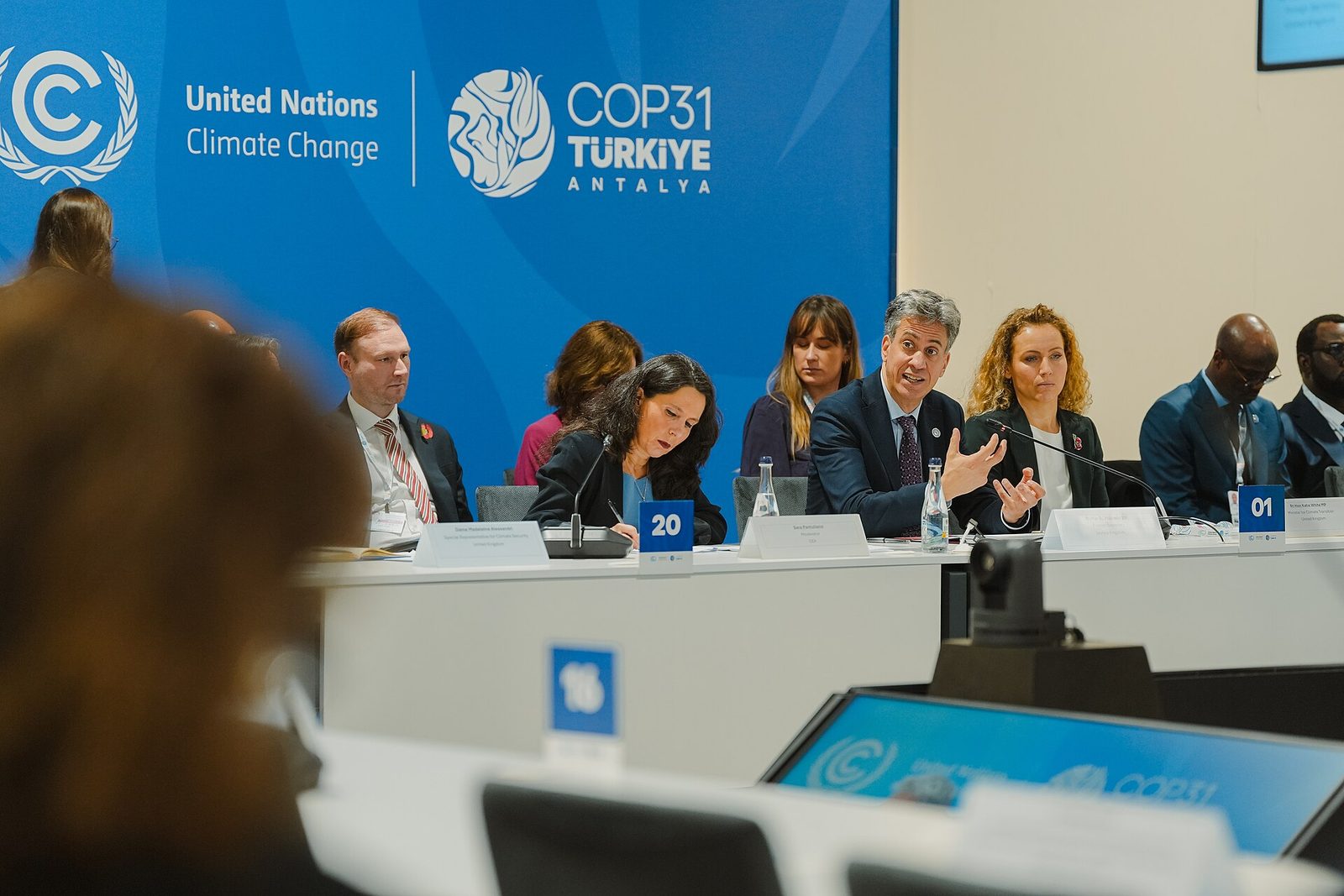
Archive photo · 12 November 2026EU Climate Envoy Warns COP31 Draft Cover Decision Could Make Talks Untenable
4 Other3 West Asian1 Asian2 Other source typesPhoto: Foreign, Commonwealth & Development Office / UK Government and Number 10, CC BY 4.0 · Cropped for layout
This article is an automated aggregation of coverage from news outlets. Our editorials offer in-depth analysis curated by the NewsCord team.
Draft cover decision proposes tripling adaptation funding to $120 billion and phaseout of fossil fuels. EU rejects draft, calls it a shopping list and demands implementation of existing agreements.
Save coverage image
10 outlets in this story. Read their headlines below.
Outlets did split on COP31 Draft Urges Immediate Fossil-Fuel Exit, Targets 35% Electrification by 2035 →
Draft splits COP31
Delegates at COP31 in Turkiye confronted a contentious 18-page draft “cover decision” published by summit cohost Australia, with the text including calls for a phaseout of fossil fuels and a requirement for wealthy nations to achieve net zero emissions by 2030. Wopke Hoekstra, the European Union’s climate envoy, said the draft could make negotiations “untenable,” adding that “the cover decision does not go in the right direction and needs significant change”. Joao Paulo Capobianco, Brazil’s environment minister, said deadlocks could be overcome through “an adjustment in the wording” in the draft, while Australian Climate Minister Chris Bowen acknowledged the text included elements “that not all parties agree on”.
Michael Joseph, Antigua and Barbuda’s environment minister, said consensus on net zero emissions at COP31 “might be very, very difficult,” and he added that he “would love to see a commitment that calls on the phasing out of fossil fuels”. The talks were scheduled to end on Friday, but climate negotiations usually run into overtime because agreements must be reached by consensus, meaning even a single country can block the entire process.
EU rejects, others push
European Climate Action Commissioner Wopke Hoekstra said the EU group rejects the first draft published on Monday by Turkey and Australia’s co-presidency and criticized that the document has become a “wish list” by including new debates on financing and trade. Hoekstra also said, “If this is a COP focused on implementation, the key of everything lies in delivering what we have already agreed,” referring to agreements made at COP28 in Dubai in 2023 regarding the phase-out of fossil fuels. Darragh O’Brien, Ireland’s Minister for Climate, Energy and Environment, said the EU would “firmly reject in areas where this goes off track,” arguing the draft goes against its “fundamental belief of what this COP should be about, which is implementation,” while also pointing to elements they do not feel “comfortable” with.
The draft’s approach to financing drew particular criticism, and the EU presidency figures said the cover decision was not headed in the right direction and needs significant changes, while Hoekstra described his conversations with Chinese colleagues as “very constructive”. Joao Paulo Capobianco urged EU leadership at COP31, and he said it has “huge weight in the negotiations,” as the draft continued to circulate ahead of the summit’s end.
IPCC timing and what’s at risk
COP31 also saw a separate dispute over the timeline for the publication of crucial IPCC reports, with dozens of European, African and Pacific states wanting them published before a crucial verification of global carbon-cutting efforts at COP33 due in 2028. Ilana Seid, chair of the Alliance of Small Island States, described delays in publishing the IPCC’s seventh assessment report as “unjustifiable,” while the Saudi delegation defended its position by saying “Saudi Arabia is not seeking to delay climate science”. Saudi Arabia’s delegation said it “advocates publication timelines that allow sufficient scientific review, transparency and meaningful participation,” and it did not explicitly mention when Riyadh would like to see the reports published.
The draft decision itself included a call for wealthy nations to achieve net zero emissions by 2030 and wording on phasing out fossil fuels that oil-rich countries have long resisted, leaving Michael Joseph to warn that consensus on net zero emissions at COP31 “might be very, very difficult”. The negotiations’ outcome remained open because Australia’s Chris Bowen said there might be “at least one more draft” introduced before the end of the week, and climate agreements must be reached by consensus to avoid a single-country block.