Gaza Genocide24 April, 20263 min read
Eyal Zamir Says Israel Approved Attack Plans for Iran and Lebanon, Continues Striking Hezbollah
This article is an automated aggregation of coverage from news outlets. Our editorials offer in-depth analysis curated by the NewsCord team.
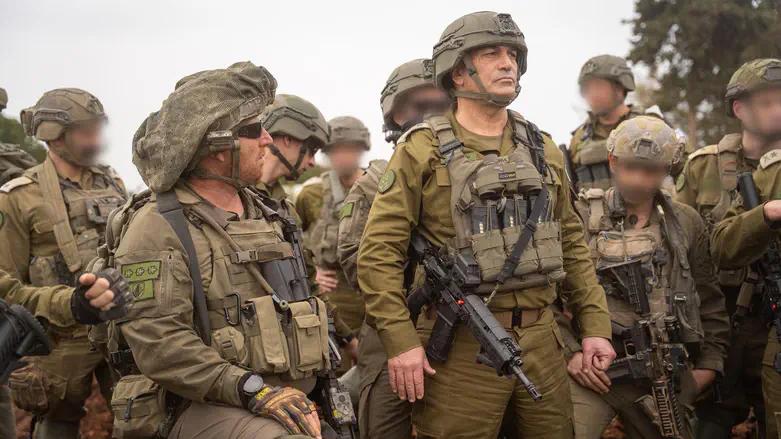
Eyal Zamir is the IDF Chief of the General Staff. Zamir visited the 162nd Division in southern Lebanon and spoke with its commanders.

Israel expands plans
IDF Chief of the General Staff Eyal Zamir said he approved further plans with the General Staff Forum and that Israel would continue to conduct ongoing situational assessments and approve plans, both in Lebanon and in Iran. Zamir, speaking during a visit to the 162nd Division in southern Lebanon, said Israel would not allow Iran to achieve gains on the nuclear front, in the Strait of Hormuz, or in other matters on the agenda.
On Lebanon, he said, "We continue to strike Hezbollah in a multi-front effort" and added that Israel had eliminated over 1,700 Hezbollah terrorists since the beginning of the operation. He also said he had instructed that "the entire area of southern Lebanon up to the Litani River become a no-go zone for Hezbollah operatives," while troops continued operations in Bint Jbeil and worked to dismantle terror threats in the Beit Leaf area.

Ceasefire sparks anger
As Prime Minister Benjamin Netanyahu faced backlash after U.S. President Donald Trump announced an Israeli ceasefire with Hezbollah in Lebanon, northern Israeli residents and opposition lawmakers said the deal was imposed without their approval.
Moshe Davidovich of the "Forum of Front-Line Communities" charged that agreements are "signed in Washington" but "paid in blood, in destroyed homes and in dismantled communities here."
Metula Mayor David Azoulay said residents of the north "feel betrayed once again" by the deal, while Merom HaGalil Regional Council chair Amit Sofer warned that Trump tied the Lebanese and Iranian fronts and said it would lead to more years of constant threats.
In a direct appeal to Netanyahu, Azoulay said: "Your basic duty as prime minister of Israel is to provide security to the citizens of the state."
Asaf Langleben, head of the Upper Galilee Regional Council, described the ceasefire as "a pause" that will inevitably lead to another round of fighting.
Negotiations under fire
While Netanyahu said direct talks would begin "as soon as possible," The Media Line reported that Israel clarified negotiations would not follow a ceasefire but would instead take place "under fire."
IDF Chief of Staff Lt. Gen. Eyal Zamir told commanders on the outskirts of Bint Jbeil that "The IDF is in a state of war" and said "We are not in a ceasefire, we continue to fight here in this sector, this is our main combat sector."
The Media Line also described sirens warning of missile and rocket fire in the Ashdod area after launches from Lebanon, and said additional sirens were reported in Kiryat Shmona.
It further reported that IDF Arabic Spokesperson Col. (res.) Avichay Adraee warned on X that Hezbollah must stop using ambulances as part of its operations, adding that "if this conduct is not halted, Israel will act in accordance with international law against any military activity" carried out using those facilities and ambulances.
In parallel, CBS reported that diplomatic efforts tied to a broader ceasefire framework shifted, with a White House official telling CBS that Israel accepted Pakistan-mediated ceasefire terms on the day they took effect but that the U.S. position later changed after a phone call between Trump and Netanyahu.