China31 August, 20263 min read
Foreign Affairs Warns China’s Nexperia Semiconductor Export Ban Could Shut North American Supply Chains
This article is an automated aggregation of coverage from news outlets. Our editorials offer in-depth analysis curated by the NewsCord team.
Tariffs and retaliatory measures continue in US-Canada trade dispute, widening economic friction. Officials downplay the crisis, arguing the dispute is not existential but risks economic disruption.
China’s leverage via semiconductors
A Foreign Affairs analysis tied North American supply-chain disruption to a “Chinese policy” in which Beijing “had suddenly banned global exports of semiconductors made by Nexperia,” a company whose parts go into “airbags, braking systems, and other automotive essentials.”
The same piece said Chinese President Xi Jinping made the move as retaliation against actions taken by “the Dutch government and by U.S. President Donald Trump,” and that Xi reversed the throttling of Nexperia’s exports only when Trump agreed “to delay the implementation of a new U.S. export control regime.”
The article warned that if Beijing targets even one country, “the entire North American supply chain could shut down,” and argued that Washington’s refusal to renew the USMCA on “July 1” has set up an implicit renegotiation focused on countering China rather than only intra-North-America terms.
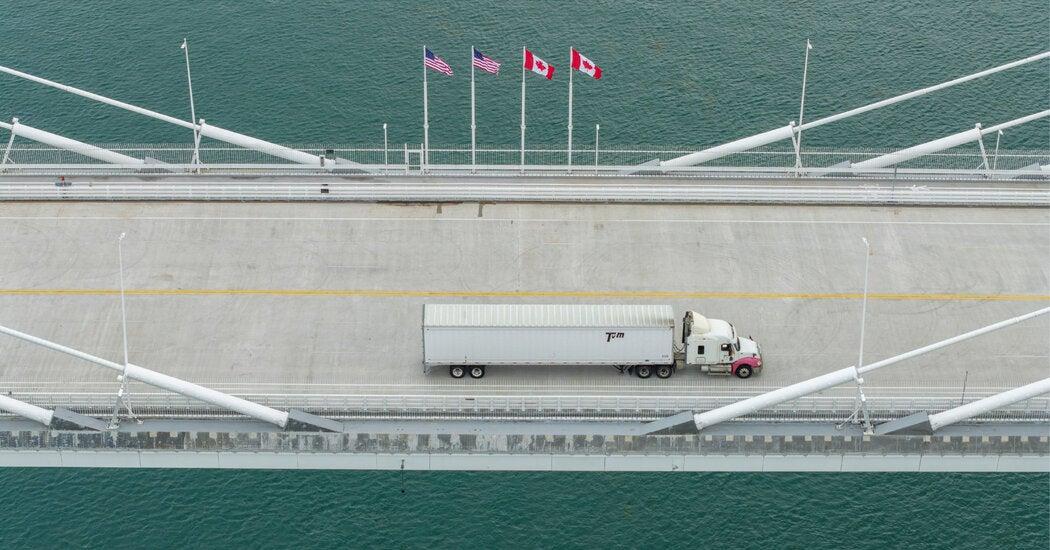
It also described how an auto component can cross the U.S.-Canadian or U.S.-Mexican border “seven or eight times before it ends up in a fully assembled vehicle,” underscoring the exposure the analysis says China can exploit.
The Foreign Affairs piece framed the broader risk as China’s “monopoly power across a variety of sectors fundamental to the North American economy” that is “growing fast,” making Mexico City, Ottawa, and Washington “each become vulnerable” to relationships with Beijing.
Trade war rhetoric and China
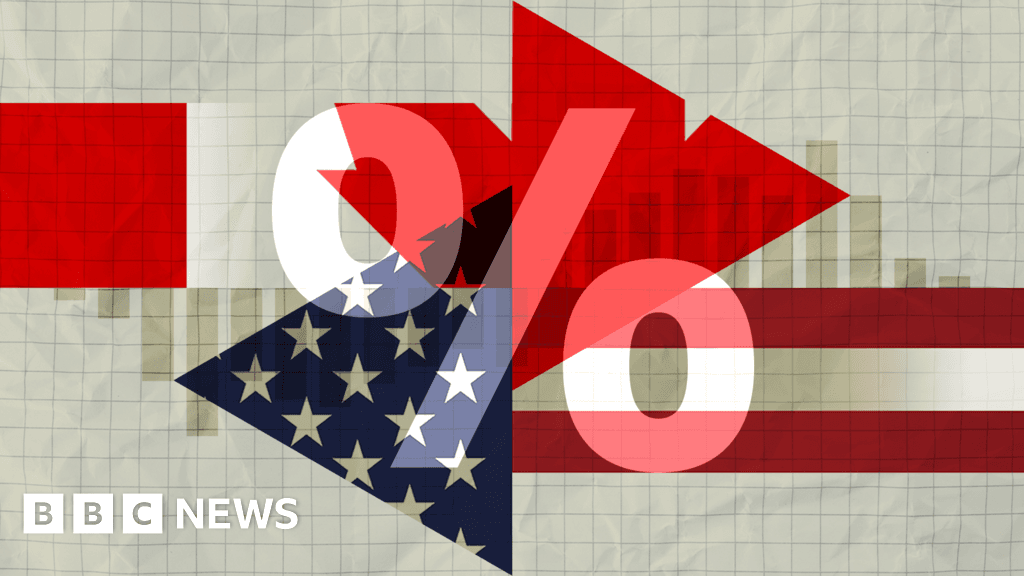
In coverage of the U.S.-Canada tariff fight, the BBC reported that the U.S. imposed “an additional 50% levy on about C$28bn ($20bn; £15bn) of Canadian goods,” while Canada responded with “counter-tariffs” described as “dollar-for-dollar” and “strategic” retaliation. The New York Times said Treasury Secretary Scott Bessent dismissed Canada’s retaliatory tariffs by arguing “I don’t think you can be in a tit-for-tat with someone who’s 13 times larger than you are,” and framed the dispute as a “political shouting match” driven by Prime Minister Mark Carney. The Guardian’s live blog quoted Carney’s response to U.S. officials blaming Canada, including his line that “Americans stop doing memes, stop throwing shade, stop trying to be tough, and start being serious about having those discussions…”.
In the same Guardian live coverage, the Politico interview with U.S. trade representative Jamieson Greer was cited for the claim that “It’s more their emergency than ours,” and for saying “There are no negotiations happening on trade right now.” A South China Morning Post report then connected the U.S.-Canada breakdown to implications for China, quoting Wendy Cutler saying “Beijing must be enjoying watching the volley of words and actions between Washington and Ottawa.”

What’s at stake for China
The Foreign Affairs analysis argued that the debate over the USMCA renegotiation “must not focus on the terms the three countries impose on one another; rather, it should focus on the terms they set to help one another counter China.” It warned that “Washington cannot fix its own exposure to Chinese coercion unless Mexico City and Ottawa fix theirs, too,” and described how China’s semiconductor ban on Nexperia was the “second attack on North American auto supply chains in less than six months.” The Guardian reported that European retailers faced scrutiny after a deadly Bangladesh factory fire, but the same Guardian live coverage also linked the U.S.-Canada stalemate to broader uncertainty, quoting Carney that “It’s not constructive, but that’s their democracy.”
In the South China Morning Post, Wendy Cutler said that if Canada “succeed[s] in weathering the storm of US retaliation while standing up for its national interests, others may follow a similar ‘get tough’ approach,” and added that it “would not be surprising if Beijing steps up its efforts to woo Ottawa into its court.” Taken together, the sources portray China’s role as both a direct supply-chain coercion risk and a potential beneficiary of Washington’s tariff-driven friction with partners, with the Foreign Affairs piece emphasizing integrated borders and the South China Morning Post describing Beijing’s incentive to capitalize on the “volley of words and actions” between Washington and Ottawa.