Technology and Science27 July, 20263 min read
Framework Laptop 13 Pro Review Highlights Modular Upgrades, 32GB RAM, and Windows 11 Pricing
This article is an automated aggregation of coverage from news outlets. Our editorials offer in-depth analysis curated by the NewsCord team.
Modular, upgradeable design enables user repairs and component replacements. Longer battery life via a bigger, better battery.

Framework’s modular “Pro”
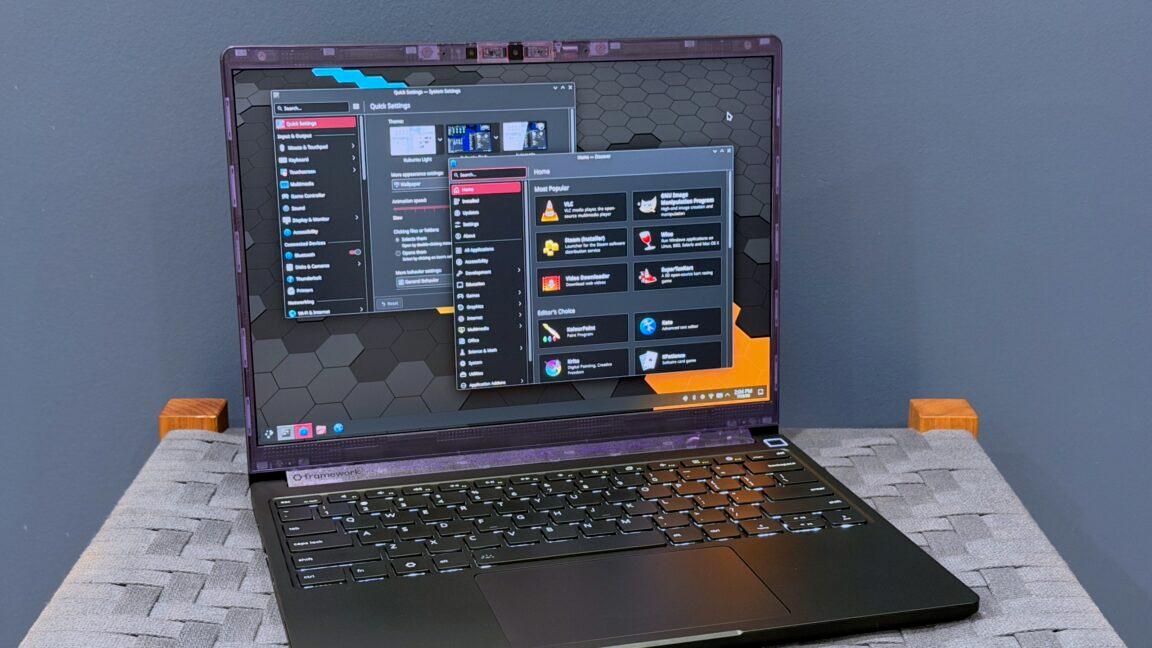
Framework Laptop 13 Pro is a modular, upgradable laptop that PCMag says achieves “a flagship, top-end laptop you can tear down for upgrades and repairs” while feeling “like a one-piece, luxury design once assembled.” PCMag’s review sets the tested configuration at 32GB of RAM, an Intel Core Ultra X7 358H processor, an Intel Arc B390 graphics processor, and a 2880 by 1920 native display resolution, with the laptop running Windows 11. PCMag also says the Laptop 13 Pro starts at $1,199 in a build-it-yourself setup and that a fully built test model reached $2,932 after Framework’s price hikes.
In PC Gamer’s account, the Laptop 13 Pro is “completely compatible with every Framework 13 device the company has shipped in the past five years or so,” while its “focus on ultra expensive LPCAMM2 memory” drives the cost. PC Gamer adds that the Laptop 13 Pro is “a next-generation Framework laptop” built around Panther Lake and that it keeps the company’s upgradeable and repairable approach even as it becomes “brutally high” priced.
Price shocks and memory
The Verge frames the Laptop 13 Pro’s upgradeable design as a “one-of-a-kind jewel among notebooks,” but says “RAMageddon spiked its price” after memory price increases. The Verge reports that its higher-end prebuilt review unit “was meant to cost $2,299” but after fresh memory price increases it is “now a nausea-inducing $3,099.” Tom's Hardware says the Laptop 13 Pro is “extremely expensive if you don't own parts already,” and it lists pricing as “$1,199 to start without SSD, RAM, or OS” and “$1,599 to start pre-built.”
Ars Technica similarly characterizes the tradeoff as “Much better battery, much worse price,” noting that the Laptop 13 Pro is as close as Framework has gotten to a “second-generation revision” for the original Laptop 13. PCWorld adds that Framework’s process can turn buying into “an odyssey,” with the company asking for a “$100 refundable deposit” and describing how ordering depends on “batch” ship dates.
Battery gains, Linux-first
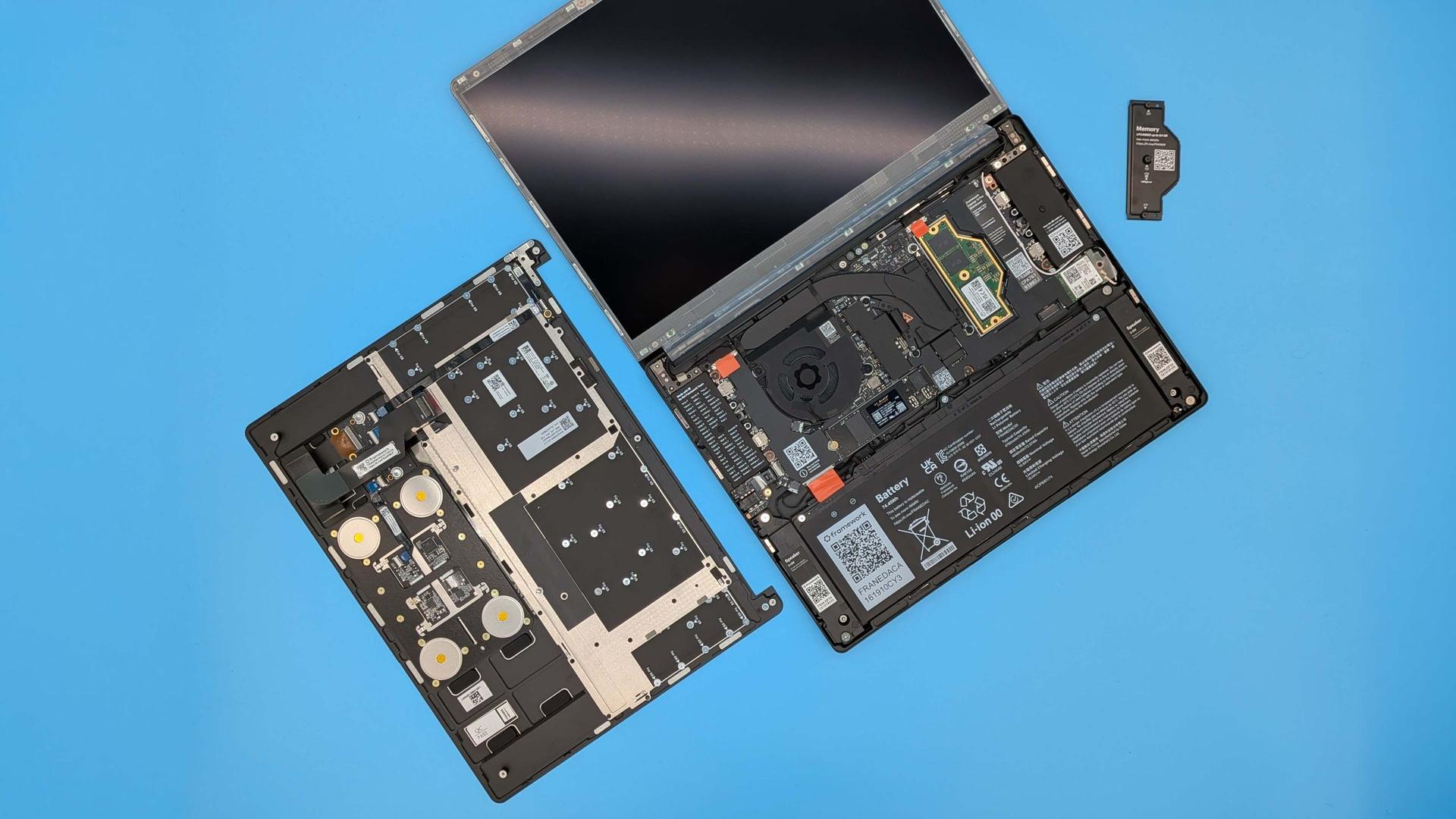
ZDNET says Framework announced the Laptop 13 Pro in April 2026 and quotes CEO and founder Nirav Patel calling it the “MacBook Pro for Linux users,” while also describing the hands-on result as having “the most crowd appeal of any of its devices to date.” ZDNET reports a “larger 74Wh battery” and says the laptop is “Linux first,” with “Ubuntu certification” and being “pre-loaded with Fedora 4.4 or Ubuntu 26.04 LTS.” Ars Technica says the Laptop 13 Pro breaks backward compatibility for some Laptop 13 components, “most notably the bottom case, the keyboard and trackpad,” while also crediting the redesign with “major strides in battery life and general fit and finish.”
PCMag’s review highlights improvements to the display, audio, and input hardware, including that the display is “now a touch screen,” and it lists a “Screen Refresh Rate | 120” and a “Dynamic Weight | 3.17.” PCWorld concludes that despite the ordering challenges, the Laptop 13 Pro DIY Edition is “easy to recommend,” citing “Incredible battery life, a terrific screen and keyboard, and clear instructions,” while noting that Framework sells it “solely through its website, not individual retailers.”