Gaza Genocide · updated 2h ago · 2 min read
Power Outages Continue At Nasser Hospital As Gaza Generators Fail From Fuel Shortages
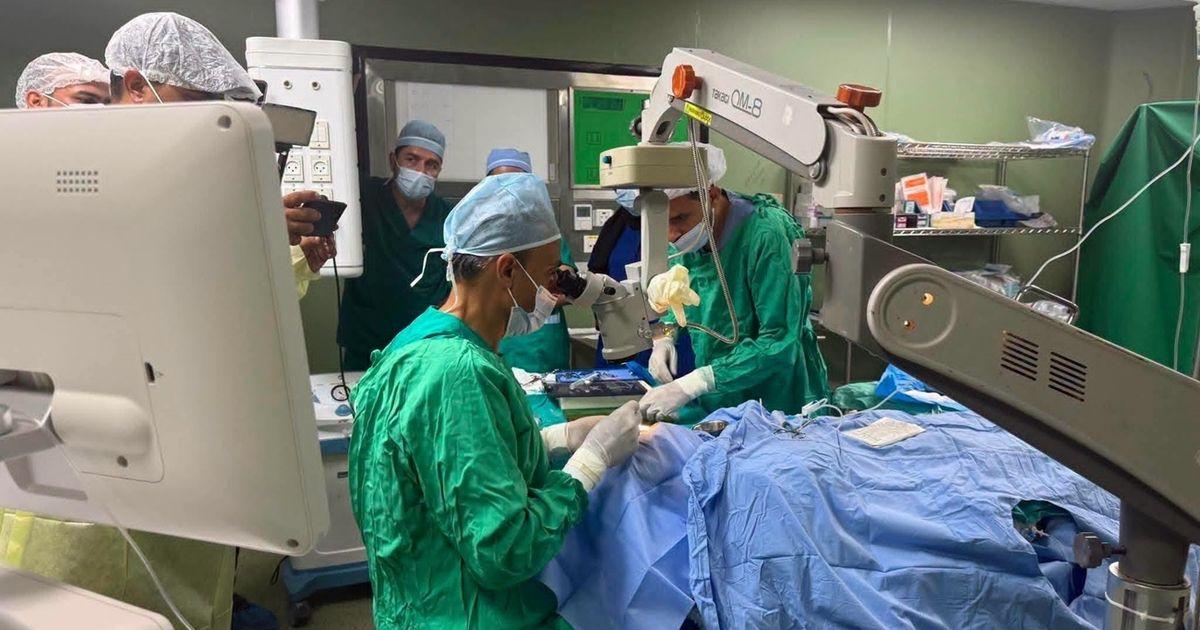
Hospital generators have stopped operating due to fuel, oil, and spare-parts shortages. One of Gaza's largest public hospitals faces power outages endangering patients.
Whether Israel’s restrictions are named as punishment.
3 of 4 outlets skipped it: hospitals need about 2,500 litres of oil each month.
17outlets compared
Same story, two versions
tap a side to read it in full
South China Morning Post
“Israel halted electricity supply and restricted the import of fuel as well as engine oil, describing them as measures to punish Hamas.”Read the original ↗
Devdiscourse
“Despite a U.S.-brokered ceasefire, Gaza remains in an energy crisis due to ongoing restrictions on essential supplies, leading to exorbitant costs of electricity.”Read the original ↗
South China Morning Post emphasises Israel’s actions and stated punishment rationale, while Devdiscourse keeps the cause as unspecified restrictions.
Generators failing at Nasser
Power outages are continuing at Nasser Hospital, one of the largest public hospitals operating in the Gaza Strip, as patients wait in extremely hot wings for treatment.
“Patients are in grave danger, because any power outage puts their lives at serious risk.”
Reuters reports that medical workers warn shortages of engine oil and spare parts are causing generators to fail, and that the crisis is widening beyond hospitals as sharply rising prices make electricity from neighborhood generators unaffordable for households.

Ahmed Al-Nabrees, an internal medicine specialist at Nasser Hospital, said, “Patients are in grave danger, because any power outage puts their lives at serious risk.”
He added that one of the hospital’s four generators is currently out of service, while the two largest of the remaining three are operating under extreme operational strain.
Reuters also reports that normally engine oil in generators should be changed every 250 hours, but shortages forced technicians to extend this to about 1,000 hours.
Rotating cuts and waiting
At Nasser Hospital, shortages have forced an austerity plan that includes rolling blackouts between buildings, with doctors warning that rotating power cuts between departments put patients at severe danger.
Fatima, a patient at Nasser Hospital with pulmonary fibrosis, said, “We keep waiting and counting the seconds and minutes. We have to wait until the electricity returns.”

The South China Morning Post describes patients waiting for treatment in sweltering wards as generators seize up due to shortages of engine oil and spare parts.S
Reuters reports that patients who require ventilation or inhalation devices must wait for power to come in a rotating schedule between departments.
In addition to hospital strain, Reuters says Gaza has been without power from the public grid since the Israeli military offensive began after Hamas-led attacks on October 7, 2023.
Wider humanitarian and costs
Reuters says Médecins Sans Frontières (MSF) warned in an August statement that thousands of people are at high risk of illness and death because restrictions on entry of engine oil and spare parts negatively affect hospital generators, ambulances, water pumps, and water trucks.
“prices rising to about $1,300 per liter from around $3 before the war”
MSF also said dwindling supplies forced aid groups to turn to the local market, where residents report prices rising to about $1,300 per liter from around $3 before the war.
Outside hospitals, Reuters reports that residents say the cost of supplying electricity to homes has risen by about 20% in recent months, while only a very small portion can afford private generators.
The Reuters report also cites Palestinian and United Nations records earlier in the year saying at least two-thirds of Gaza’s population of about two million people still live in more than a thousand displacement sites across the Strip.
In a separate report, Sawt Bayrut Ijnternational says the electricity crisis is worsening as hospitals and health facilities face severe fuel shortages, engine oils, and spare parts, prompting rationing systems that cut electricity in rotation between departments and buildings.