Gaza Genocide · updated 2h ago · 2 min read
Gaza Education Ministry Starts 2026–2027 School Year With Classes in Tents and Temporary Centers
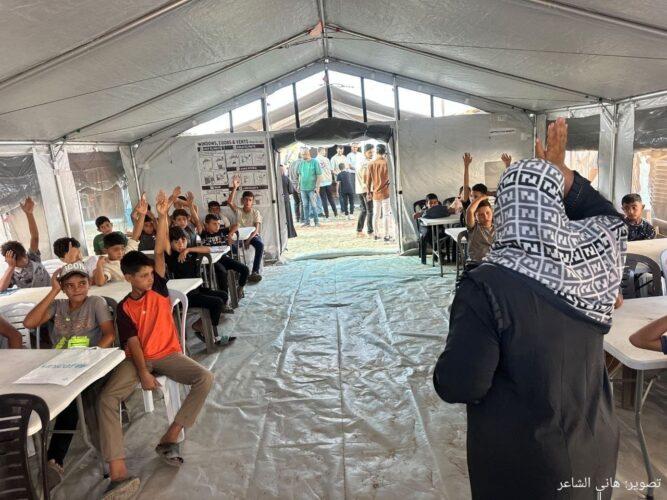
About 700,000 Gaza students return to classes across Gaza in tents and temporary centers. Most schools damaged or destroyed; 85% affected, pushing classes into shelters.
Whether the focus is operational schooling or lived childhood change.
2 of 3 outlets skipped it: children collect fuel from streets after school duties.
Mondoweiss was read line by line by the Watchdog: 2.8. See the score →
18outlets compared
Same story, two versions
tap a side to read it in full
Mondoweiss
“Something deeper has changed. The war has altered the priorities of families”Read the original ↗
IMEMC News focuses on operational restart and provision, while Mondoweiss foregrounds families' altered childhood routines.
Tents replace schools
About 700,000 children are expected to return to lessons across Gaza, but most have no school to return to as education buildings are damaged, destroyed, or shelter displaced families.
“About 700,000 children are expected to return to lessons across Gaza—but most have no school to return to.”
The 2026–2027 school year began on Saturday after three years of war, with classes starting in temporary centers, tents, and, where electricity and internet access allow, online.
Gaza’s Education Ministry aims to reach roughly 350,000 students, up from about 270, while UNRWA is combining classroom and remote instruction for hundreds of thousands more.
Officials expect about 320 schools and learning points to operate this year, up from roughly 270 last year, even as about 97% of Gaza’s educational buildings are out of service.
UNRWA opened 86 learning spaces at the start of the school year and plans to expand in-person classes as safe locations, teachers, and basic services become available.
Capacity and supplies strain
After three years of interruption, about 400,000 students in the Gaza Strip returned to education, and in Gaza City the first return looked like tents serving as classrooms amid a shortage of books, stationery, and desks.
At a school run by UNICEF in coordination with the Ministry of Education, the tents welcomed about 3,000 students while its capacity is only two thousand, and Al Jazeera correspondent Nour Khaled said students began their school day with limited capabilities because curricula and stationery were not sufficiently available.
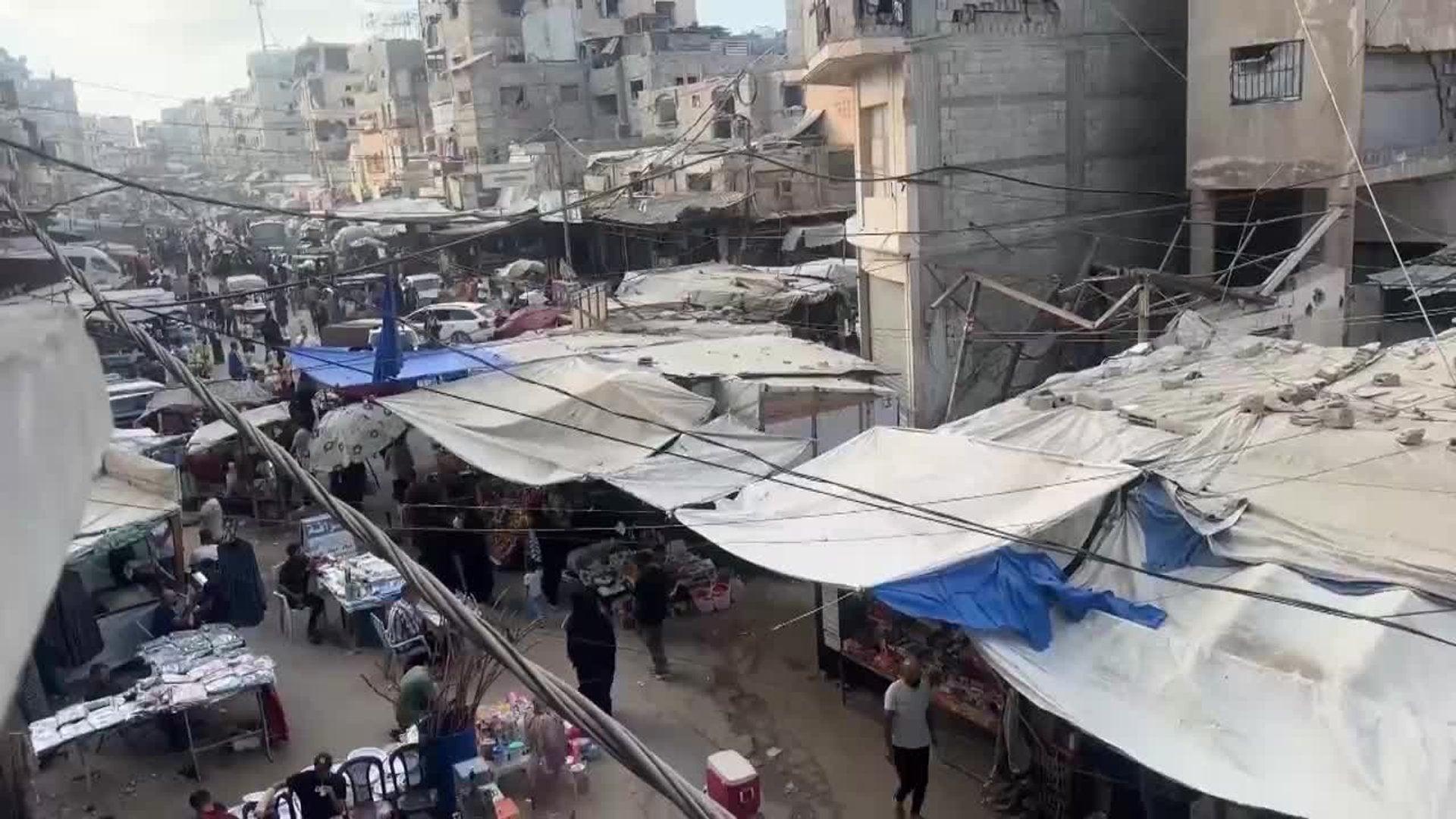
The Ministry of Education is resuming the educational process through accelerated education curricula designed to reduce learning loss, and the step comes after most school buildings were damaged or converted into shelters for the displaced.
In the Gaza West District, Dr. Jawad Al-Sheikh Khaleel described the number of students as the biggest challenge, saying the number of registered students exceeds the capacity of the field schools set up in the tents.
He added that the shortage of stationery, desks, and blackboards imposes direct constraints on the educational process as teachers face difficult economic conditions, including irregular salaries and limited stipends.
War’s toll and next steps
Gaza’s education restart is shadowed by the war’s human cost, with Gaza’s Education Ministry figures cited in the IMEMC News report saying about 17,000 students and 770 education workers have been killed during the war.I
“about 17,000 students and 770 education workers have been killed during the war”
The same report says the ministry itself has been crippled, with its headquarters destroyed along with much of its furniture and equipment, while offices and transport vehicles were also lost.
In the longer-term recovery plan described by IMEMC News, the priorities are to restore access to education, help students regain lost skills, and gradually rebuild Gaza’s schools and wider education system.I
The Al Jazeera report also frames the stakes for families and learning continuity, noting that UNICEF indicated about 700,000 children between four and seventeen lost formal in-person education for nearly three consecutive years.
For the Catholic community, the School of the Holy Family in the Old City of Gaza reopened to accommodate about 1,000 students, and Father Gabriel Romanelli told the ACN delegation that the reopening would be “like a light in the darkness for the local community”.