Protests23 October, 20263 min read
Archive photo · 18 October 2026Generation Z Protests Spread Across Europe Over Education Funding And Housing Costs
3 Western Mainstream1 OtherThis article is an automated aggregation of coverage from news outlets. Our editorials offer in-depth analysis curated by the NewsCord team.
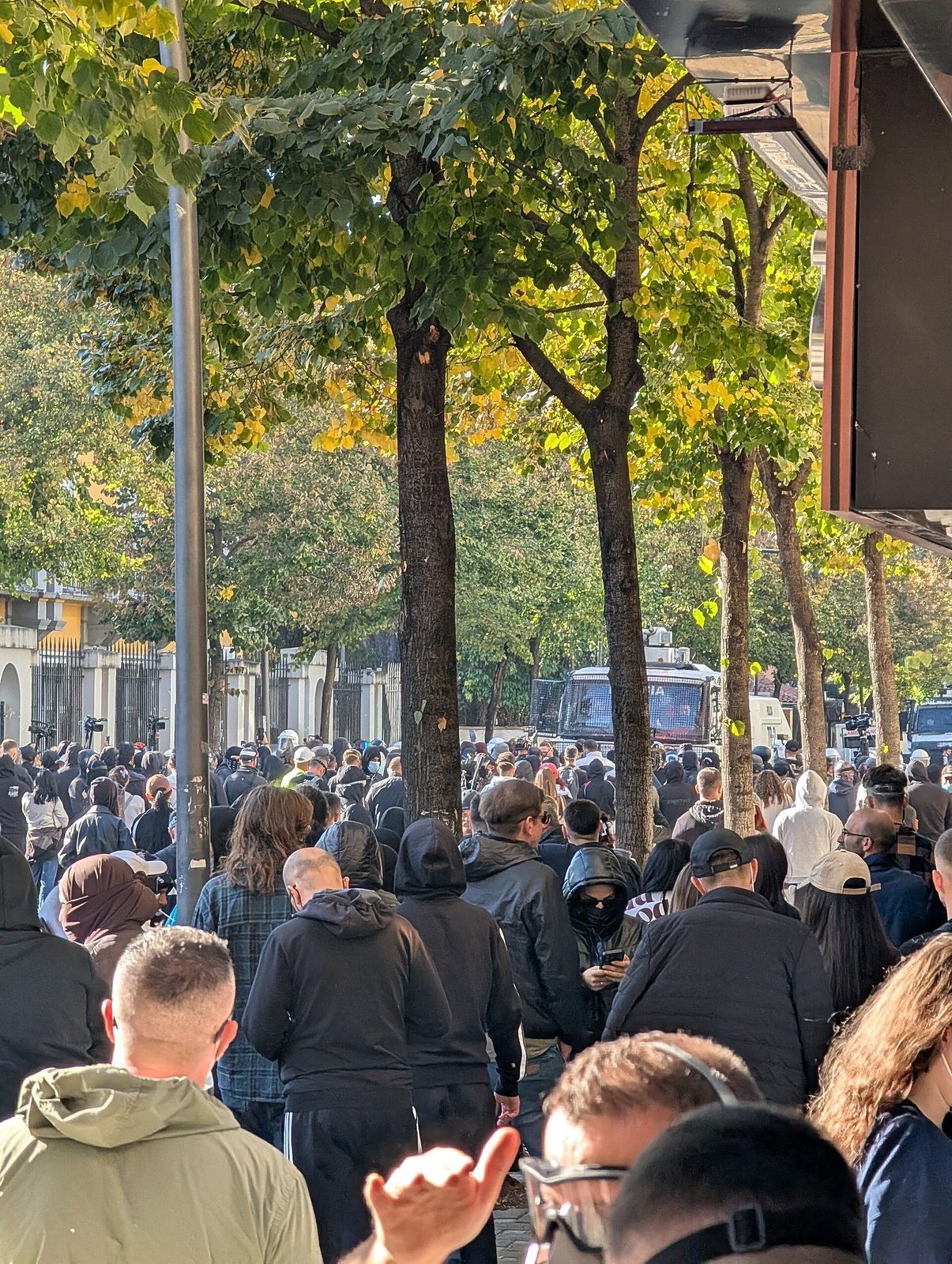
Generation Z protests across Europe cite inadequate education funding and high housing costs. Albania saw student protests outside Education Ministry since Oct 13, with clashes and property damage.
Save coverage image
4 outlets in this story. Read their headlines below.
Europe-wide youth anger
Young people across Europe protested issues ranging from the lack of funding for education to the cost of housing, with CNN en Español describing the wave as led by Generation Z and driven by intergenerational frustration.
In Spain, the eviction of Maricarmen Abascal, 87, acted as a catalyst for the protests, while France saw students take to the streets in solidarity with striking teachers and Albania saw student protests unfold for months after plans for a luxury complex backed by Jared Kushner.
Alice de Brito, vice president of France’s main student union, UNEF, told CNN en Español, “We all talk about the need to invest in education, in universities, and in youth in general. But we also talk about the cost of living and housing.”
Sabrina Brizzola, an Italian student leader, told a rally last weekend, “Let’s be heard: we want schools that don’t crumble on us, secure and decent jobs, public health and social justice.”
Julius Fintelmann, cofounder and editor-in-chief of the daily European Correspondent, said the protests “reflect a kind of frustration, the sense that European politics is not meeting the expectations of the next generation.”
Albania street clashes
In Albania, police and protesters clashed again in Tirana after three days without violence, with El País saying the protesters accused Prime Minister Edi Rama and the main opposition party of being accomplices to a “mafioso” system. El País reported that the clashes that broke out in Albania on October 13 returned to the streets of Tirana after three days of relative calm between Wednesday and Friday, and it said Prime Minister Edi Rama placed chairs and concrete blocks in front of the Government Headquarters bearing the word “dialogue.” Gresa Hasa, a researcher at Graz University (Austria) and expert on the Balkans, warned that the uprisings should not be interpreted as “a sudden eruption of anger” by the youth, but as “a continuation of peaceful demonstrations” that began at the end of May.
DW said students and faculty from the University of Tirana gathered outside the Education Ministry in Albania's capital on Tuesday, with smashed windows still unreplaced and walls still black with soot from fires during the protests. Rama blamed the youth uprising on a “hybrid war,” and DW quoted him saying protesters thought they could “make Albania a better country through TikTok and without even being able to string together more than seven coherent words.”
Violence, messaging, and demands
El Salto described the “Flamingo Revolution” as lasting 135 days, with the movement mainly characterized by peaceful demonstrations before discontent escalated into violent clashes with the police and calls for Rama’s resignation. El Salto said that on October 13 university and high school students took to the streets of Tirana, and in the following days some protesters damaged and burned public buildings including the Ministry of Education and the Ministry of Infrastructure and Energy, the City Hall of Tirana, and some offices at the Government seat. El Salto reported that the police responded with tear gas, water cannons, rubber bullets, and other riot-control measures, and it said that during the first five days of protests 272 people had received medical care, including 169 police officers, 82 protesters, and 21 bystanders.
DW reported that Besmir Semanaj, a prominent Albanian cybersecurity advocate, said, “Social media is the most important public space today — more so than physical spaces,” and he added that young Albanians organize through cellphones rather than traditional political structures. DW also quoted Sara, who asked to be called Sara because she fears repercussions, saying protesters “communicate via text messages — that's the only way,” as police used water cannons to disperse the crowd after some protesters flung stones at the Education Ministry.