
Russia · 01 September, 2026 · 3 min read
Germany Summons Russia’s Ambassador Sergei Nechaev After Leipzig Airport Drone Incident
Germany formally holds Russia responsible for the hybrid drone attack at Leipzig/Halle Airport. Berlin closes the Russian consulate in Bonn and imposes sanctions on Moscow.
How soon Germany moved beyond attribution and evidence.
6 of 7 outlets skipped it: germany probed suspected sabotage of two power substations.
200outlets compared
Same story, two versions
tap a side to read it in full
1News.az
“On September 1, the German government officially placed the blame on Russia for the drone incident at the Leipzig/Halle airport.”Read the original ↗
BBC
“It was not until Tuesday that the German government said police investigations and intelligence finding had proved that Russia was behind the incidents.”Read the original ↗
Timing around when attribution became “officially proven” varies by outlet.
Leipzig drone accusation
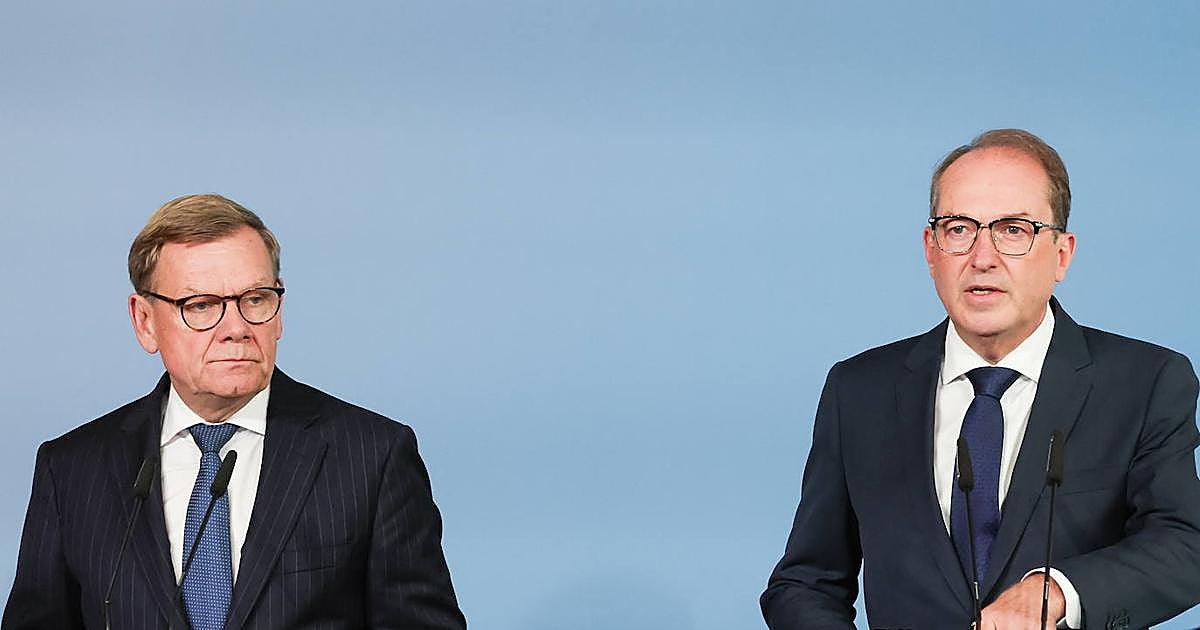
Germany summoned Russia’s ambassador in Berlin, Sergei Nechaev, after a drone incident at Leipzig airport, with Johann Wadephul saying, "I have given the order to summon the Russian ambassador. This meeting is taking place right now," during a press conference.
“Germany has said Russia was responsible for last month's drone attack at Leipzig's airport.”
Germany’s Interior Minister Alexander Dobrindt said investigators concluded that "Russia is responsible for the hybrid attack perpetrated in Leipzig on August 4," describing the incident as fitting "the well-established pattern of Russian hybrid operations in Europe."
The BBC reported the drone carrying an explosive device was discovered at Leipzig/Halle Airport on 4 August close to Ukrainian cargo planes, and that it failed to explode as the detonator was apparently faulty.B
The BBC also said German Foreign Minister Johann Wadephul announced he would order the closure of the Russian consulate in Bonn and terminate the contract for the Russian House in Berlin, alongside tighter entry controls for Russian nationals.B
In response, the Russian embassy in Berlin called the allegation "absurd" and Russian President Vladimir Putin accused Germany of planting evidence to blame Moscow for the attempted drone attack at Leipzig airport.
EU and NATO reactions
At an EU meeting, Kaja Kallas told reporters, "It is clear that it has all the hallmarks of state-sponsored terrorism," as EU foreign ministers weighed sanctions, visa restrictions, and shutting Russian consulates.
French Foreign Minister Jean-Noël Barrot said France summoned Russia’s envoy to "protest strongly" and wants to impose sanctions on more of the Kremlin’s shadow fleet ships.
NATO Secretary General Mark Rutte said the alliance stood "in full solidarity with Germany," and pledged to strengthen deterrence and defense capabilities against hybrid attacks.
The BBC reported that Russia rejected the German accusations, with Maria Zakharova saying Moscow would respond in a "mirror-image" fashion to Germany’s measures.B
The BBC also reported that Putin condemned Germany’s measures as a serious mistake and that Russia’s Deputy Foreign Minister Alexander Grushko said "maybe" Moscow would sever relations with Berlin, but for now it was giving diplomacy a chance.B
Next steps and wider threat
Germany’s measures included shutting down the Russian consulate in Bonn and the Russian House in Berlin, and the EU and NATO leaders warned that Leipzig represented a "new escalation on European Union soil directly attributed to Russia," according to Ursula von der Leyen.
““Leipzig marks a new escalation on European Union soil directly attributed to Russia,” said Commission President Ursula von der Leyen”
The BBC said Berlin’s response was paired with a vow to increase pressure on Russia’s shadow fleet, and it reported that the German government said police investigations and intelligence findings proved Russian involvement.B
In parallel, ABC News reported Germany probes suspected sabotage after two power substation disruptions, with explosive devices found near the Jänschwalde coal-fired power plant in Brandenburg and a deliberate short circuit at the Bergheim power substation near Cologne.
Brandenburg Interior Minister Jan Redmann said, "at this time, we cannot rule out any perpetrators," and he added, "we cannot rule out the possibility that foreign powers are behind it," while North Rhine-Westphalia Interior Minister Herbert Reul said, "It wasn’t a broken switch, it was intentional. It was a criminal act."
The BBC linked the Leipzig attack to a broader pattern, saying the Leipzig attack was part of increasingly dangerous incidents including drones and interference with critical infrastructure, and it cited von der Leyen warning that Russia was growing increasingly reckless.B