Technology and Science03 September, 20262 min read
Google DeepMind Unveils WeatherNext 3 With Hourly, Higher-Resolution Satellite Forecasts
This article is an automated aggregation of coverage from news outlets. Our editorials offer in-depth analysis curated by the NewsCord team.
WeatherNext 3 delivers hourly forecasts at up to 5-km resolution worldwide. Precipitation forecasts are up to 50% more accurate than WeatherNext 2.

10 outlets told this the same way.
Outlets did split on Replit CEO Amjad Masad Says Company Stops Working With Anthropic →
WeatherNext 3 launched
Google DeepMind and Google Research unveiled WeatherNext 3, an AI-based global weather forecasting model that updates forecasts every hour and generates hourly forecasts at multiple spatial resolutions. Engadget says WeatherNext 3 uses live satellite data for higher-resolution forecasts, with precipitation forecasts described as “up to 50 percent more accurate,” and it can provide “100-meter wind speeds (roughly at turbine-height)” for wind-energy output.
Quartz reports that WeatherNext 3 targets operators of wind and solar energy with wind-speed data at turbine height and cloud cover updated every hour from satellite images, and it says the hourly cadence reduces the typical delay to “three o four hours.” Google’s blog says WeatherNext 3 produces hourly forecasts at multiple spatial resolutions, visualizing surface variables such as temperature and humidity at a “5-kilometer resolution,” while other surface variables are at “10-kilometer resolution” and atmospheric variables like wind speed are at “25-kilometer resolution.”

How it works, and who says what
Engadget describes WeatherNext 3 as incorporating live satellite data rather than primarily relying on numerical weather prediction models that include a six-hour lag, and it says the satellite view is “a rich, continuously updating view of the atmosphere.” Quartz quotes DeepMind senior research scientist Ilan Price saying, “Se vuelve mucho más preciso al no esperar la próxima fecha de análisis y utilizar la información más reciente,” linking the model’s accuracy to not waiting for the next analysis date.
TechCrunch quotes Samier Merchant saying, “This is going to be the first time that some of the core variables feed and power a lot of the Google products,” as WeatherNext 3 is set to feed weather information users see in Search, Google Maps, and Gemini. TechCrunch also quotes Ferran Alet on why the model targets “approximate noisy physics from incomplete information and finite compute,” framing WeatherNext 3 as learning patterns from large datasets rather than only following physics simulations.
Integration and remaining limits
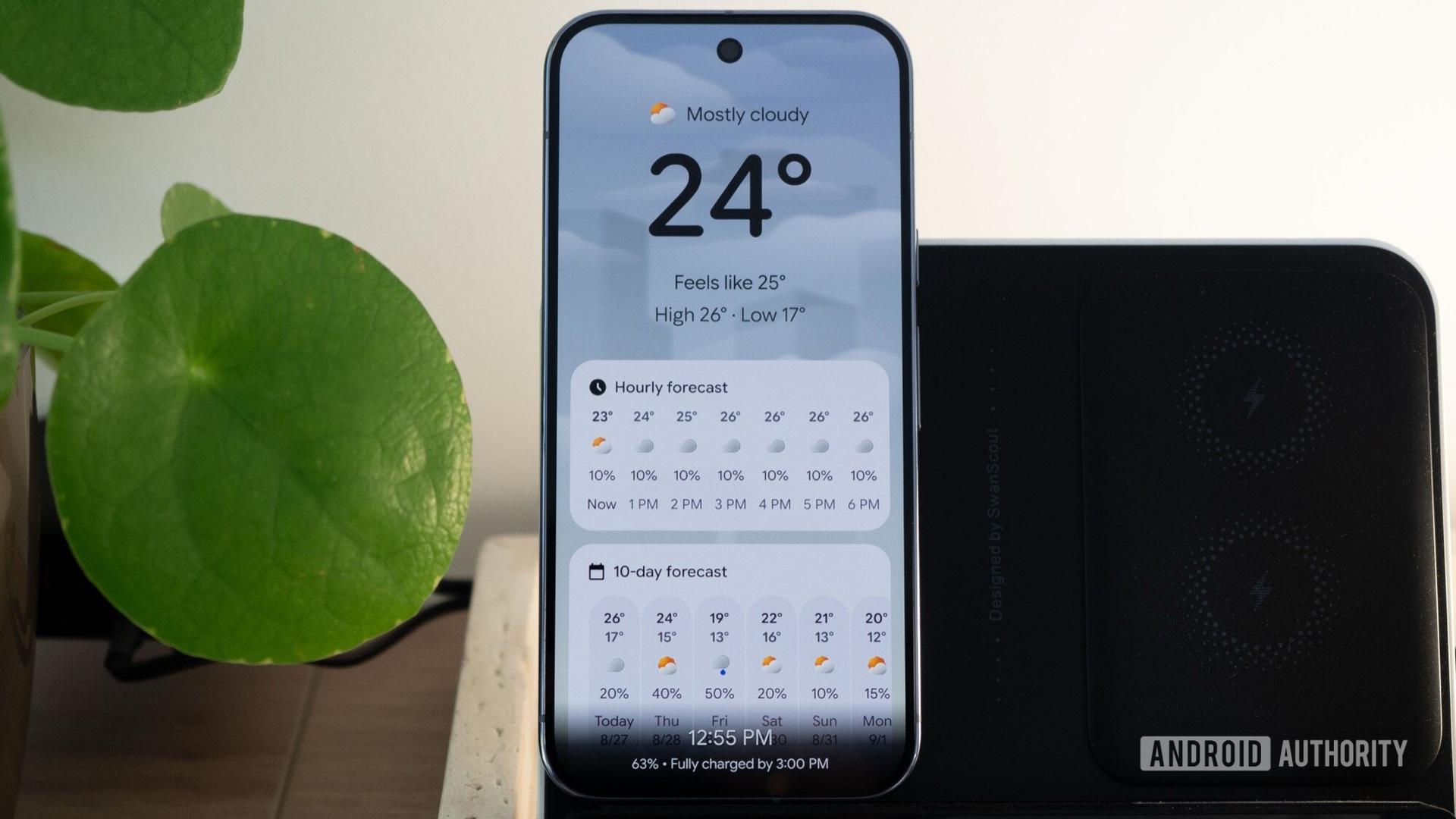
WeatherNext 3 is planned to power weather experiences in Google Search, the Gemini app, and Google Maps, and it is also described as available through the Google Maps Weather API and Google Earth Engine, with Engadget saying it can be tried in the Google Weather Lab. Unite.AI says WeatherNext 3 begins powering weather experiences in Google Search, the Gemini app, Google Maps, the Weather API of the Google Maps Platform, and Google Earth Engine starting September 3, 2026, and it describes the model as operational based on a technical paper accompanying the release.
Unite.AI reports that the production version was trained with data up to June 30, 2026, and it states that the model ingests live geostationary satellite mosaics on an hourly basis alongside traditional historical analyses. Unite.AI also documents limitations, noting “spatial and temporal artifacts visible in individual forecast samples,” including “hexagonal patterns reflecting the model’s mesh structure,” and it says temporal discontinuities appear at “six-hour boundaries” in some output modules.