Iranupdated 22m ago3 min read
Archive photo · 29 May 2008Iran Denounces New York Times Dam Claims as Security Pretext for Attacks
11 West Asian2 Asian2 Other2 Other source typesPhoto: M samadi, CC BY-SA 3.0 · Cropped for layout
This article is an automated aggregation of coverage from news outlets. Our editorials offer in-depth analysis curated by the NewsCord team.
Iran warns Washington and Israel of retaliation if its infrastructure targeted Ghalibaf vows to apply the same logic to facilities near American and Israeli bases
Save coverage image
17 outlets in this story. Read their headlines below.
Outlets did split on Iran’s UN Mission Rejects New York Times, CNN “Dirty Bomb” Claims, Calls Them Disinformation →
The Jerusalem Post was read line by line by the Watchdog: 3.0. See the score →
Dams, missiles, and backlash
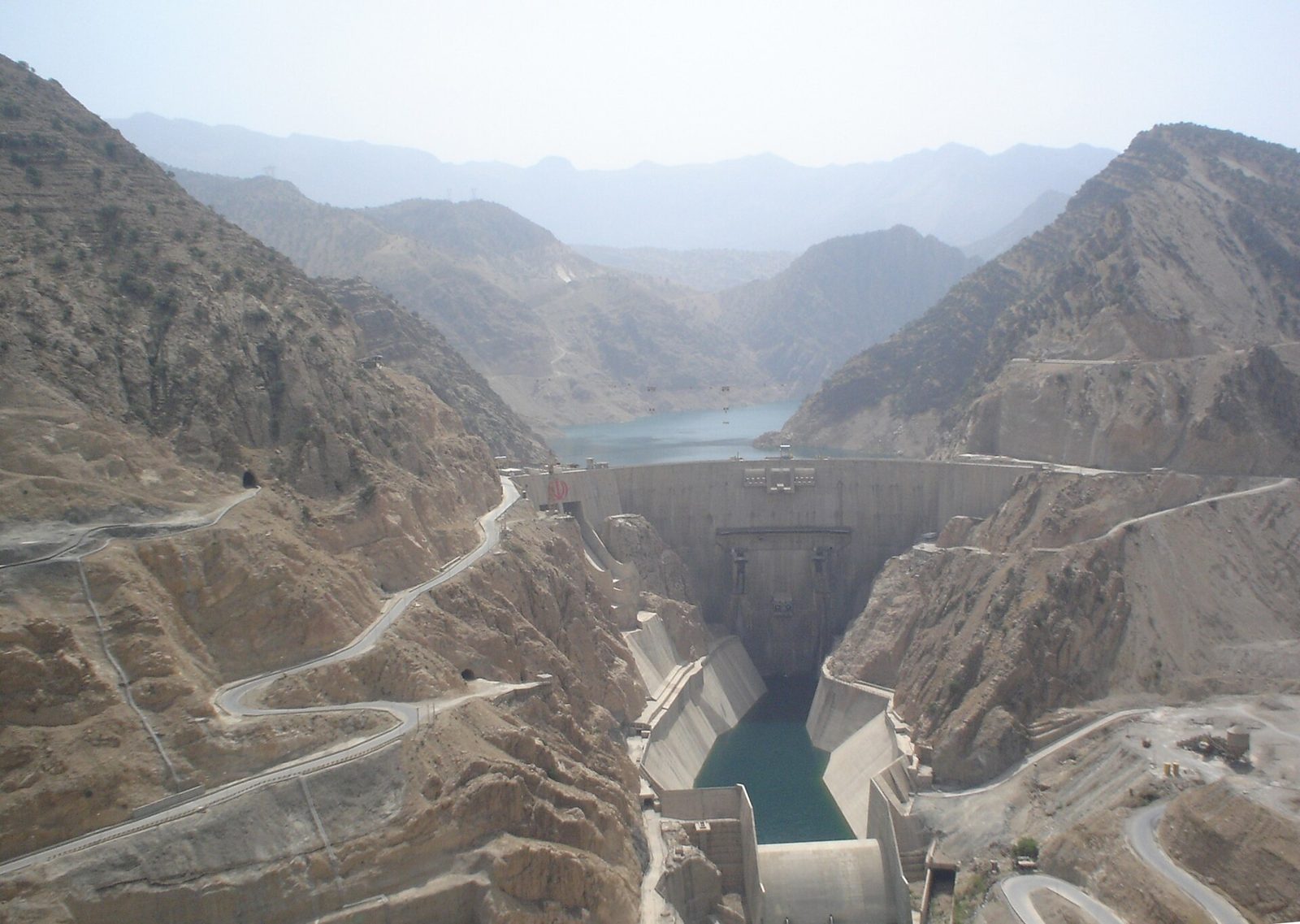
A New York Times report argued that some of Iran’s dams and water infrastructure may have been built to support the country’s underground missile programme, and Iranian officials denounced the story as a security pretext for attacks on civilian facilities. Iranian Foreign Ministry spokesperson Esmaeil Baghaei said, "The baseless allegations seeking to link Iran’s dams to missile bases constitute yet another example of a malicious campaign to manufacture propaganda and security pretexts aimed at justifying attacks on a country’s vital infrastructure," in a post on X. The report itself acknowledged, "Given the secrecy surrounding Iran’s missile program, any connection between it and Iran’s ambitious, decades-old initiative to develop water infrastructure remains speculative," while it cited researchers who observed geographical similarities between dam locations and sites targeted by US and Israeli air strikes.
“Given the secrecy surrounding Iran’s missile program, any connection between it and Iran’s ambitious, decades-old initiative to develop water infrastructure remains speculative.”
US President Donald Trump threatened further attacks, saying last week that key Iranian infrastructure could be destroyed within three days, as the controversy revived memories of the NYT’s pre-2003 Iraq coverage. Political analyst Rami Khouri called the NYT report "troubling," saying it reaffirmed his concerns about US mainstream media being "complicit in the US-Israeli criminal attacks on Iran".
Experts dispute the link
Kaveh Madani, director of the United Nations University’s water institute and a former senior Iranian environmental official, challenged the report’s reasoning on X, writing, "Speculation is not evidence. Spatial proximity is not causality," and he added that the New York Times should know better.
Madani also said, "I’m one of the people quoted in the article, but my comments had nothing to do with dams or missiles!" as he disputed how the newspaper used his remarks.
Nima Shokri, a water-security expert at Hamburg University of Technology, said on X that, "The proximity of dams to military targets does not establish why those dams were built, nor does it justify attacks on them," and Amir Aghakouchak wrote, "I fully agree [with Shokri]."
Mehdi Zare, a geologist and university professor, argued that Article 56 of the First Protocol Additional to the Geneva Conventions gives dams and spillways special protection, saying, "dams and spillways enjoy special protection."
Zare added that, "Therefore, a mere claim that a dam is connected to a military facility cannot justify attacking it," while the NYT report remained framed as an expert hypothesis rather than a confirmed fact.
Threats and legal stakes
Iran’s parliament speaker Mohammad Bagher Ghalibaf threatened retaliation in kind if the United States or Israel targeted Iran’s infrastructure, criticizing the justification of striking civilian facilities on the pretext that they are used for military purposes. Ghalibaf wrote, "Great, then the new rule is that any dam, port, or power plant near an American or Israeli base is considered dual-use," and he warned, "We will apply your logic as is." Iran’s water sector spokesman Isa Bazrjzadeh rejected the NYT report’s allegations as unproven claims that could be used to justify targeting civilian facilities, warning that such threats "may be classified as a war crime under international law."
Bazrjzadeh said dam construction in mountainous areas and on slopes is dictated by terrain and the need to provide drinking water, irrigation, flood control, and hydropower generation, and he denied claims about military facilities consuming large amounts of water. The dispute left the question of whether dams could be treated as legitimate targets unresolved in the sources, as the NYT report itself said the connection remained speculative and Iranian officials warned that attacking water infrastructure could be considered a war crime.