
Full story
Strikes, missiles, and a wedding
The U.S. military hit targets in Iran on Tuesday as Tehran fired missiles and drones in response, with the renewed fighting coming after a month without military action ended abruptly.
“One U.S. strike hit a home hosting a wedding, killing two people and wounding dozens”
One U.S. strike hit a home hosting a wedding in Kuhestak in southern Iran, killing two people and wounding dozens, local officials said, while Iranian state television reported the death toll had risen to four including a child.
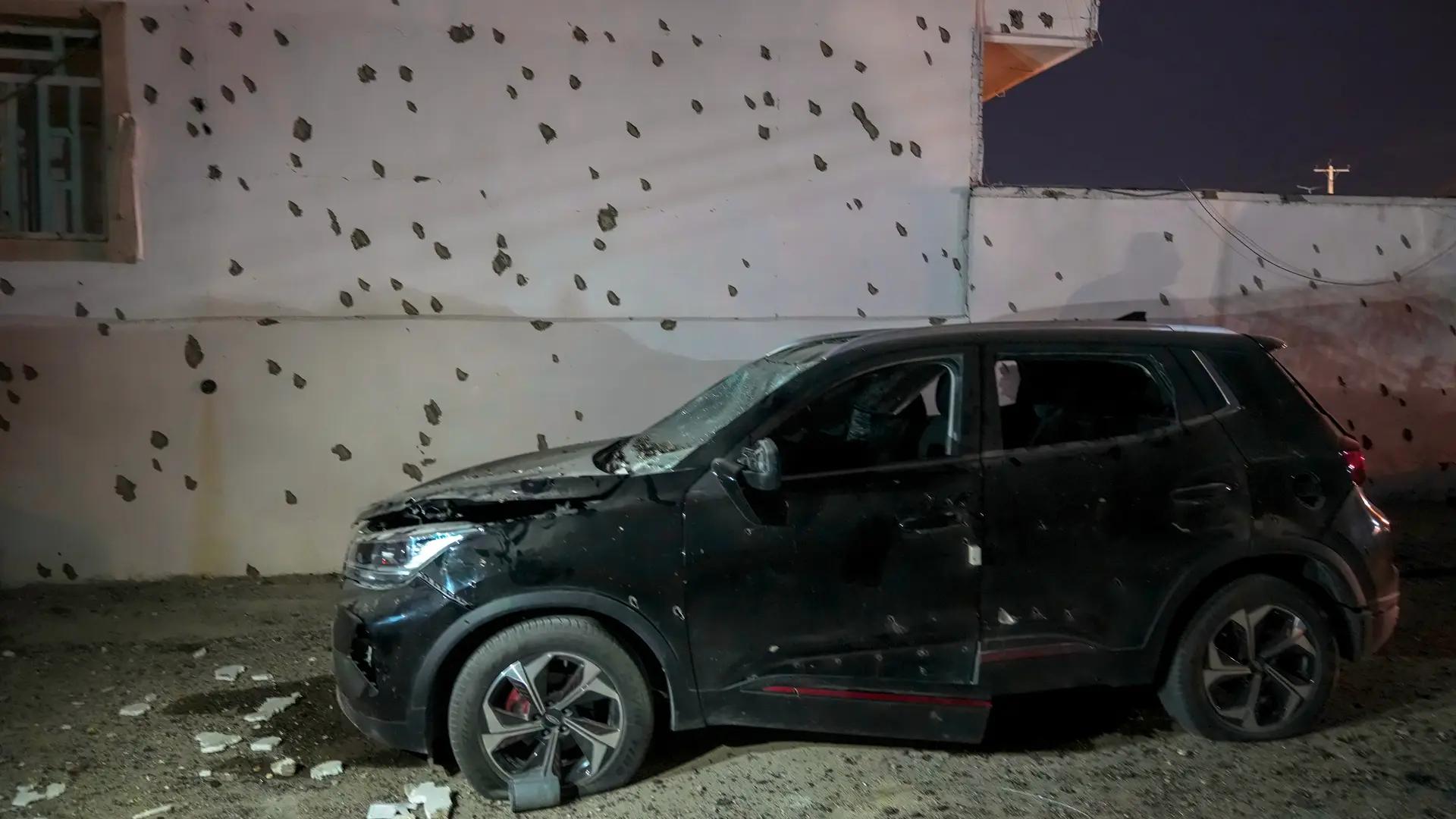
Iranian state media also reported U.S. strikes hit a fishmeal factory on Qeshm Island and several civilian sites in Hormozgan province, including a fishing pier and a Ports and Maritime Organization tower in Sirik.
U.S. Central Command said the latest strikes were in response to Tehran trying to attack commercial ships and American forces in the Middle East, and Iran’s Armed Forces General Staff said the armed forces would deliver “crushing and devastating blows” against the United States.
In the same escalation, explosions were reported across southern Iranian coastal areas including Bandar Abbas, and Iranian state television said the U.S. military struck the civilian Jiroft Airport in central Iran’s Kerman province, saying a projectile struck an area outside the runway and caused no casualties or damage to airport infrastructure.
Warnings and competing claims
President Donald Trump warned on social media that if Iran retaliates for the U.S. strikes, “they will be hit again at a much harder and higher level,” while U.S. Central Command spokesperson Capt. Tim Hawkins said, “The U.S. military never targets civilians, unlike the IRGC.”
Iran’s Ministry of Foreign Affairs described the Kuhestak wedding strike as a war crime and said it involved “These barbaric war crimes, which constitute a gross violation of the fundamental principles of international law,” while the Iranian Red Crescent said at least four people were killed and 67 others were injured in the alleged attack.

The Islamic Revolutionary Guard Corps issued a new statement warning the U.S. against future action and warning other countries in the region against helping the U.S., saying, “This offensive operation will continue as a lesson against the Americans until they regret their crime.”
Jordan and Kuwait also announced intercepting new Iranian attacks on American bases in the region, with Jordan saying it intercepted and destroyed 10 ballistic missiles launched from Iran and Kuwait saying its air defenses repelled “hostile drones.”
As the exchange of fire spread, the U.S. Embassy in Qatar urged Americans to remain “highly vigilant and be aware of possible flight cancellations, airspace closures, and travel disruptions,” according to the reporting.
Oil, navigation, and next steps
The renewed hostilities sharpened the focus on the Strait of Hormuz as a primary flashpoint, with Energy Secretary Chris Wright announcing “over 17 million barrels of oil flowed” through the waterway on Monday and the conflict driving fears of escalation.
““over 17 million barrels of oil flowed, the record since before the conflict,””
Al Jazeera reported that Brent crude rose 2 percent on Tuesday to top $92 a barrel, and it said traffic in the Strait of Hormuz remained heavily constrained as many vessels sailed “dark” with their Automatic Identification System turned off.
The U.S. and Iran are both seeking control over the Strait of Hormuz, and the reporting said Tehran effectively closed it after the war began while the U.S. and Iran continued exchanging strikes.
In response to the renewed fighting, the G20 finance ministers and central bank governors said they were concerned about continued disruptions to energy trade and called for “the free, safe, and predictable navigation through the Strait of Hormuz and worldwide.”
Meanwhile, the U.S. Central Command said it completed its latest strikes on Iran, and CENTCOM said it hit “air defense sites, radar systems, maritime assets and facilities, mine laying capabilities, and communications sites,” as the next phase of the confrontation remained tied to whether the Strait stays open.