Iran15 July, 20264 min read
Iran’s 60% Enriched Uranium Stockpile Remains Unresolved After US and Israeli Strikes
This article is an automated aggregation of coverage from news outlets. Our editorials offer in-depth analysis curated by the NewsCord team.
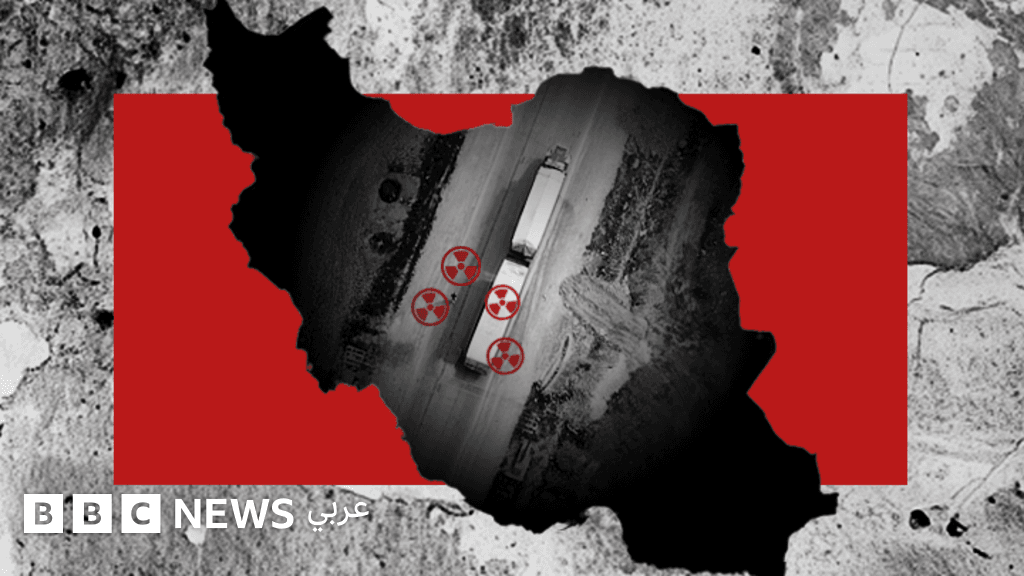
About 440–450 kg of 60% enriched uranium remains unaccounted after 2025 bombings disrupted inspections. Satellite imagery in March shows a flatbed truck carrying blue drums toward Isfahan underground bunkers.
Where the uranium went
Iran’s stockpile of enriched uranium—enriched to 60 percent—has become a central, unresolved puzzle in efforts to end the war between Tehran and Washington, with no independent party able to determine the amount, condition, or exact location after the American and Israeli strikes that targeted Fordo, Natanz, and Isfahan’s nuclear facilities during a 12-day war. The BBC describes the dispute as centering on “hundreds of kilograms of uranium Iran has enriched in recent years to a purity of 60 percent,” and it notes that before the 12-day war last year Iran’s stock of 60 percent enriched uranium stood at about 440 kilograms, according to IAEA estimates. The BBC adds that the materials are primarily stored as uranium hexafluoride gas (UF6) in specialized steel cylinders, while the IAEA’s production sites were clear—Fordo as the main center and Natanz as a secondary role—yet production does not necessarily show where the uranium is stored.
DW reports that IAEA Director General Rafael Grossi said in late April 2026 that the bulk of Iran’s highly enriched uranium probably remained at the Isfahan nuclear complex, and it cites IAEA claims that 18 blue-painted containers believed to be carrying about 200 kilograms entered a tunnel in the Isfahan Center for Nuclear Technology on June 9 (19 Khordad 1404), four days before the start of the 12-day war. DW also states that the agency says Iran has 440.9 kilograms of uranium in its possession enriched to 60 percent, a level described as only one small technical step away from the 90 percent level needed to build a nuclear weapon.
Talks, threats, and access
As the fate of the uranium stockpile remains a sticking point in undisclosed talks between Washington and Tehran, the Council on Foreign Relations’ Global Conflict Tracker says President Trump, while attending the NATO summit on July 8, believed the interim truce had ended and threatened further attacks, suggesting the U.S. Navy could reinstate its blockade of Iranian ports.
In the same dispute, Sky News Arabia reports that IAEA chief Rafael Grossi told the Financial Times that Kazakhstan has expressed willingness to host Iran’s stockpile of enriched uranium at levels close to those needed for military use if Washington and Tehran reach an agreement.

Sky News Arabia further says Trump had pressed to move the stock out of Iran, while Tehran indicated it would not hand over the stock, and it adds that negotiators reached a memorandum of understanding on the deal but Trump had not yet approved it.
The BBC frames the uncertainty as a consequence of the destruction of nuclear facilities by military strikes, the suspension of IAEA inspectors’ access, and conflicting accounts from Iranian and American officials that produced “a hazy picture of the fate of these materials.”
El País similarly describes how the IAEA’s physical access has been lost since the June 2025 strikes, and it quotes Rafael Grossi warning that “its large stockpile of nearly weapons-grade enriched uranium and its refusal to grant my inspectors full access are a matter of serious concern.”
What’s at stake next
The DW report ties the uranium question to the stalled negotiations, saying that “the fate of about 450 kilograms of 60 percent enriched uranium” is what talks between the United States and the Islamic Republic have been largely tied to. DW also describes the material form as uranium hexafluoride that has accumulated, and it quotes Roland Wolf warning that “Uranium hexafluoride gas, UF6, in steel cylinders becomes solid when cooled,” while noting that leaks and reactions with moist air may occur. In El País, Olli Heinonen cautions that satellite imagery has limitations, explaining that it “is not a continuous monitoring system that would allow determining, for example, the origin of a vehicle or the contents of the packages.”
The BBC adds that the dispute over the stockpile is intertwined with the technical gap between 60 percent enrichment and the 90 percent enrichment level required for a nuclear bomb, and it notes that Trump has said the stockpile should be destroyed whether inside Iran or abroad. Finally, the BBC says the IAEA report issued in May 2025 found that between February and May of that year alone more than 166 kilograms of 60-percent enriched uranium were produced at Fordo and about 19 kilograms at Natanz, underscoring why the location-and-storage puzzle remains central to what comes next.