Iran22 July, 20263 min read
U.S. Central Command Launches 11th Straight Night Of Strikes Against Iran
This article is an automated aggregation of coverage from news outlets. Our editorials offer in-depth analysis curated by the NewsCord team.
11th straight night of U.S. strikes against Iran. Iran retaliated with attacks on U.S. forces and regional targets.
BBC was read line by line by the Watchdog: 5.9. See the score →
Eleventh Night Strikes
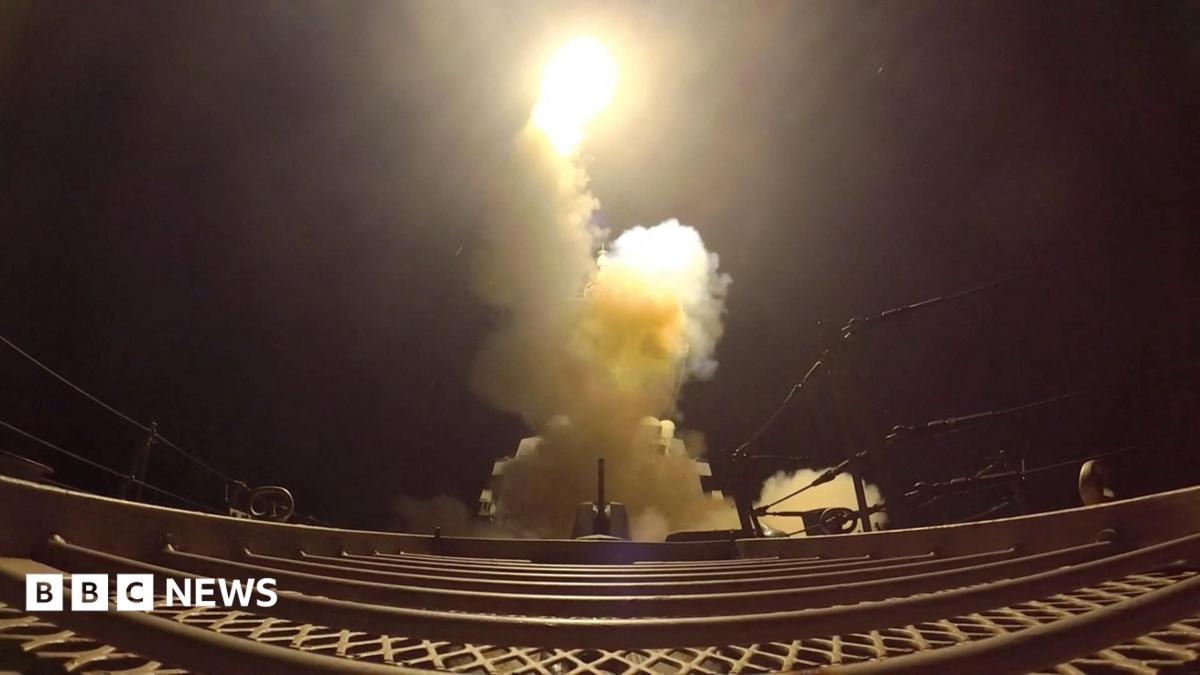
For the 11th night in a row, U.S. Central Command announced the start of a new round of strikes against Iran, aimed at undermining Iran's ability to threaten commercial shipping in the Strait of Hormuz.
“For the 11th night in a row, the U.S. Central Command announces the start of a new round of strikes against Iran.”
CENTCOM said the strikes began at 7:00 PM Eastern Time and that the operation was intended to continue weakening Iran's ability to threaten commercial shipping in the Strait of Hormuz.

Iranian media reported hearing a series of explosions in several areas across the country, including the cities of Behbahan and the port of Mahshahr in Khuzestan Province, western Tabriz, and areas in Hormozgan and Sistan and Baluchestan provinces.
The BBC reported that U.S. President Donald Trump said the United States 'has not finished its work at all' with Iran as the U.S. military continued overnight for the tenth consecutive night to strike Iranian infrastructure.
In response to the escalation, the Iranian Revolutionary Guard Corps announced missile and drone attacks targeting American military bases in regional countries, warning that the Strait would not be safe as long as the U.S. strikes continue.
Threats and Warnings
The Unified Headquarters of the Iranian Armed Forces (Khatam al-Anbiya Headquarters) warned that any American attack on Iranian nuclear facilities or other sensitive sites would be considered 'an expansion of the war in the region,' according to a statement carried by the official Islamic Republic of Iran Broadcasting. The statement stressed that if 'the U.S. military undertook such a step, we would consider it an expansion of the war in the region.' On Tuesday, Trump said the United States would 'strike the Mount al-Fas site very soon,' describing the underground fortified complex as about one mile south of Natanz in central Iran.
The BBC reported that for the second time in ten days, Trump threatened to strike the area known as 'Beikax Mountain' near Iran's Natanz uranium enrichment facility 'soon.' The BBC also said the Jordanian army shot down three Iranian missiles aimed at the kingdom, with no injuries or material damage, while Kuwait announced it was intercepting missiles and drones launched by Iran.
Regional Fallout and Costs
The BBC reported that a fire broke out Tuesday in southern Iran on a mountain overlooking Shiraz, with IRNA saying 'A large fire broke out Tuesday evening on the Derak Hills and the mountains near Bab al-Quran in Shiraz,' and that thick smoke and flames could be seen from several neighborhoods.
In Bahrain, the BBC said Tehran claimed it targeted a hangar for MQ-9 drones at Ali al-Salem Air Base in Kuwait, while the Kuwaiti Ministry of Defense said 'Kuwaiti air defenses are currently intercepting missile and drone attacks in response to the heinous Iranian aggression.'
The Al Jazeera net report said the Kuwaiti Ministry of Electricity and Water announced that several power generation and water desalination plants were subjected to Iranian attacks for the fourth consecutive day, resulting in fires at several facilities.
It also said the IRGC announced it targeted a data center belonging to the American technology company Amazon in Bahrain, while Jordanian forces neutralized five drones and downed three Iranian missiles targeting the kingdom.
In parallel, DIE WELT reported that U.S. Defense Secretary Pete Hegseth estimated the costs of the Iran war at 37.5 billion dollars, and that he pressed for a supplemental defense budget of 67 billion dollars in Congress.