Iranupdated 1h ago2 min read
Iran’s Pezeshkian Tells Pakistan’s Asim Munir US Must Lift Sanctions Before Talks
This article is an automated aggregation of coverage from news outlets. Our editorials offer in-depth analysis curated by the NewsCord team.
Iran's president Masoud Pezeshkian demands US lift sanctions and end threats before any talks. He spoke with Pakistan's Army Chief Asim Munir, citing US warmongering as regional tensions cause.

PressTV was read line by line by the Watchdog: 2.0. See the score →
Pezeshkian sets conditions
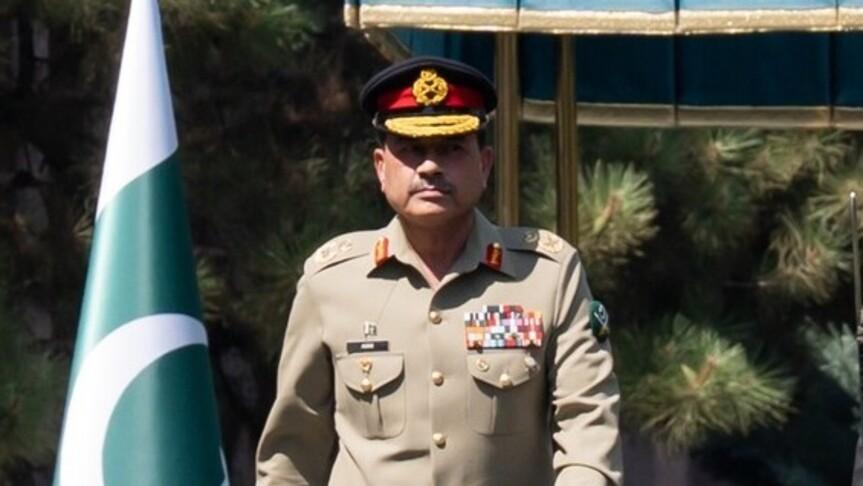
Iranian President Masoud Pezeshkian told Pakistan’s army chief, Field Marshal Asim Munir, that the United States must end pressure and threats and lift sanctions before any negotiations. Pezeshkian said, “Before any negotiations, they must first end the pressure and threats and lift sanctions,” during a meeting in Tehran carried by Iranian state broadcaster IRIB. Pezeshkian also argued that “All regional problems, from escalating tensions to disruptions in the Strait of Hormuz, stem from US warmongering,” as he blamed Washington for disruptions in the Strait of Hormuz.
“Before any negotiations, they must first end the pressure and threats and lift sanctions.”
Iranian Foreign Ministry spokesperson Esmaeil Baqaei said Munir’s visit was primarily focused on strengthening bilateral relations and cooperation between Tehran and Islamabad. Munir arrived in Tehran on Tuesday accompanied by a delegation of officials, as diplomatic efforts aimed at resolving differences between Iran and the US remained stalled.
Talks stall, threats rise
Iran International reported that analysts were cautious about a breakthrough, with Danny Citrinowicz saying continuing diplomatic exchanges did not amount to evidence of an imminent breakthrough.
Citrinowicz told Iran International, “In order to have a breakthrough, one side needs to show significant compromise. And I don't see that in the Iranian side,” as Washington sought substantial restrictions on Iran’s uranium enrichment capabilities.

Iran’s Foreign Minister Abbas Araghchi said Tehran’s seven-day proposal remained on the table, under which Iran would reopen the strait within seven days if Washington accepted Tehran’s conditions.
The Times of Israel said senior Iranian officials believed Iran was deliberately prolonging talks to politically weaken Donald Trump ahead of November’s US midterm elections.
One Iranian official told The Times of Israel, “Iran is preparing for renewed Israeli and US attacks, not for a deal with America to end the war,” as fears of renewed military action and deep distrust shaped Tehran’s stance.
Seven conditions and leverage
Iran’s Parliament Speaker Mohammad Baqir Qalibaf told Pakistan’s Army Chief Asim Munir in Tehran that the United States cannot gain Iran’s trust except by implementing the seven conditions.
“Threats and military moves cannot affect the strategic decisions of the Islamic Republic.”
Qalibaf said, “Threats and military moves cannot affect the strategic decisions of the Islamic Republic,” while he reiterated that Tehran had nothing new regarding negotiations with Washington.
Qalibaf said Iran’s seven conditions included stopping confrontations on all fronts, including Lebanon, the Gaza Strip, and the Houthis in Yemen, along with ending the maritime blockade imposed on Iranian ports.
Masoud Pezeshkian told Munir that “You cannot intensify sanctions and pressure day after day and close off routes and avenues to our country, and then claim that you want dialogue and negotiations. What kind of dialogue is this?”
Press TV reported that Iran’s security chief, Major General Mohsen Rezaei, told Pakistan’s Army Chief that all enriched nuclear materials will remain in Iran as a national asset, stressing that no negotiations with the US will take place until Washington builds trust by meeting Iran’s conditions.