Iranupdated 1h ago2 min read
IRGC Navy Says Supertanker Exploded After Striking Mine South Of Strait Of Hormuz
This article is an automated aggregation of coverage from news outlets. Our editorials offer in-depth analysis curated by the NewsCord team.
Super tanker carrying about two million barrels exploded after hitting a mine south of Hormuz. IRGC says vessel had switched off navigation and used an unauthorized southern route.

Anadolu Ajansı was read line by line by the Watchdog: 6.2. See the score →
Mines, fires, and routes
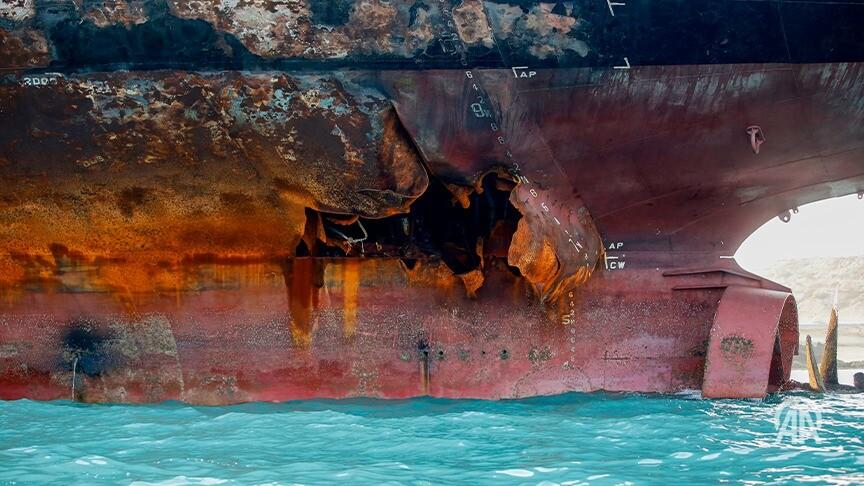
Iran’s Islamic Revolutionary Guard Corps Navy said a supertanker carrying more than two million barrels of crude oil exploded and caught fire after striking a naval mine south of the Strait of Hormuz. The IRGC Navy said the tanker switched off all its radar and navigation systems and attempted to exit through the southern, unauthorized route of the strait despite warnings from Iranian naval forces. The IRGC Navy warned that vessel owners and crews operating in the Persian Gulf and the Sea of Oman would be held responsible for using unauthorized routes.
The IRGC Navy added that any movement disregarding the security of the Strait of Hormuz would be met with a firm response. The IRGC Navy also said two tankers were set ablaze and brought to a halt south of the Strait of Hormuz after hitting Iranian mines, according to a statement shared by state media.
Competing claims and denials
The IRGC stated that “two violator oil tankers caught fire and became immobilized” after mines laid by the IRGC Navy exploded in the illegal southern passage of the Strait of Hormuz.
UK Maritime Trade Operations reported that it had received accounts of “an incident between an oil tanker and military forces” on Monday, about 121 nautical miles east of the Omani city of Duqm, and it indicated there were no damages or casualties.
A U.S. official rejected the IRGC claim that its air defense system had shot down a U.S. MQ-9 drone over the strait on Monday night.
The IRGC Navy said ships operating in the Strait of Hormuz and the Gulf with their navigation and identification systems switched off would face a firm response.
JMIC’s October 18 advisory said there was “no substantiation to these claims” about Iranian mine-strike assertions for October 17.
Threats, cables, and stakes
IRGC spokesman Hossein Mojabi threatened on Monday to attack undersea internet cables in the gulf and in the strait, and he asserted that “new weapons will be revealed” to remove the U.S. military presence in the region. The Iranian Foreign Ministry spokesman Esmail Baghaei said Tehran will respond to any U.S. attack, and he warned, “An American strike on Kuh Kalang and Iran without retaliation is a fantasy and empty rhetoric.” Arsenio Domínguez, secretary-general of the International Maritime Organization, said about 6,000 sailors have been stranded in the strait since the war began.
The IRGC Navy warned that any movement disregarding the security of the Strait of Hormuz would be met with a firm response, while the IRGC also threatened to boycott undersea internet cables in the Gulf. The reports described a wider dispute over control of the waterway, with the Strait of Hormuz subject to the right of transit passage under the United Nations Convention on the Law of the Sea.