Iran16 November, 20263 min read
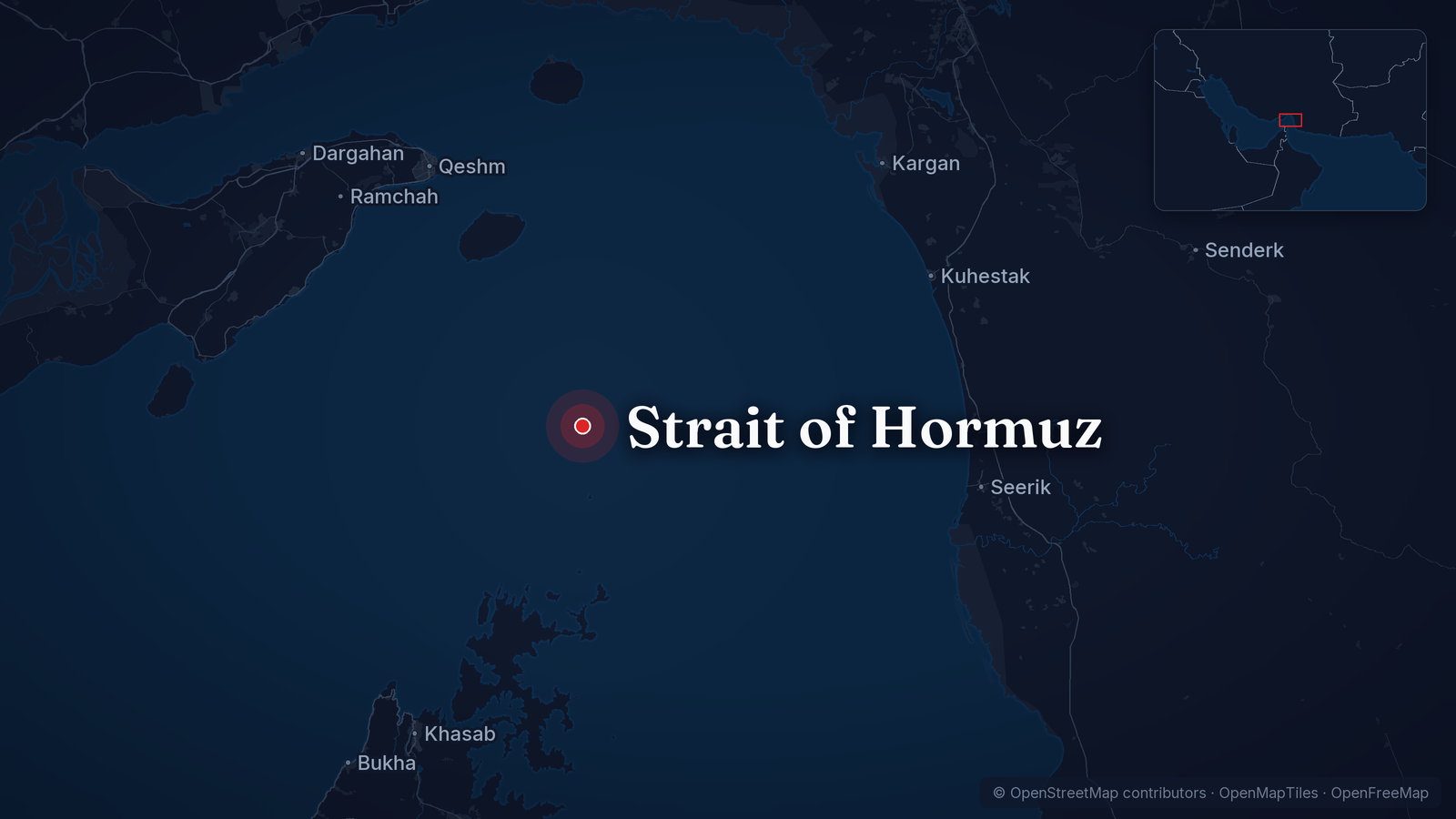
MapIRGC Navy Says Two Tankers Hit Mines and Caught Fire in Strait of Hormuz
13 West Asian7 Western Mainstream6 Other9 Other source typesMap: © OpenStreetMap contributors, ODbL · Cropped for layout
This article is an automated aggregation of coverage from news outlets. Our editorials offer in-depth analysis curated by the NewsCord team.
IRGC says two oil tankers hit naval mines and caught fire on unauthorized southern route. Three oil tankers reported on fire, with at least one sinking in Hormuz.
Save coverage image
Euronews was read line by line by the Watchdog: 6.0. See the score →
Mines, fires, and a drone
Iran’s Islamic Revolutionary Guard Corps (IRGC) Navy said on Monday that two oil tankers struck naval mines and caught fire while attempting to cross the southern part of the Strait of Hormuz through a route Tehran considers unauthorised. Iran’s regular navy said another tanker caught fire and became immobilised after striking a mine in restricted waters east of the strait, while the UK Maritime Trade Operations agency separately reported two tanker attacks in the strait on Monday. The UKMTO said a tanker was disabled and an engine room fire broke out following an attack seven nautical miles (13km) north of Khasab, Oman, and it said no casualties were reported.
The incidents followed a drone alert at Iraq’s Khor Mor gas field in the Kurdistan region, where warning sirens sounded after a drone flew over the field on Monday, Reuters reported citing two security sources. The UN’s International Maritime Organization recorded 136 security incidents involving vessels in the Strait of Hormuz and the wider Middle East between March 1 and November 11, including 35 in October alone.
Competing counts and routes
Iran’s IRGC Navy said two oil tankers were hit by sea mines in the Strait of Hormuz, with fires ignited, and it said six oil tankers had been set ablaze in similar incidents over the past two days, Sunday and Monday. An Anadolu Ajansı report said Iran’s army’s Navy said one tanker struck a mine early Monday in an area east of the strait it described as prohibited, while the IRGC Navy said two tankers struck mines while attempting to cross the southern Strait of Hormuz. The IRGC Navy alleged that the two southern-route vessels were operating under the direct guidance of US officers and with support of American fighter jets, and it said the tankers suffered several powerful explosions.
The UKMTO said it received a report from a tanker’s company security officer that the vessel had been hit by an “unknown projectile” while transiting outbound through the strait, and it said the collision led to a fire in the engine room. The sources also left the linkage unclear, because it remained unclear whether either incident was connected to the mine strikes claimed by Iran.
Diplomacy, escalation fears
Iran’s Deputy Foreign Minister Kazem Gharaibi Arabi said Iran had shortened the deadline for implementing its plan to open the Strait of Hormuz from seven days to two days, and he said postponing implementation would hinder reaching an agreement. Gharaibi Arabi warned that his country would not allow the International Atomic Energy Agency to inspect its nuclear facilities before Tehran’s conditions were met and the war was ended permanently. Iran’s conditions, as listed in the report, included lifting the maritime blockade, ensuring safe passage for commercial ships and oil tankers through the Strait of Hormuz, canceling unilateral sanctions, waiving export restrictions on oil, releasing frozen Iranian assets, keeping nuclear materials inside the country, and ending the war.
A US official confirmed to Al Jazeera that the aircraft carrier USS Theodore Roosevelt arrived in the region, bringing the number of American aircraft carriers operating in the US Central Command area to three. Euronews said the USS Theodore Roosevelt arrived to join two other carrier strike groups in US CENTCOM’s operating region, and it described the situation as bringing the region closer to a new all-out war.