Iran20 July, 20263 min read
IRGC Vows to Safeguard Iran’s Dignity and Independence, Promises Unforgettable Lesson for Washington
This article is an automated aggregation of coverage from news outlets. Our editorials offer in-depth analysis curated by the NewsCord team.
IRGC pledges to safeguard Iran's dignity and independence under Leader Khamenei. IRGC vows to deliver an unforgettable lesson to the United States.
Tehran Times was read line by line by the Watchdog: 3.5. See the score →
IRGC vows and US threat
The Islamic Revolution Guards Corps (IRGC) pledged to remain committed to the strategic guidance of Leader of the Islamic Revolution Ayatollah Seyyed Mojtaba Khamenei, saying it regarded the Leader’s directives as “a binding command, a divine covenant and a clear roadmap” for continuing its mission to safeguard Iran’s dignity and independence. In a Monday statement issued in response to Ayatollah Khamenei’s recent message, the IRGC vowed never to tie Iran’s future to the promises of a “child-killing enemy,” and said past experiences reinforced its belief that national dignity could only be secured through “resistance, vigilance and strength.”
The IRGC also said it remained committed to carrying out the Leader’s directive and vowed to teach Washington the “unforgettable lesson” he had promised, adding that any such response would be delivered with “power, determination, wisdom and authority.” General Ahmad Vahidi, addressing the strategic message of Ayatollah Seyyed Mojtaba Khamenei, warned, “We will never tie the destiny of this land to the promises of a child-killing enemy whose record is marked by betrayal, deception, and hostility toward the Iranian nation.”
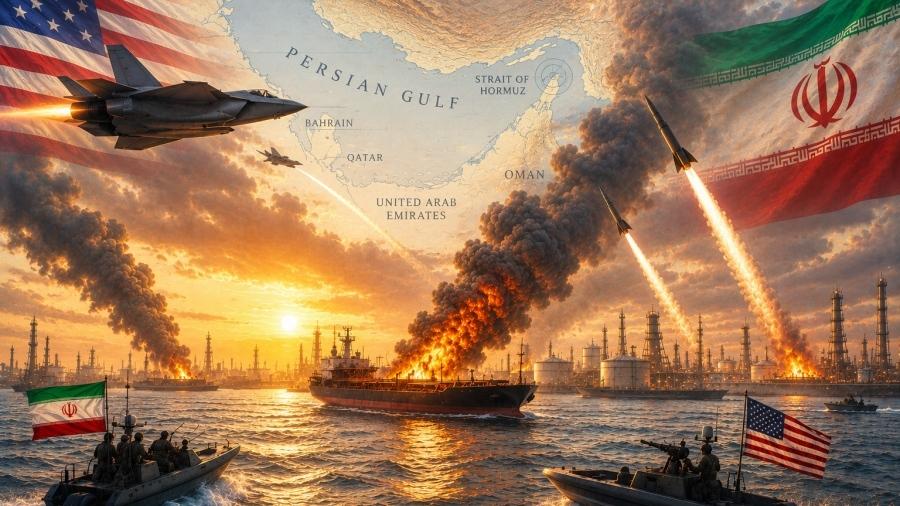
Hormuz conflict and regional spread
As the US and Iran confrontation escalated, the IRGC warned that the Strait of Hormuz was becoming the new epicenter of a conflict that threatens not only regional security but also the stability of the global economy.
The Bankingnews account said the U.S. military confirmed that three more American service members were killed in retaliatory strikes against Iran and its proxies in just two days, bringing the total U.S. death toll since the conflict began in late February to 17.

It also said the latest round of strikes began at 6 p.m. Eastern Time on Saturday, targeting Iranian military installations in the Strait of Hormuz, aimed at “further degrading Iran's ability to threaten commercial shipping and swiftly punishing the IRGC for the attack on U.S. forces in Jordan.”
In parallel, the Jordan News report said CENTCOM announced a new wave of military strikes marking the eighth consecutive night of U.S. operations, and described the strikes as aimed at reducing Iran’s ability to threaten commercial shipping through the Strait of Hormuz at 10:00 p.m. GMT.
MoU rupture and “unforgettable lesson”
The conflict’s political frame also shifted, with Iran saying it was no longer bound by the 14-point Memorandum of Understanding (MoU) signed with Washington last month and accusing the US of violating the agreement through renewed military action.
In the Gulf News account, Iranian Foreign Ministry spokesperson Esmail Baghaei said the agreement was based on reciprocal commitments and claimed the US had failed to meet its obligations, while Iran’s Supreme Leader Mojtaba Khamenei warned that the US would face “unforgettable lessons” if attacks continued.
The same report said Iran’s military adviser Major General Mohsen Rezaei warned that Tehran would go beyond proportional retaliation if US strikes continued, and it described the UAE Ministry of Foreign Affairs urging all parties to exercise maximum restraint and calling for an immediate halt to the escalation.
Separately, the Tehran Times reported that IRGC commander-in-chief Brig. Gen. Ahmad Vahidi said Iran would not “tie the destiny of this land to the promises of a child-killing enemy whose record is marked by betrayal, deception, and hostility toward the Iranian nation.”