Lebanon · updated 2h ago · 3 min read
Israel Detonates 1,100 Tonnes of Explosives on Ali al-Taher Ridge as Joseph Aoun Rejects New Talks
Israel detonated Ali al-Taher tunnels with about 1,100 tons of explosives near Nabatieh. Lebanese President Joseph Aoun visited Nabatieh and said there would be no new negotiations.
Link between demolition and whether negotiations resume.
3 of 5 outlets skipped it: lebanon approved a draft law banning property sales in Israeli-occupied areas.
The Times of Israel was read line by line by the Watchdog: 3.5. See the score →
30outlets compared
Same story, two versions
tap a side to read it in full
Al Jazeera frames the demolition alongside stalled negotiations, while Asharq frames it through residents’ fear of what comes next.
Talks Paused After Blasts
The next round of United States-mediated talks between Israel and Lebanon was postponed as Israeli forces continued to strike and demolish buildings across southern Lebanon, with Lebanese President Joseph Aoun confirming during a visit to Nabatieh that “there will be no new negotiations with Israel at the moment.”
“there will be no new negotiations with Israel at the moment”
Aoun said the withdrawal, the return of prisoners and displaced people, and reconstruction were national principles he pledged to implement, while AFP quoted an unnamed US official saying the next round of talks scheduled for this month in Rome would not be happening until October.

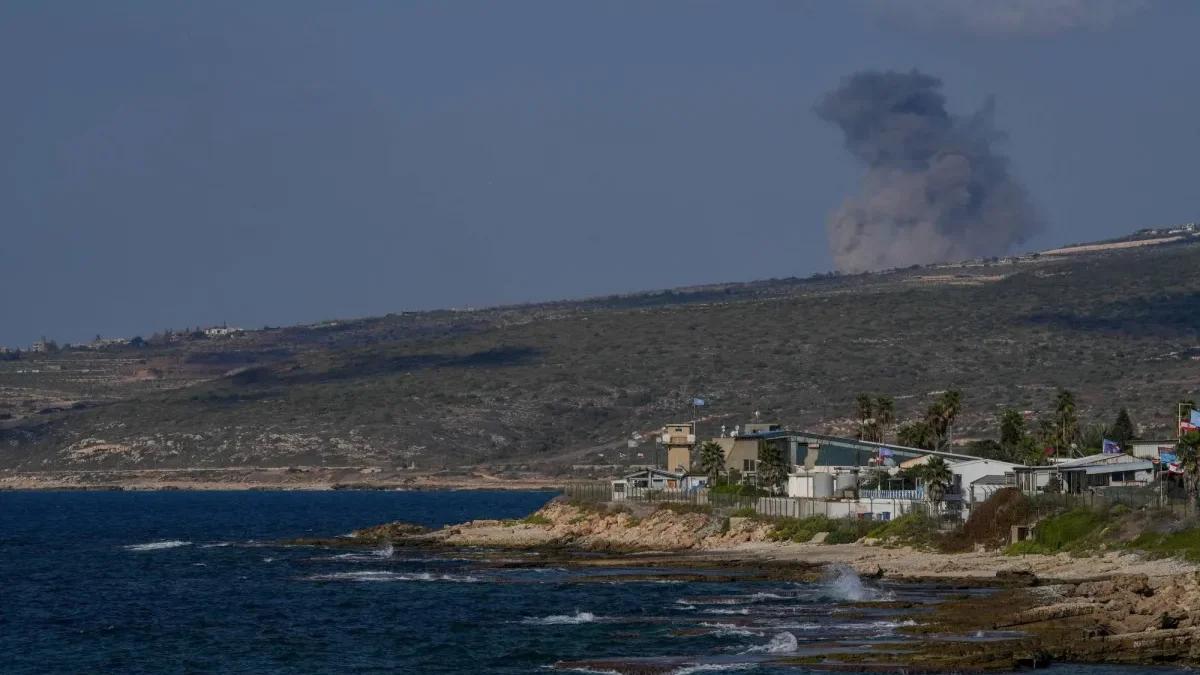
Israeli forces detonated 1,100 tonnes of explosives at what they claimed was a Hezbollah central command complex built into the Ali al-Taher Ridge, causing tremors throughout surrounding areas in southern Lebanon.
Israeli attacks in the area have killed at least 29 people in the last two weeks, including 12 members of the same family in an air raid on Kfar Ramman, which neighbours Nabatieh.
The Lebanese armed group has rejected direct talks with Israel, and the Lebanese army warned that Israel’s escalation threatens the implementation of the framework agreement between Lebanon and Israel.
Aoun Visits Nabatieh
Lebanese President Joseph Aoun visited Nabatieh in southern Lebanon near Talh Ali al-Tahir, accompanied by Army Commander General Rudolph Hichal and security agency leaders, after Israel announced the destruction of a wide network of underground Hezbollah tunnels.
During the visit, Aoun told residents outside Nabatieh’s government hospital, “We are here to thank the hospital staff for their resilience, and we are proud of them,” as displaced residents faced clashes between Hezbollah and the Israeli army.
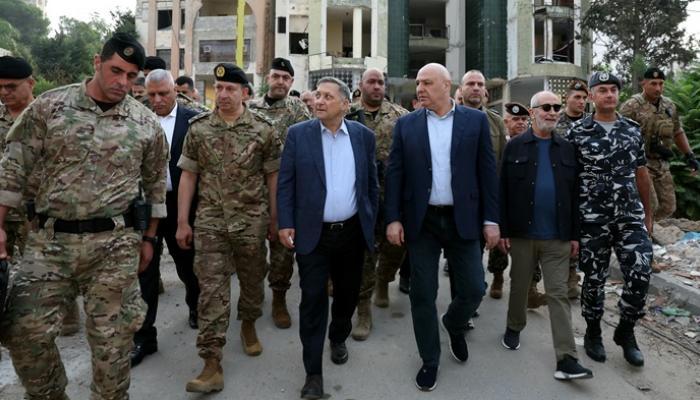
Some Nabatieh residents urged the army to strengthen its presence in the city to avoid a possible ground attack, including a man who told Aoun: “The residents want to feel safe and their children safe after their displacement and humiliation.”
The fighting had calmed after a memorandum of understanding between Iran and the United States in June and a framework agreement later between Lebanon and Israel, but Israeli airstrikes intensified recently, especially in the Nabatieh region.
A 4.1-magnitude earthquake was recorded in southern Lebanon after the Israeli tunnel destruction, according to the U.S. Geological Survey, while the Lebanese army warned on Wednesday that Israel’s escalation threatens the framework agreement.
What Comes Next
Israel’s demolition of two tunnels extending two kilometers through Ali al-Taher ridge brought movement in Nabatieh to a standstill and deepened fears over what comes next, as Israeli Defense Minister Israel Katz said Israel was ready to press ahead with its campaign and continue striking Hezbollah and other sites.
“a difficult night”
The US Geological Survey recorded a magnitude 4.1 seismic event in southern Lebanon, while Lebanon’s National Center for Geophysics said ground waves detected at 9:08 p.m. on Thursday resulted from the explosion in the Ali al-Taher area.
Residents described “a difficult night,” with one living 20 kilometers from Ali al-Taher saying, “The ground shook beneath us for about five seconds,” and another resident of Marjeyoun saying the sky glowed red as dust covered trees, cars and rooftops.
Asharq Al-Awsat reported that many residents who had returned to Nabatieh “left again for fear that the war would resume or the fighting would expand,” and that people were asking about “the next phase,” which remained unclear even to the Lebanese state.
Beirut continued contacts with the United States aimed at de-escalation and resuming negotiations through an eighth session expected to be held this month, while Hezbollah issued no official statement and the fate of fighters suspected of having been inside the tunnels remained unknown.