Lebanon03 July, 20263 min read
Israeli Air Raids Kill Israeli Soldier in Southern Lebanon as Givati Brigade Completes Missions
This article is an automated aggregation of coverage from news outlets. Our editorials offer in-depth analysis curated by the NewsCord team.
Givati Brigade completed its mission in southern Lebanon. Israeli casualties reported in southern Lebanon amid raids; numbers vary.

Givati Brigade ends
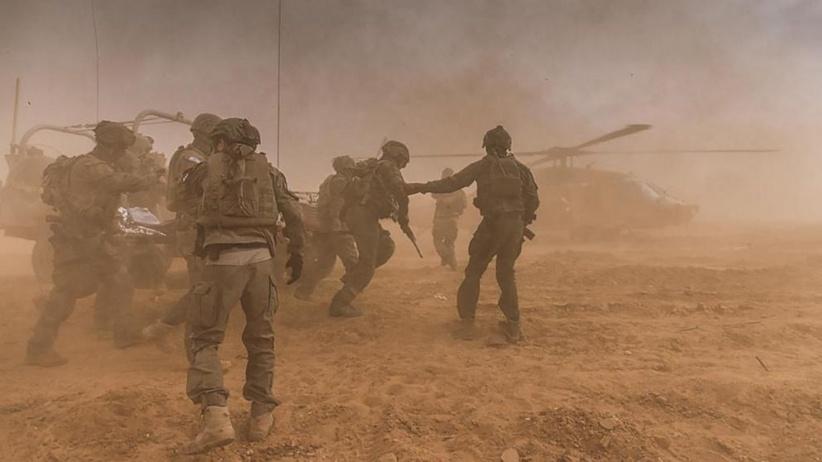
Israeli forces carried out air raids on southern Lebanon, including a drone strike targeting the surroundings of Ghandour Hospital in the town of Nabatieh al-Fouqa and a fighter-aircraft raid on the town of Bar’ashit in the Bent Jbeil district, while Israeli forces also conducted demolition operations in Hadatha and around Kunin and al-Tiri in the Bent Jbeil district. The Israeli army announced that the Givati Brigade completed its combat missions in southern Lebanon after eight months of operation, with an official ceremony held at Camp Filon in the north and participation by Northern Command chief Rafi Milo. The army said the brigade’s mission included defensive operations on the border, then attacks inside areas in southern Lebanon including Al-Khiyam and Bent Jbeil, and north of the Litani River, and it claimed the brigade destroyed hundreds of Hezbollah’s infrastructure, killed hundreds of its fighters, and found more than a thousand weapons.
The framework agreement signed between Beirut and Israel under U.S. mediation provided for an incremental Israeli withdrawal starting with two unnamed experimental zones, but the agreement did not specify a timetable for withdrawal from the two zones or from all territories. According to the latest official Lebanese toll cited by Al-Jazeera Net, Israeli attacks on the country since March 2 have killed 4,298 people and injured 12,196 others.

Deaths, injuries, and disputes
An Anadolu Ajansı report said an Israeli soldier was killed and another wounded on Wednesday during what the army described as an "operational activity" in southern Lebanon after the overturning of a military tanker truck, identifying the killed soldier as Reserve Staff Sergeant Basil Sweid, 32, who served as a driver. In a separate incident, BFM reported that the Israeli army announced on Thursday, June 18, the death of one of its soldiers who died on Wednesday in southern Lebanon in an incident that left seven other soldiers injured, with the soldier described as a 29-year-old staff sergeant who "fell in combat." Israeli Defense Minister Israel Katz said Israeli forces would not leave the occupied territories in southern Lebanon, "even if the United States demanded a withdrawal," according to Anadolu Ajansı.
As the framework agreement was discussed, Euronews reported that Tehran warned on Thursday that maintaining even the slightest Israeli presence in Lebanon "would annul" its agreement with the United States. Euronews also said that Israel is quietly negotiating with the United States to maintain its presence in Lebanon for what it describes as operations necessary to protect its territory against Hezbollah threats.
Withdrawal plans and risks
Ici Beyrouth reported that on Sunday, the day after the framework agreement between Beirut and Israel under U.S. mediation, Israeli aviation conducted new strikes in southern Lebanon and Israel said it was preparing a first partial withdrawal of its forces from two sectors of the Nabatieh District. The Israeli army said it had killed on Saturday Hezbollah fighters armed with anti-tank rocket launchers (RPG) in the Nabatieh region and destroyed an RPG launcher and infrastructure used by the movement, claiming it acted to "eliminate the threats" weighing on its soldiers. According to the Emergency Operations Center of the Lebanese Ministry of Public Health cited by Ici Beyrouth, Israeli military operations have killed 4,247 and wounded 12,195 in Lebanon since March 2.
Ici Beyrouth also reported that Israeli authorities expect a possible Hezbollah retaliation in the coming days, quoting a security official as saying, "Hezbollah will not sit idly by," while assuring that Israel was ready for a new escalation. Meanwhile, L’Orient-Le Jour quoted Prime Minister Nawaf Salam saying, "We must, on the contrary, do everything possible to avoid armed confrontation with Hezbollah, but we will not yield to blackmail or threats of civil war," as he argued for placing all weapons on Lebanese soil under the army’s authority.