Gaza Genocide04 August, 20263 min read
Israeli Forces Bomb Gaza Almost Daily As Tech Workers Rebuild Online
This article is an automated aggregation of coverage from news outlets. Our editorials offer in-depth analysis curated by the NewsCord team.
Gaza tech workers rebuild livelihoods online despite ten months after ceasefire and ongoing conflict. A 24-year-old Palestinian software engineer connects with a mentor in Silicon Valley to advance skills.
BBC was read line by line by the Watchdog: 4.3. See the score →
Tech work amid bombing
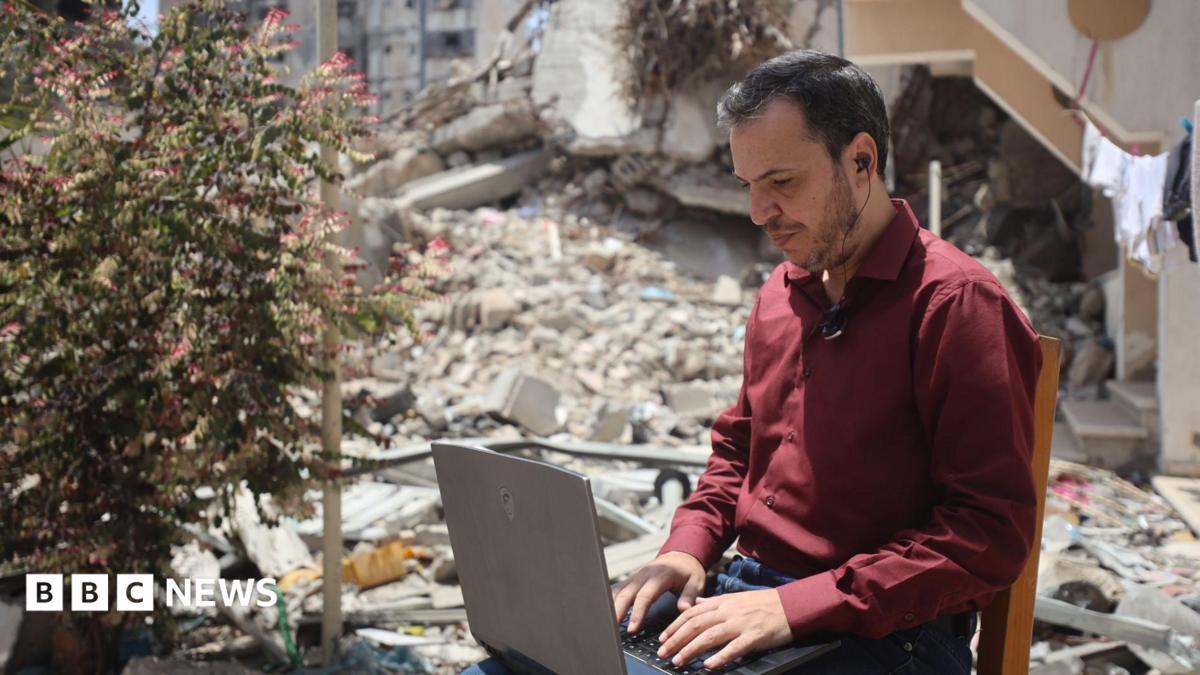
Ten months after a US-brokered ceasefire between Israel and Hamas, Gaza’s tech workers are trying to rebuild their lives online while Israeli forces “continue to bomb Gaza almost daily.” Walaa Volidis, a 24-year-old Palestinian software engineer, lives in a tent in Deir al-Balah in central Gaza and says, “When the war started, I lost everything: my job, my university, even some of my family members.” The BBC reports that the UN says Gaza’s unemployment rate has passed 80% compared with 22% before the war, and it frames online work and freelancing for clients abroad as a way to earn income.
“Hamas hasn't disarmed and Israeli forces continue to bomb Gaza almost daily.”
Nicole Hark of Mercy Corps describes online work as “a sort of digital lifeline,” saying that if people have a laptop and working internet they can work and have an income. The BBC also says Gaza Sky Geeks was founded in 2012 by Google and Mercy Corps, and that two of its three hubs were destroyed during the war.
Ceasefire, casualties, and payment
The BBC says that despite the “US-brokered ceasefire” and a recent deal between President Donald Trump’s “Board of Peace” and Hamas to advance his peace plan, “Israeli bombardments in Gaza have continued on a near-daily basis.”
It adds that Israel says it is targeting Palestinian armed groups, while the Hamas-run Health Ministry says “at least 1,250 people have been killed, including 265 children, since October's truce,” and the UN considers the figures reliable.

Tarik Zaeem, a 44-year-old freelance programmer and former chief technology officer for a local firm, tells the BBC, “When I work on my laptop, I forget everything. I forget what's happened.”
The BBC reports that Tarik’s mobile app work includes “a mobile app to make bookings for a barber's shop and a valet parking app for a Saudi client,” but that getting paid remains a challenge due to few reopened bank branches and severe cash shortages.
It says Palestinians cannot register with most digital payment platforms and that some rely on brokers in Gaza who charge high fees to convert electronic transfers into cash, leaving him with “only half his original payment.”
What’s at stake next
The BBC links the future of Gaza’s digital economy to whether people can keep working, noting that “the majority of the two million population is reliant on humanitarian aid to survive.” It says Mercy Corps argues that online work is “really critical to help people go back to work,” because “They don't want to be dependent on aid.” In the same reporting, the BBC describes how Gaza’s power and communications infrastructure has been hit hard, saying Gaza’s power system has suffered near-total collapse and approximately 75% of its telecommunications networks have been damaged or destroyed.
The BBC also says Mercy Corps supports co-working spaces across Gaza using generators and solar panels to offer better internet connections and a more stable power supply. Against that backdrop, the BBC recounts that Tarik describes an air strike outside his co-working space in Gaza City in June, where a Palestinian student sitting her exams online was killed in the street.