Lebanon10 September, 20263 min read
Israeli Forces Damage Water Networks Across 20 Villages In Southern Lebanon, Doctors Without Borders Says
This article is an automated aggregation of coverage from news outlets. Our editorials offer in-depth analysis curated by the NewsCord team.
Israeli forces damaged or destroyed water networks and pumping stations across 20 southern Lebanese villages. MSF says the damage prevents displaced residents from returning and rebuilding basic life.

Anadolu Ajansı was read line by line by the Watchdog: 1.3. See the score →
Water systems hit in south
Doctors Without Borders/Médecins Sans Frontières said Israeli forces have damaged or destroyed water networks, pumping stations, filtration systems, and other critical infrastructure across 20 villages in southern Lebanon, preventing displaced people from returning to rebuild their lives. MSF teams reported they are repairing water filtration systems and borehole networks, providing water tanks, rehabilitating distribution networks, and carrying out other critical activities after assessing damage throughout the region. MSF project coordinator in Lebanon Charlene Silvin said, “Before people ask about health care, education, or housing, they ask about water,” describing a pattern seen in every location MSF visited.
MSF said solar panels powering water infrastructure had been struck or damaged in every location it visited, disrupting systems that communities rely on for daily life. In Yater, MSF said the community water tank was directly hit and damaged beyond repair, and in Froun it said a water tank was rendered inoperable and MSF repaired the water filtration unit and connected it directly to the water source, bypassing damaged infrastructure.

Aoun presses state return
Lebanese President Joseph Aoun told the opening of a Cabinet session that “the time has come for the state to return to the south,” urging ministries to make every possible effort to support residents of Nabatieh, Tyre and Arabsalim.
Aoun said the presidency had listened to appeals from residents of Nabatieh, Tyre and Arabsalim, stressing that the state “stands by them” and cannot remain distant from them.
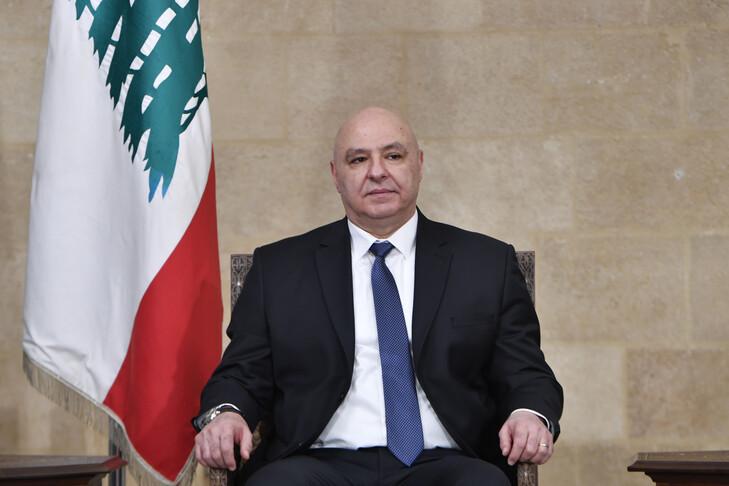
The Anadolu Ajansı report said Aoun urged all government ministries to provide support to residents of southern Lebanon as Israeli attacks continued across the region.
In the same reporting, Aoun described the south as “an essential part of Lebanon,” adding: “The time has come for the state to return to the south. This is our collective responsibility and our duty toward our people.”
Naharnet said Aoun’s remarks came after the Lebanese Army and security forces reinforced their presence in Nabatieh following Israeli strikes that left 27 dead and 69 wounded in three days.
Schools, displacement, and stakes
Al Jazeera reported that in Froun, southern Lebanon, Abbas Makki, the principal of a school in the village, prepared for students to return to a building that was also doubling as a centre for displaced people. Makki said, “We will reopen the school [for students], but will not abandon the displaced people,” as Froun was described as littered with rubble from buildings destroyed by Israeli air strikes and local officials said most of the village still had no state-provided water or electricity. Al Jazeera said the public school year was set to start on Tuesday, September 15 in Lebanon, and a local official said the Lebanese government had also set that day as a goal for restoring water and electricity to Froun.
The report quoted UNESCO education programme specialist Maysoun Chehab saying, “A school cannot function simultaneously as a proper shelter and a normal learning environment,” and warned that reopening would be delayed or classroom capacity reduced where schools continue to accommodate displaced families. Doctors Without Borders said humanitarian organizations cannot be expected to repeatedly repair essential systems that may be attacked and destroyed all over again, adding that restoring water systems is a basic necessity for recovery and survival.