Lebanon10 September, 20263 min read
Lebanon’s Constitutional Council Suspends General Amnesty Law After Decision No. 10/2026
This article is an automated aggregation of coverage from news outlets. Our editorials offer in-depth analysis curated by the NewsCord team.
Decision No. 10/2026 suspends Law No. 70/2026 granting general amnesty. Suspension applies pending challenge resolution and halts effects of the law.

7 outlets told this the same way.
Amnesty law frozen
Lebanon’s Constitutional Council suspended the validity and effects of Law No. 70/2026, which granted a general amnesty and reduced certain penalties, after issuing Decision No. 10/2026 on September 10, 2026.
“The decision is provisional: it does not mean the law is definitively annulled.”
The decision followed a session chaired by Judge Tannous Mashlab, with judges including Aouni Ramadan, Ahmad Akram Baassiri, Albert Serhan, Riad Abou Ghaida, Fawzat Farhat, Michel Tarazi, Elias Bou Mfraj, and Mireille Najm, while Vice President Judge Omar Hamzeh was absent due to illness.
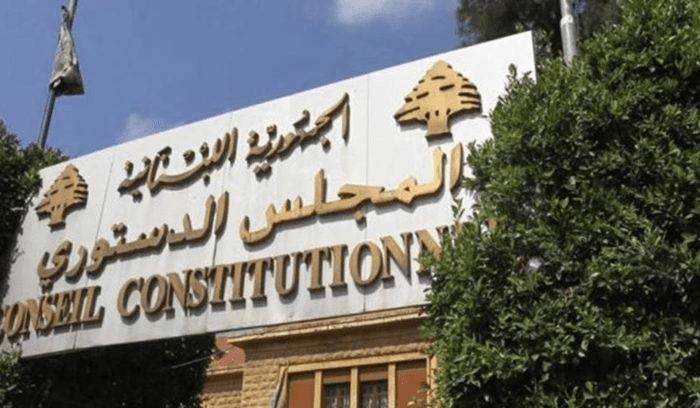
The Council stated it decided by a majority vote to suspend the effect of the contested law and to formally notify the President of the Republic, the Speaker of Parliament, and the Prime Minister, with publication in the Official Gazette.
The suspension is provisional and does not mean the law is definitively annulled, because the council is examining the appeal filed against the text and will rule on its constitutionality.
In the meantime, none of the provisions of the amnesty can produce the legal effects expected by its beneficiaries while the challenge is adjudicated.
Bassil challenges the law
The suspension came after an appeal was filed by the Free Patriotic Movement-led Strong Lebanon bloc, with the appeal submitted on Wednesday and the Council ruling on Thursday. Gebran Bassil, the leader of the FPM, argued that the legislation would grant amnesty to perpetrators of murder, rape, attacks against the army and other offenses, and he said, "Our goal is to amend the law so that it specifically targets the limited number of aggrieved Islamists who have remained untried for years." Bassil also framed the issue as a defense of the armed forces, saying, "defending the army is a duty, not a stance against any specific sect."
The appeal described three political concerns—justice, the rights of victims notably military personnel and other victims of crimes, and the fate of a limited number of Islamist detainees held without trial—and it argued the enacted law used that situation to extend the amnesty to persons and offenses unrelated to the initial problem. The challenge further alleged defects in the formation of legislative will, including a violation of Article 36 of the Constitution and the rule of open voting by calling the names of MPs aloud.

Who benefits, what’s at risk
The sources say the amnesty law was designed to benefit about three thousand prisoners and detainees through amnesty, a reduction of the sentence, or imposing a time limit on preventive detention depending on each file and its legal conditions. Among the named figures who were poised to benefit from sentence reductions were Ahmad al-Aseer, convicted over the Abra incident of 2013, who would remain in prison until completing his reduced sentence expected to end no later than May 2028. The decision also froze potential relief for Mustafa al-Hujairi, known as “Abu Tiqa,” and Naeem Abbas, sentenced to life imprisonment for bombings targeting the southern suburbs of Beirut in 2013 and 2014, while Hassan Abu Ali—detained since February 2014 without a ruling in the Iranian Embassy bombing file—could have benefited from provisions setting a cap on preventive detention.
The Constitutional Council’s suspension means that people who were to benefit cannot be released on the sole basis of the new law while the suspension lasts, and prosecutions are not extinguished by this text. The sources also describe that the law excluded serious crimes including intentional murder, terrorism offenses, serious assaults on the army and security forces, espionage and contact with Israel, and crimes referred to the Court of Elections, while drug trafficking and major drug smuggling offenses and repeat offenses were also excluded.