
Lebanon · 31 July, 2026 · 3 min read
Israeli Forces Detonate Near Beaufort Castle, Lebanese President Joseph Aoun Warns of Threat to Framework Agreement
Israeli forces detonated near Beaufort Castle, destroying a tunnel system in southern Lebanon. Incidents are framed as experimental zones within a broader Lebanon-Israel framework agreement.
Ground tremor measurement and whether earthquakes occurred.
5 of 7 outlets skipped it: seismic waves measured as magnitude 3.8.
15outlets compared
Same story, two versions
tap a side to read it in full
The Times of Israel
“in response to Hezbollah’s “blatant” violation of the ceasefire agreement”Read the original ↗
Al Jazeera
“continue to occupy southern Lebanon despite a United States-brokered “ceasefire” agreement”Read the original ↗
Al Jazeera and Times of Israel stress different justifications for Israel’s blasts
Beaufort blasts and tunnel claims
Israeli forces carried out powerful detonations near Lebanon’s UNESCO-listed Beaufort Castle in the Nabatieh district early Friday, with Lebanese officials condemning the escalation as a continued pattern of Israeli violations threatening the framework agreement and efforts to stabilize the border region.
“The latest escalation followed a night of heavy explosions that shook the area surrounding the historic Beaufort Castle”
Lebanese President Joseph Aoun warned in an official statement that the attacks pose a direct threat to the framework agreement recently reached and undermine international efforts to prevent further instability along the border, while the Lebanese presidency condemned the Israeli army’s use of large quantities of explosives near Beaufort Castle as unprecedented.

The Israeli occupation army claimed the operations targeted and destroyed a Hezbollah tunnel network in the area, and field sources reported that echoes of the explosions targeting Yuhmor al-Shaqif, Arnoun and Kafrtibnit spread across large areas of southern Lebanon.
The pressure waves from the blasts reportedly reached Iqlim al-Kharroub and the Khalde area near Beirut, and the Israeli military also demolished caves and residential structures around the towns of Mansouri and Majdal Zoun in the Tyre district.
Aoun said the timing of the attacks carried a negative message ahead of a crucial round of negotiations scheduled to be held in Rome, Italy.
Aoun and Salam condemn
Lebanese President Joseph Aoun and Prime Minister Nawaf Salam condemned a new wave of Israeli military operations in southern Lebanon, warning that the explosions and bombardments risk undermining fragile diplomatic efforts to preserve the ceasefire while causing damage to villages and cultural heritage sites.
In a statement, Aoun denounced Israel’s “ongoing violations and attacks” in southern Lebanon, saying they had inflicted significant damage on villages across the region and endangered civilian safety.
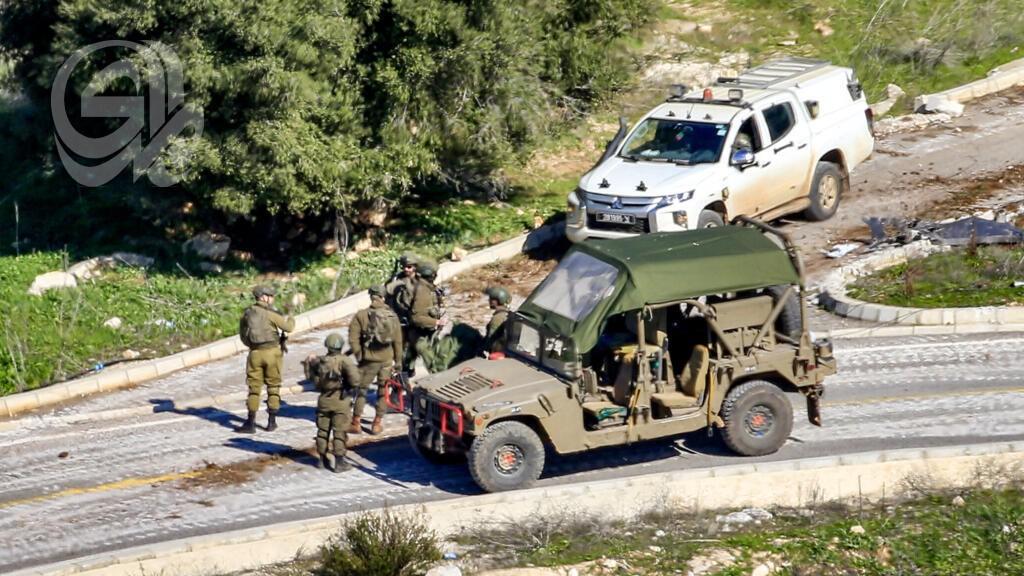
Aoun pointed to massive explosions recorded near Beaufort Castle, which Lebanon’s National Center for Geophysics said generated seismic waves equivalent to a magnitude 3.8 earthquake, calling the incident “a highly dangerous escalation” and “a blatant violation” of existing commitments under the framework governing the ceasefire.
Salam echoed those concerns in a post on X, describing the Israeli bombardments, explosions and systematic destruction as “a clear violation of the ceasefire” and “a blatant violation of Lebanon’s sovereignty, security and the principles of international law.”
The Israeli Defense Forces said the operation targeted an extensive underground tunnel network used by the Iran-backed Hezbollah movement, and the IDF said its forces demolished several major tunnels forming a multi-level command complex constructed over nearly two decades.
Negotiations, withdrawal, and risk
The blasts and demolitions came as Lebanon and Israel were set to hold talks in Rome, with UPI reporting that Aoun said the explosions occurred just days before a new round of direct negotiations between Lebanon and Israel was scheduled to take place in Rome on Tuesday and Wednesday.
“Aoun said such violations constitute "a highly dangerous escalation"”
UPI said Aoun referred to massive explosions near Beaufort Castle where Israeli officials said they used 700 tons of explosives to destroy Hezbollah’s underground tunnel network, and he described the seismic tremors as equivalent to a 3.8-magnitude earthquake on the Richter scale.
UPI also reported that the preliminary framework agreement provides for a phased Israeli withdrawal from occupied areas of southern Lebanon to allow the Lebanese Army to deploy, “restore effective sovereign authority,” disarm Hezbollah and prevent the group from returning to areas evacuated by Israel.
The implementation process began July 21 when the Lebanese Army started deploying in the village of Zawtar al-Gharbieh, the first pilot zone situated in the central sector of southern Lebanon near the strategic Litani River, and Aoun warned that Israel’s continued violations were threatening the safety of residents in most villages across southern Lebanon.
In parallel, Al Jazeera reported that the detonations continued despite a United States-brokered “ceasefire” agreement, and it said Israeli Prime Minister Benjamin Netanyahu and Defence Minister Israel Katz claimed the army blew up a tunnel system in the Beaufort area as part of an ongoing campaign to dismantle Hezbollah’s infrastructure.A