
Gaza Genocide · 08 June, 2026 · 3 min read
Israeli Forces Kill 16-Year-Old Ammar Yasser Mohammad Taamara in West Bank Raid
16-year-old Palestinian killed by Israeli gunfire during a West Bank raid. Israel says its forces fired on stone-throwers during the raid.
Israeli land registration process described as legal procedure vs dispossession mechanism.
3 of 4 outlets skipped it: a 16-year-old was killed during a raid near Bethlehem.
4outlets compared
Same story, two versions
tap a side to read it in full
France Palestine Solidarité
“legal means to 'systematize the dispossession' of Palestinian lands”Read the original ↗
Frames legality differently, shaping readers’ conclusions about intent and effects.
Tuqa raid death
A 16-year-old teenager, identified as Ammar Yasser Mohammad Taamara (16), was killed in the West Bank village of Tuqa, southeast of Bethlehem, after Israeli gunfire during a raid on the town, the Palestinian Authority announced on Monday. The Israeli army said it had opened fire on stone-throwers during clashes in which stones were thrown toward the soldiers, and it said the incident is under review after soldiers used crowd-control measures and then fired at one of the leaders.
The Palestinian Health Ministry said Taamara was killed by a bullet to the chest, fired by the occupying forces [Israeli] during the raid, with no further details provided. Ouest-France also reported that violence in the Palestinian territory has surged since the Gaza war began, triggered by the Hamas attack on Israel on October 7, 2023, and that more than a thousand Palestinians have been killed in the West Bank since then, according to an AFP tally based on Palestinian Authority data.

Land registration dispute
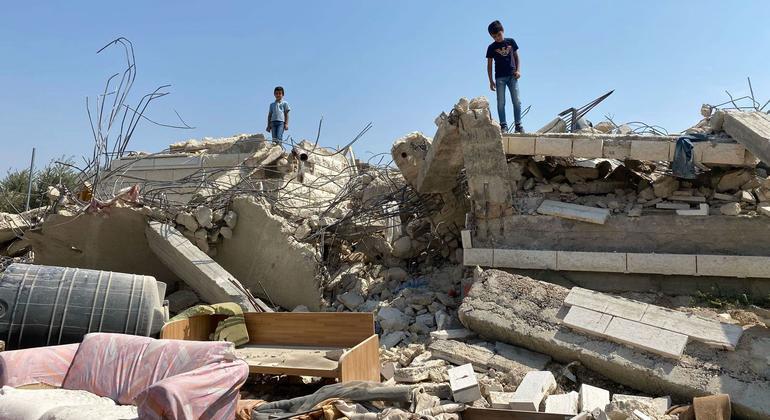
The UN expressed concern about Palestinians’ dispossession after the Israeli government resumed land registration procedures in Area C of the occupied West Bank, following a Cabinet decision dating from May 2025. UN Secretary-General António Guterres, through his spokesperson Stéphane Dujarric, said the decision could lead to the dispossession of Palestinians from their property and risk expanding Israeli control over the region’s lands, and he called on Israel to immediately reverse the measures.
The UN also reiterated that “all Israeli settlements in the occupied West Bank, including East Jerusalem, and the regime associated with them, are devoid of any legal validity,” while warning that the current situation on the ground undermines prospects for a two-state solution. In parallel, France Palestine Solidarité reported that Israel’s resumption of land registration procedures for the first time since 1967 was approved after Sunday’s approval of a proposal submitted by far-right Finance Minister Bezalel Smotrich, Justice Minister Yariv Levin, and Defense Minister Israel Katz, and it quoted Bimkom’s Michal Braier saying land registration will be inaccessible to a large portion of the Palestinian population.F
Gaza aid obstacles
Beyond the West Bank, UN News said the United Nations Office for the Coordination of Humanitarian Affairs (OCHA) warned on Monday that humanitarian operations in the Gaza Strip continue to face significant obstacles. UAt a New York briefing, Stéphane Dujarric said convoys from Jordan are limited to a route that requires multiple unloading and reloading points, while convoys from Egypt via Kerem Shalom/Karem Abu Salem have a high return rate and that between February 4 and 10 fewer than 60% of shipments from Egypt could be unloaded at that crossing.
UN News added that of nearly 50 coordinated movements between February 6 and 11, only half could be fully delivered, with five rejected outright and eleven approved but delayed, including two that could only be completed. UWAFA Agency reported that, in May, Israeli occupation authorities seized approximately 393 dunums of Palestinian citizens’ land through military orders, including land seizure orders for security and military purposes, declarations of state land, and expropriation orders, as part of what it described as a systematic policy aimed at expanding colonization and consolidating control.