Other07 August, 20263 min read
Israeli Ministers Urge Resuming Gaza Offensive, Reject Trump Ceasefire Roadmap
This article is an automated aggregation of coverage from news outlets. Our editorials offer in-depth analysis curated by the NewsCord team.
Israeli ministers call for renewed Gaza attacks and reject Trump's ceasefire roadmap. Security Cabinet members press Netanyahu to oppose the second phase of Trump plan.
7 outlets told this the same way.
Outlets did split on Thousands March in London Calling for Britain to Stop Arming Israel and Impose Sanctions →
Anadolu Ajansı was read line by line by the Watchdog: 4.7. See the score →
Gaza roadmap rejected
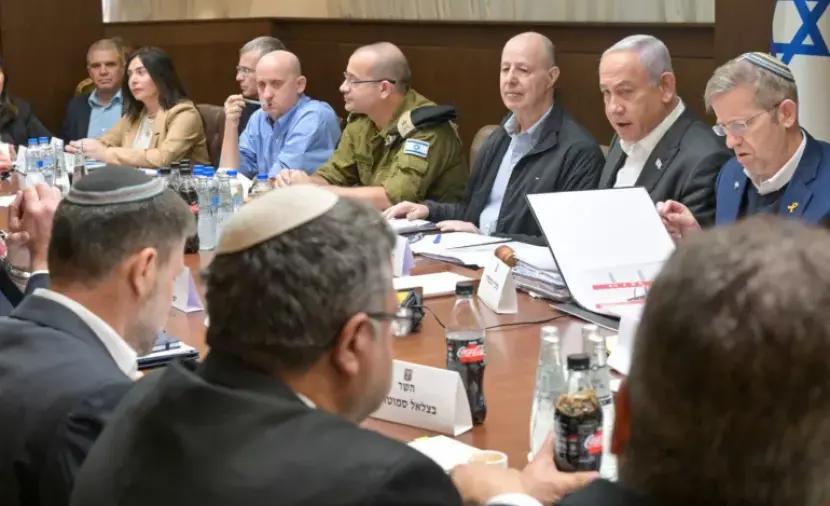
Israeli ministers called for the resumption of a military offensive in the Gaza Strip and for rejecting a roadmap for implementing the second phase of U.S. President Donald Trump’s ceasefire plan, according to Anadolu Ajansı.
The calls came during a meeting of Israel’s Security Cabinet chaired by Prime Minister Benjamin Netanyahu on Thursday evening to discuss the roadmap’s second phase, the report said.

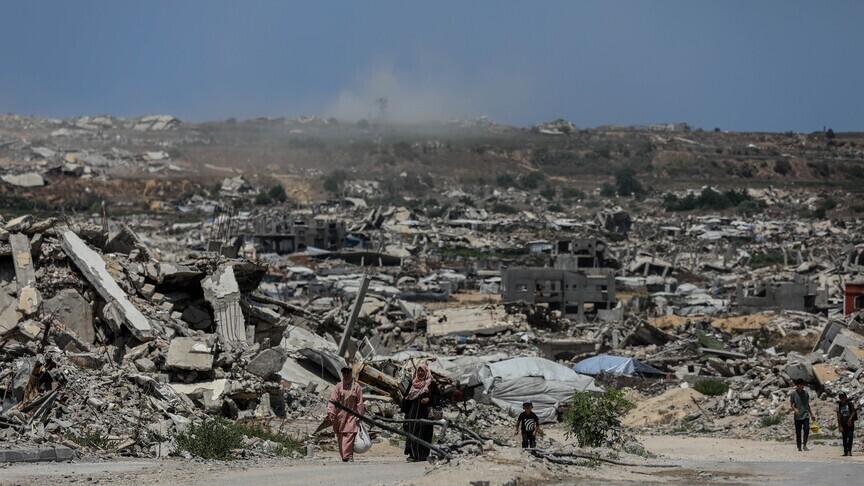
Anadolu Ajansı said that since the ceasefire agreement took effect on Oct. 10, 2025, Israel has continued to violate the deal through daily attacks on Gaza, killing 1,252 Palestinians and injuring 4,120 others, most of them women and children.
Israeli media reported that ministers Ze’ev Elkin, Bezalel Smotrich, Orit Strock and Avi Dichter urged the resumption of offensive operations, with Elkin saying, “If Israel does not launch offensive operations for two weeks, it would mean that it has accepted the plan.”
Cabinet clashes and polling
As the roadmap dispute played out in cabinet, The Jerusalem Post reported that a Maariv poll found Gadi Eisenkot projected to lead the Knesset as elections approach, with the distribution of seats remaining unchanged this week.
The poll, conducted by Lazar Research headed by Dr. Menachem Lazar in cooperation with Panel4ALL, showed the coalition at 49 seats compared with 57 for the Zionist opposition parties, and it said the Arab parties remain at 10 seats.
The Jerusalem Post also reported that most Israelis, 54%, oppose the published road map for an agreement in Gaza, while opposition rises to 72% among voters for coalition parties.
In the cabinet meeting described by Al-Jazirah Net, ministers urged Netanyahu to resume military operations and the paper quoted the Israeli Channel 12 report of a heated session and a dispute between National Security Minister Itamar Ben-Gvir and Netanyahu, with Ben-Gvir criticizing UN Middle East envoy Nickolay Mladenov’s remarks about de-escalation.
Al-Jazirah Net further said the Shin Bet chief warned that Hamas signing the agreement could be part of what he described as a “strategic deception operation.”
Diplomacy, oversight, and stakes
Beyond the cabinet fight over the second phase, The Jerusalem Post’s polling snapshot and Anadolu Ajansı’s account of ongoing attacks set a backdrop for continued disputes over how any ceasefire roadmap is implemented. Al-Telfزيون العربي said Prime Minister Benjamin Netanyahu reinstated Ron Dermer to the forefront of political communications to address divergences with Washington over the mechanism for implementing the second phase of the war-end plan in the Gaza Strip. The report said Haaretz quoted an Israeli source saying Washington expressed displeasure at Israel’s delay in declaring its reservations, while another source cited by Haaretz said Israel insisted it was not aware of the final version of the blueprint until Trump and the Peace Council announced reaching an agreement.
Al-Telfزيون العربي also described three objections centered on preserving heavy weapons amassed by Hamas rather than destroying them, involving Turkey and Qatar in supervising implementation, and restricting the Israeli army’s freedom to conduct military operations in areas under the administration of the Palestinian National Authority and the International Stability Force. It added that Netanyahu had announced Israel would not withdraw from the sites currently controlled by the army inside the Gaza Strip, even as the Trump-led Peace Council’s roadmap called for halting Israeli military operations and for the Palestinian National Authority to manage Gaza with the International Stability Force to enter, alongside a gradual Israeli withdrawal, and it quoted the roadmap’s heavy-weapons placement as under the responsibility of the Palestinian Authority.