Financeupdated 19m ago2 min read
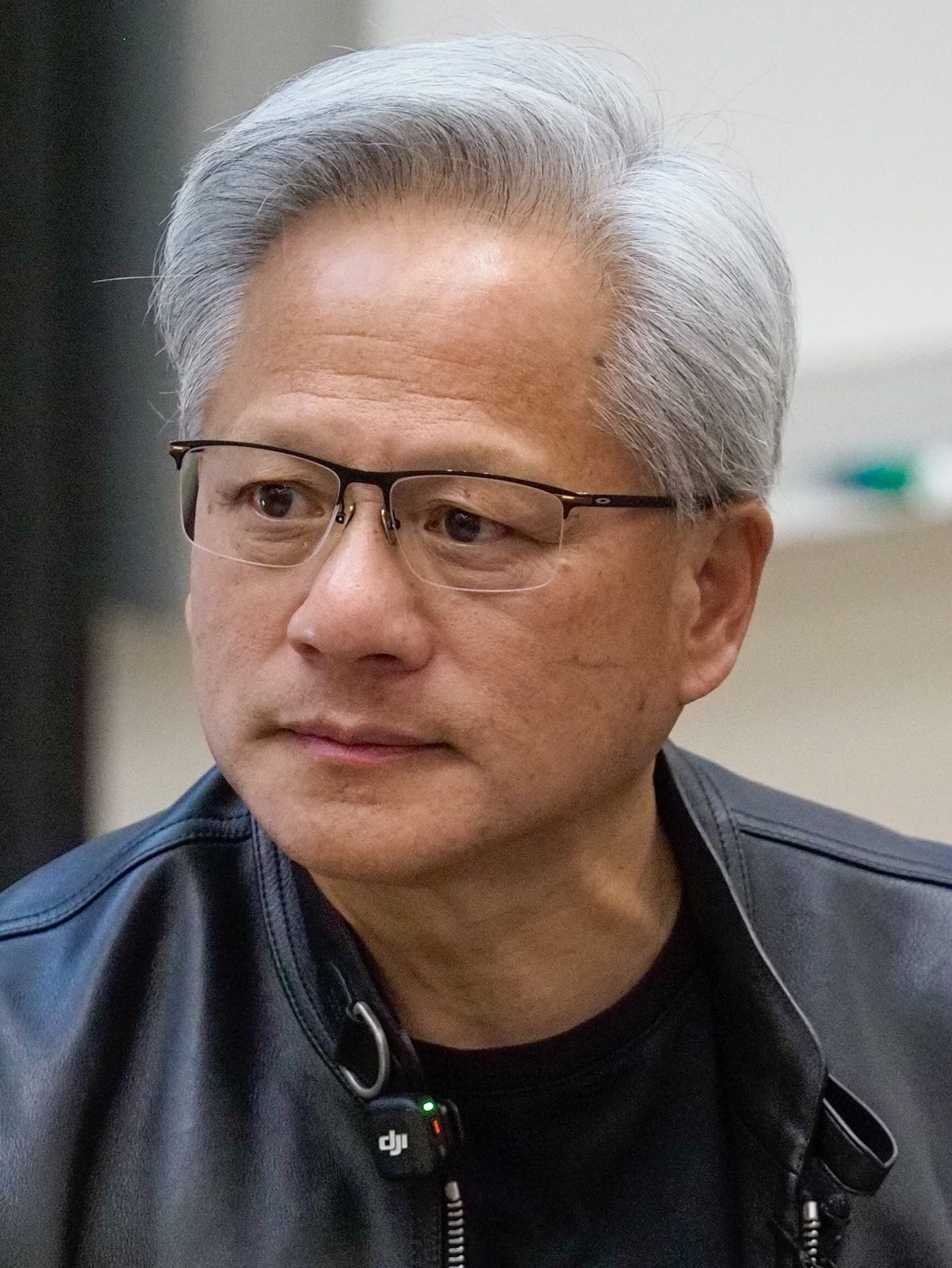
Archive photo · 30 April 2026Jensen Huang Resigns as Nvidia CEO, Colette Kress Named Interim Chief
“rebuilding the trust of tens of thousands of workers”
“London-listed technology trusts suffered another bruising sell-off”
Photo: Anderseidesvik, CC BY-SA 4.0 · Cropped for layout
This article is an automated aggregation of coverage from news outlets. Our editorials offer in-depth analysis curated by the NewsCord team.
Jensen Huang resigned as Nvidia CEO on November 12, triggering stock decline and value loss. Colette Kress named interim chief after Huang's resignation.
Save coverage image
Resignation, trust, and leadership
Jensen Huang resigned as Nvidia’s CEO on November 12, leaving the company with a leadership transition after reports of an extramarital relationship and national security concerns. Nvidia appointed Colette Kress, its chief financial officer, as interim CEO after Huang’s departure on Wednesday, and the company launched a search for a permanent replacement.
Huang built Nvidia on transparency, quoting Huang as saying, "I spend all of my time being transparent," while the same article said his exit leaves the next CEO rebuilding trust of "tens of thousands of workers." Kim Scott, a former Apple and Google executive and cofounder of executive education company Radical Candor, warned that "When the CEO is having a romantic relationship with someone at the company, that can erode trust and engender cynicism," as Nvidia faced uncertainty about day-to-day operations and succession planning.
Market shock and London funds
Nvidia shares opened 2.3 per cent lower on Friday after Huang’s resignation, following a Thursday plunge of as much as 14.3 per cent, and the sell-off also dragged the Nasdaq Composite Index down 0.3 per cent and the S&P 500 down 0.1 per cent. Manchester & London Investment Trust, which holds Nvidia alongside Micron and Broadcom, lost nearly a fifth of its value over the last month, while Allianz Technology Trust and Polar Capital Technology Trust each saw their share prices tumble 13.2 per cent and 13.3 per cent respectively.
Polar Capital’s portfolio is exposed to semiconductor stocks for more than 40 per cent, and Manchester & London has 92.6 per cent of its equity exposure in North America. The same article tied the pressure on trusts to Nvidia fallout and to concerns about debt-fuelled hyperscaler data centre build-out, while it contrasted those moves with Finsbury Growth & Income Trust’s 3.1 per cent rise and Onward Opportunities’ 1.9 per cent increase over the last week.
Exports, trusts, and policy scrutiny
Huang’s $140 billion stake in Nvidia is primarily held in trusts co-owned with his wife, Lori Huang, and the shared ownership structure implies neither party can independently sell or manage the shares. Chosun일보 reported that U.S. operational impacts could come from strengthened export restrictions on AI semiconductors, including graphics processing units (GPUs), and it quoted Dan Morgan of Sinovest Trust saying, "Big tech companies can continue to operate well even after the founder’s role is reduced."
Chosun일보 also quoted Morningstar analyst Brian Collello saying, "It is difficult to view this as a significant long-term risk," while it warned that uncertainty could burden the stock price until resolved. BigGo Finance added that Democrats sent a letter to the Commerce Department demanding it preserve records on Nvidia’s China chip deals and questioned the constitutionality of the export tariff mechanism and the department’s national security review failures, while it said the letter raised concerns about the link between Nvidia’s $26 million in political donations and the deal.