Lebanon · 16 September, 2026 · 3 min read
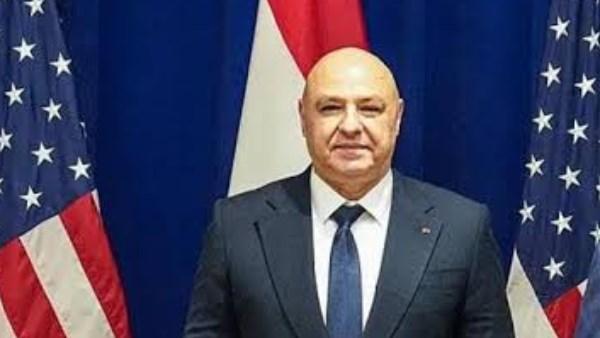
Joseph Aoun Seeks Security Agreement With Israel After Troop Withdrawal From Southern Lebanon
Lebanon seeks security agreement with Israel after southern Lebanon withdrawal. Disarm Hezbollah without confrontation.
25 outlets, one story, no spin found.
9 of 10 outlets skipped it: israel says Hezbollah disarmament needs a stronger Lebanese army.
Arab News was read line by line by the Watchdog: 5.2. See the score →
25outlets compared
Aoun seeks security deal
Lebanese President Joseph Aoun told AFP he wants a security agreement with Israel once it withdraws its troops from southern Lebanon, describing it as “primarily to end the state of hostility and the deployment of the army on the border.”
“primarily to end the state of hostility and the deployment of the army on the border”
Aoun said Lebanon also wants a new force, “European or otherwise,” to prevent a security vacuum after UN peacekeepers leave south Lebanon when their mandate expires at the end of the year.

He said Lebanon is determined to disarm Hezbollah “neither negotiable nor open to discussion,” while insisting “The objective is not a confrontation.”
Aoun framed the approach as step-by-step negotiations, telling AFP, “We have no choice but negotiations, because the alternative is war, which would be very costly for us,” and said he would travel to Paris for a meeting hosted by President Emmanuel Macron with King Abdullah II of Jordan.
The same AFP interview placed the UNIFIL end-date at December 31, 2026, with Aoun arguing “What matters is that there is no vacuum” as any replacement force would be “temporary until the (Lebanese) army can deploy”.
Israel links deal to army
Israeli army chief Eyal Zamir said disarming Hezbollah as part of an agreement with Beirut “cannot be achieved” unless the Lebanese army significantly improves its effectiveness on the ground.
Zamir made the remarks during a visit to the army’s 91st Division operating in southern Lebanon, accompanied by Northern Command chief Maj. Gen. Rafi Milo and Operations Directorate chief Maj. Gen. Itzik Cohen, according to an army statement.

He claimed Israel had “achieved many significant operational accomplishments and weakened Hezbollah” and said Israel was determined to remove Hezbollah’s military presence from the area south of the Litani River.
Zamir added, “This goal cannot be achieved within the framework of a desired agreement with the Lebanese government unless the Lebanese army significantly improves its effectiveness on the ground,” and said Israel would “not allow Hezbollah to rebuild its strength, restore its capabilities or reestablish infrastructure in the area.”
The Anadolu Ajansı report said Zamir’s comments came a day after Aoun told Finnish Defense Minister Antti Hakkanen that the Lebanese army was “fully carrying out its duties” in the south and rejected Israeli claims it was failing to perform its responsibilities.
Paris conference and next phase
A Paris conference described by Annahar as being held “today” centers on three interconnected conditions: a capable army, international partners, and Israel’s security, with the meetings framed as dedicated to supporting the Lebanese army.
“develop a clear and actionable plan for the deployment of the Lebanese army”
The report said the meetings are hosted by French President Emmanuel Macron and invited by Jordan’s King Abdullah II, with Lebanese President Joseph Aoun participating, and that the French presidency wants a “clear and actionable plan” for deployment of the Lebanese army.
Annahar said Paris is trying to move from a general principle to an operational plan for the army’s capabilities, needs, and means, while noting the deployment of the Lebanese army south of the Litani River was central to Resolution 1701 but remains incomplete after about twenty years.
It also described the most sensitive file as what comes after UNIFIL, whose mandate ends at the end of the year, saying France is consulting especially with Italy about a new or multi-national international presence that would not create a security vacuum.
In parallel, Al-Monitor reported that Aoun told AFP Lebanon wants a new force “temporary until the (Lebanese) army can deploy,” and that he reiterated the “best and most optimal option remains extending UNIFIL's mandate” as the deadline approaches.