Gaza Genocide25 April, 20267 min read
Kimolos Ghost Fleet Disappears From Charts Near Lebanon, Links to Israel’s Ashkelon Oil Logistics
This article is an automated aggregation of coverage from news outlets. Our editorials offer in-depth analysis curated by the NewsCord team.
Oil prices rose due to Iran-related strikes and Middle East tensions. Bombardments on Iran by the U.S. and Israel rekindled oil-market fears.

Ghost fleet and hidden cargo
A tanker at the center of a “ghost fleet” narrative— the Kimolos— disappeared from charts on March 1, according to El País, as it sailed in a south-southwest direction about 60 nautical miles (111 kilometers) off the Lebanese coast. Two days earlier, El País says, it docked at the Mediterranean port of Ceyhan (Turkey) where it loaded around one million barrels of Azeri crude at the BTC pipeline terminal, which transports oil from the Caspian Sea. For nearly four days, El País reports, the tanker stopped transmitting its position to the Automatic Identification System (AIS), required by maritime safety rules, while it reported that it was heading to Port Said, in Egypt.
At the end of those four days, El País writes that, according to the tracking platform Global Fishing Watch, it reappeared about 40 miles south of the place it disappeared, but this time sailing northbound back to the port of Ceyhan. El País then links the vessel’s movements to Israel’s logistics by citing a Planet Labs satellite image dated March 5 showing the Kimolos alongside the terminal of the Israeli port of Ashkelon, which has 24 crude storage tanks connected by pipelines to refineries at Ashdod, Eilat, and Haifa. El País frames the question of concealment by asking, “But why hide this call if, in principle, it is not illegal traffic?” and it places the timing of the ship’s unloading at Ashkelon alongside a broader strike campaign, noting that on March 4, “the United States and Israel bombed Iran.”
Escalation widens inside Iran
As the Gaza-linked regional war expands, multiple outlets describe a widening of strikes inside Iran and a diversification of targets. The بوابة اخبار اليوم report says the confrontation between the United States and Israel and Iran “is entering a new phase of military escalation,” with attacks extending beyond “specific sites” to “vital ports, commercial ships, and facilities linked to defense industries.” It places the timeline at “the third week” and says the conflict entered “its twenty-first day since its start on February 28,” while also describing a strategic shift toward “gradually and methodically weakening military and logistical capabilities.”
In that account, strikes hit Bandar Lengeh port in Hormozgan Province and targeted ships in Bandar Lengeh and Bandar Kong ports, where a local official said the strikes hit “at least 16 ships” and that “some ships were completely destroyed.” The same report says the Israeli army announced airstrikes on targets in the Noor area overlooking the Caspian Sea, east of Tehran, describing them as connected to defense industries.
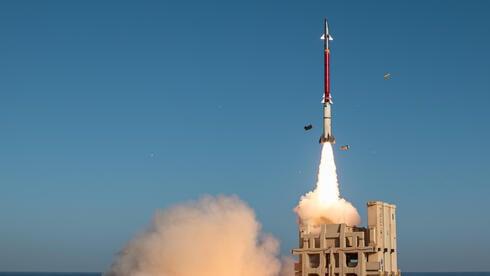
It also asserts that “more than 1,700 military and industrial targets have been struck so far,” and it describes the campaign as focusing on “production of ballistic missiles and air defense systems, in addition to naval assets and related supply chains.” The report further says the Israeli army spokesman described “military plans spanning several weeks,” with “the possibility of continuing the operations beyond that period.”
Oil market jitters and price spikes
The escalation described by regional reports is reflected in market coverage that ties bombardments to fears about oil prices. Le Monde.fr reports that “American and Israeli bombardments of Iran on Saturday morning, February 28, have rekindled fears in the oil market,” and it says that “As early as Friday, before the strikes and before the weekend's close, oil prices had risen to levels unseen in six months.” Le Monde.fr gives specific benchmarks: “a barrel of Brent, the European benchmark, at $73 (€62), up more than 2% day over day,” and it says West Texas Intermediate “rose to above $67.”
The article frames the concern as linked to Iran’s role in global supply, stating that “Market concerns reflect first the weight of Iran and, by extension, that of the Persian Gulf in the global supply of 'black gold'.” By Saturday midday, Le Monde.fr says it was “hard to know to what extent the Islamic Republic's oil facilities had been affected by the bombardments,” emphasizing uncertainty about damage.
It also notes that “By Saturday at noon, it was difficult to know to what extent the Islamic Republic's oil facilities had been affected by the bombardments,” repeating the same uncertainty at a later time. In parallel, the بوابة اخبار اليوم report says the widening confrontation has led to “a rise in global oil prices and heightened tensions in the region,” and it links those tensions to fears of the war widening.
Turkey’s embargo and pipeline constraints
El País situates the “ghost fleet” question inside a broader web of sanctions and shipping rules, focusing on Turkey’s embargo and the BTC pipeline’s contractual constraints. It says Turkey imposed “a total embargo on trade with Israel in May 2024,” and “Three months later, it banned any Israeli-flagged ship from docking in its ports or ships with Turkish flags from calling at Israeli ports.” El País describes why the BTC pipeline issue is “more delicate,” explaining that it is governed by “an intergovernmental agreement and several international contracts” that “prevent the Turkish government from blocking crude transit except temporarily in emergencies related to national security or environmental concerns.”
It adds that the company operating the pipeline and the port terminal at Ceyhan is “the Turkish state-owned BOTAS,” while ownership is “of a consortium led by the British multinational BP and the Azerbaijani state-owned SOCAR.” El País also reports that the Turkish Ministry of Energy stated in November 2024 that “the companies transporting oil to international markets through the BTC pipeline have respected Turkey's decision not to trade with Israel and have not loaded ships with Israel as the destination.”
It then connects the shipping narrative to changes in official trade visibility by saying that “Suddenly, Israel, which until 2024 was one of Azerbaijan's main customers for Azeri crude, stopped appearing in Azerbaijan's official statistics.” To counter that official picture, El País cites Reuters via Kpler data, stating that “in 2025 Azeri crude exports to Israel rose by 31% to reach the highest level since 2022.”
Threats, displacement, and regional spillover
Beyond shipping and markets, the war’s regional spillover is described through political statements, displacement figures, and escalating threats. عرب 48 reports that the new Iranian Supreme Leader Mojtaba Khamenei “vowed on Thursday in his first message to avenge the war dead,” stressing that “revenge is a priority until it is fulfilled,” and saying Iran is “targeting only American bases in the region.” The same briefing says UNHCR reported “up to 3.2 million people have been displaced inside Iran since the U.S.-Israeli war began about two weeks ago,” and it describes Hezbollah escalating attacks by saying it “struck the air defense system around the city of Caesarea in central Israel with a volley of precision missiles near the home of Israeli Prime Minister Benjamin Netanyahu.”
“UNHCR reported that up to 3.2 million people have been displaced inside Iran since the U.S.-Israeli war began about two weeks ago.”
عرب 48 also reports that the Israeli army said Hezbollah fired “about 200 missiles on the night between Wednesday and Thursday, the largest barrage since the war began,” and it includes an Israeli Security Minister statement: “I have ordered the army to be ready to widen operations in Lebanon, threatening to seize lands if Hezbollah missiles do not stop.” On the Lebanon front, عرب 48 says “Eight people were killed at dawn in an Israeli airstrike that hit the al-Raml al-Beida area in central Beirut,” and it states that “The death toll from Israeli airstrikes on Lebanon rose to 687 since the war between Israel and Hezbollah began on March 2, according to the Lebanese government.”
The briefing also records threats tied to infrastructure and energy, including Ali Larijani saying he “threatened to target power grids in the region if the United States attacks Iran's electrical infrastructure,” and it says the IRGC announced it targeted Israeli and American sites in the UAE, Iraq, and Kuwait. In the same arc of consequences, عرب 48 says Iran launched “a new wave of attacks on Gulf energy facilities,” and it notes that crude prices rose again despite “the release of record amounts of strategic oil reserves worldwide.”