Russia21 September, 20263 min read
Kremlin Opens Talks With Germany’s AfD After Electoral Successes, Dmitry Peskov Says
This article is an automated aggregation of coverage from news outlets. Our editorials offer in-depth analysis curated by the NewsCord team.
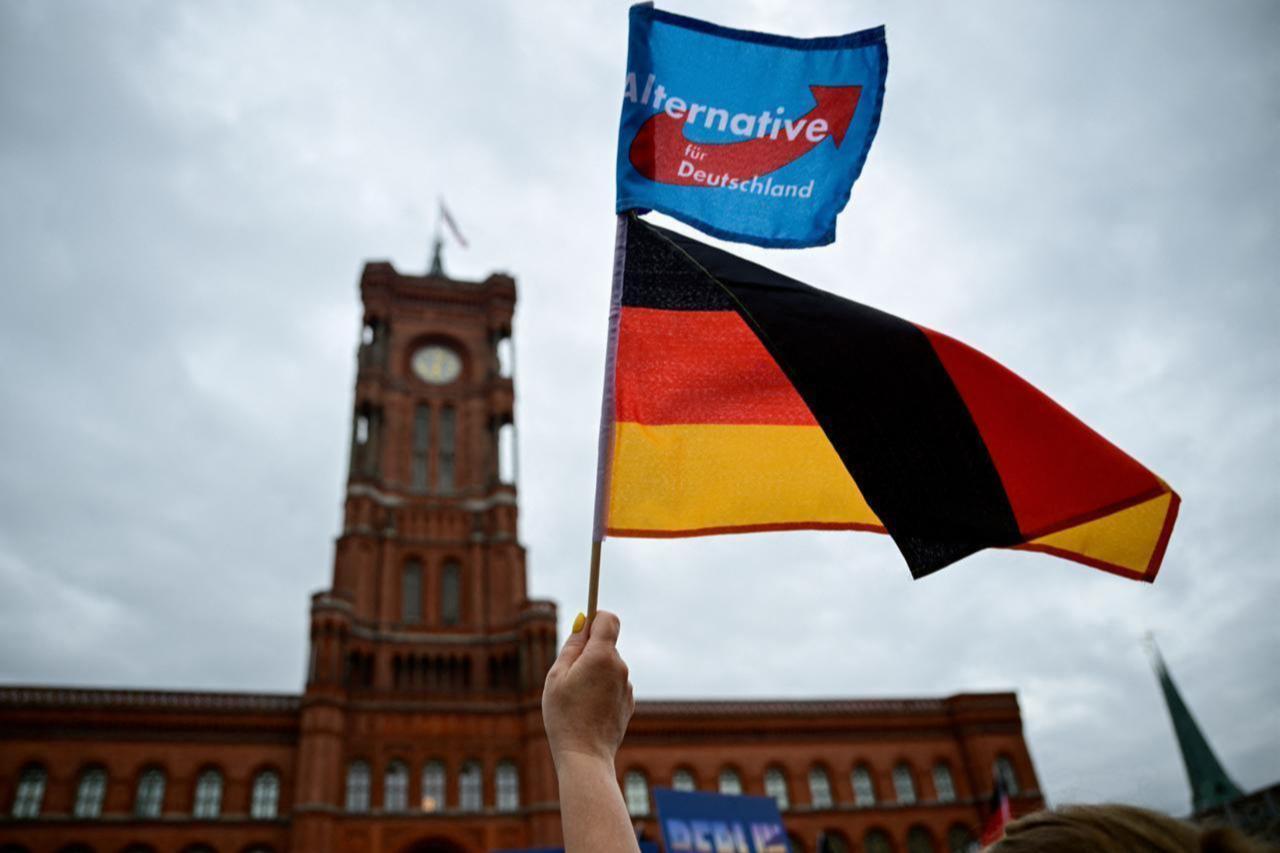
AfD became strongest party in Mecklenburg-Western Pomerania after regional elections. Kremlin indicated willingness to hold talks with AfD after the gains.
8 outlets told this the same way.
Kremlin eyes AfD talks
The Kremlin said it is open to talks with Germany’s far-right Alternative for Germany after the party’s electoral successes, with Kremlin spokesman Dmitry Peskov telling Interfax that the AfD’s statements on resuming relations “impress us.” Peskov contrasted the AfD with Chancellor Friedrich Merz, saying Merz has “basically distinguished himself only by confrontational statements against the Russian Federation.” The Kremlin official also pointed to past contacts between the AfD and Moscow, saying Foreign Minister Sergei Lavrov welcomed AfD co-chairman Tino Chrupalla to discussions in the Russian capital in 2020.
The Kremlin further tied its outreach to broader political conditions, saying Vladimir Putin offered, in the event of the abolition of Western sanctions, to supply comparatively cheap Russian gas to Germany again if there were a long-lasting agreement free of political conjuncture. The Kremlin’s stance arrived as Germany’s domestic politics shifted after regional elections, with AfD gains described as setting up a potential dialogue with Russia even as Russia accused the Merz-led federal government of fueling the war with arms deliveries and billions in aid to Ukraine.
AfD urges Merz to Moscow
AfD co-chairman Tino Chrupalla urged Chancellor Friedrich Merz to travel to Moscow for talks, saying Germans want “to see a different kind of policy here, including a different approach to peace and diplomacy.” Chrupalla said the AfD wants Merz to “finally travel to Moscow and hold talks there, so that the spiral of escalation, and the arms race, can finally be broken,” framing the move as a way to end the Russia-Ukraine war. AfD co-leader Alice Weidel stressed that it was important to open a channel of communication with the Russian side “together with the Americans,” and she added that both sides concluded the AfD is “the only remaining reliable partner in Germany.”
The AfD’s push for diplomacy came after the party won the state election in Mecklenburg-Vorpommern, described as its second state victory in just two weeks, while Merz’s Christian Democratic Union suffered its worst-ever showing in its 81-year history. The election results were also described as leaving the AfD without an immediate government option, with DW saying the party is likely to remain in the opposition in Mecklenburg-Western Pomerania and Berlin.
Gas talks and political stakes
AfD officials also discussed resuming Russian gas supplies to Germany, with Beatrix von Storch confirming that her party’s foreign-policy spokesperson Markus Frohnmaier “was in Moscow and personally spoke with Gazprom’s Miller.” Von Storch said the AfD is interested in resuming trade and argued that “we need affordable energy and as broad a supply as possible,” which she linked to receiving supplies from Russia. The reporting said Reuters had described preparations for broader talks between AfD leadership and Russian representatives, with the meeting potentially taking place as early as March 2027 if Russia and Ukraine reach agreement on the terms of a peace settlement by then.
“Our foreign policy spokesperson Markus Frohnmaier was in Moscow and personally spoke with Gazprom’s Miller.”
The Kremlin’s outreach to the AfD and the AfD’s calls for direct diplomacy were set against Germany’s election pressure on Merz, with NPR describing Merz as breaking stunned silence at CDU headquarters after exit polls showed the party’s worst result since World War II. NPR also quoted Alice Weidel saying “Friedrich Merz is the wrong chancellor for the CDU,” while the same reporting described Merz as insisting he would push ahead with his federal agenda of tax and welfare reforms.