Iranupdated 1h ago3 min read
Kuwait Condemns Iran’s Closure of Strait of Hormuz, Warns of Threat to Global Food Security
This article is an automated aggregation of coverage from news outlets. Our editorials offer in-depth analysis curated by the NewsCord team.
Kuwait condemns Iran’s closure of the Strait of Hormuz and navigation threats. Warns the closure risks global food security and flows of essential goods.

10 outlets told this the same way.
Outlets did split on Iranian Hardliners Push Impeachment Proceedings Against Foreign Minister Abbas Araghchi →
i24NEWS was read line by line by the Watchdog: 4.0. See the score →
Closure, navigation, and food
Kuwait’s diplomatic attaché Dalal Sharar renewed Kuwait’s condemnation of Iran’s closure of the Strait of Hormuz and its threats to freedom of navigation there, while warning of continued disruption of shipping in Bab Al-Mandab by Iran’s proxies. Sharar told the UN General Assembly’s Second Committee that she called for the full implementation of UN Security Council Resolution 2817 and for Iran to stop immediately all acts and threats that obstruct legitimate transit passage or freedom of navigation in the Strait of Hormuz, or that threaten maritime security in Bab Al-Mandab, in line with international law and the UN Convention on the Law of the Sea.
Sharar warned that the world faced interlinked threats to food security, from climate change and water scarcity to supply chain disruption caused by threats to vital waterways, and she said the hunger crisis continued to affect millions of people even though the global hunger rate fell to 8.2 percent in 2025. Sharar said the number of hungry people in Asia stood at about 292 million, while Africa had the highest number at about 309 million, nearly one-fifth of the continent’s population, and she stressed the need to direct support and resources to the areas in greatest need and to strengthen their resilience against successive shocks.

Iran says passage must be coordinated
Rear Admiral Habibollah Sayyari, Chief of Staff and Deputy Coordinator of Iran's Army, said the Strait of Hormuz is closed and that any passage through it must be coordinated. Sayyari told reporters that if the strait were not closed and oil were passing through, gasoline prices in the United States would not have risen, and he called this clear and evident.
Sayyari described the military posture in the region by saying the Islamic Revolution Guard Corps Navy is firmly positioned in the west of the Strait of Hormuz, while the Army of the Islamic Republic of Iran is present with authority from the east of the strait to the north of the Sea of Oman, exercising full control and surveillance over the area. Sayyari stressed that any transit must be coordinated, warning that otherwise "you see in the news what happens," and he framed the closure as a condition for movement through the strategic waterway.
Attacks, shipping disruption, and escalation
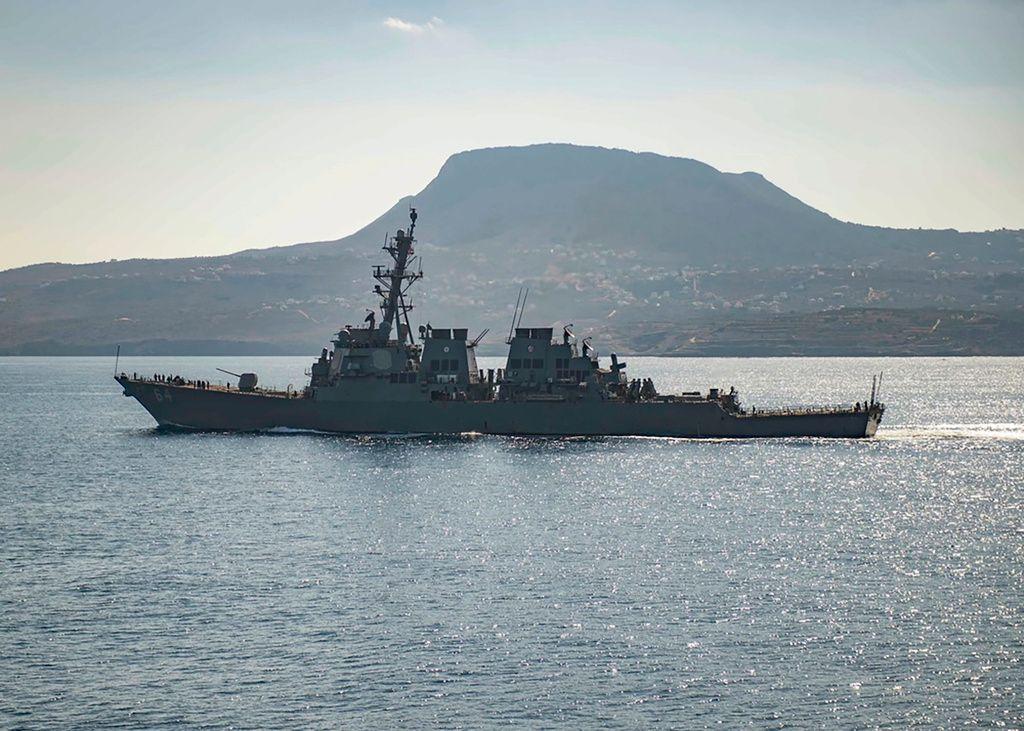
A container ship sank in the Strait of Hormuz on Wednesday as Iran escalated its attacks on commercial vessels, and the GFS Pride, registered in Singapore, sank after it was struck by an unidentified projectile and caught fire. The Maritime and Port Authority of Singapore said the ship's 21 crew members were safely evacuated and no injuries were reported, while Pakistani maritime authorities warned in a navigational alert as containers floated in the water after the vessel sank.
The International Maritime Organization said it was the third commercial ship sunk during the Iran war, and the incident reports from the United Kingdom Maritime Trade Operations Centre showed that more than 20 vessels, mostly oil tankers, had come under attack this month in Hormuz, the Persian Gulf and Gulf of Oman. Reuters reported that Iran was deploying new tactics to target ships sailing through the Strait of Hormuz as it sought to keep oil prices high and influence the US midterm elections, and Reuters quoted one senior Iranian official saying, "The aim is to frustrate efforts by the United States and its allies to bring down global oil prices."