Africa30 August, 20263 min read
Libya Rivals Sign Tripoli Deal With UNSMIL to Hold National Elections Within Two Years
This article is an automated aggregation of coverage from news outlets. Our editorials offer in-depth analysis curated by the NewsCord team.
Libyan rival factions signed UN-facilitated agreement to hold national elections within 24 months. Agreement aims to resolve election-law disputes and reform the High National Election Commission.
14 outlets told this the same way.
Two-Year Election Roadmap
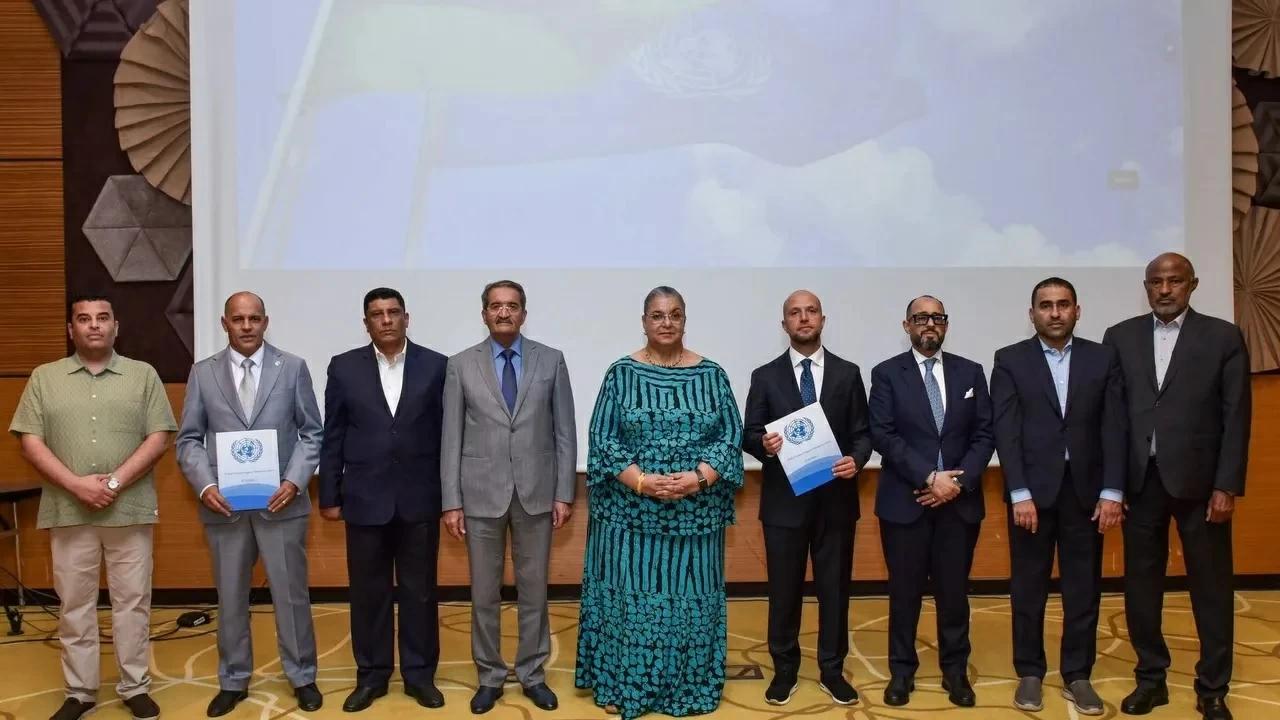
Representatives of Libya's rival political factions signed an agreement in Tripoli to hold long-delayed national elections within two years, aiming to resolve disputes over electoral laws and reform the national elections body. The signing ceremony took place at the United Nations Support Mission in Libya, UNSMIL, and followed talks in a smaller format known as the 4+4 involving two representatives of each of Libya's four main institutions: the Government of National Unity, the High Council of State, the House of Representatives and the Libyan National Army. Walid Ellafi, state minister of political affairs and communications in the Government of National Unity, said legislative and presidential elections should be held "within a period not exceeding 24 months" under a single executive authority and unified national institutions.
Shibani AbuHamoud, head of the army's general command delegation, said the 4+4 would work with UNSMIL "to develop a framework within one month of the signing of the agreement" to follow up on implementation. The political process has been stalled for more than a decade since an election scheduled for December 2021 collapsed following disputes over the eligibility of the main candidates, with Libya having little stability or security since a 2011 NATO-backed uprising.

Leaders Welcome, UN Backs
The BBC said Abdul Hamid Dbeibah, head of the Libyan Government of National Unity in Tripoli, and Marshal Khalifa Haftar, the man in the east, welcomed the agreement at the United Nations Support Mission in Tripoli in the presence of UN Special Envoy Hana Tilaut. The BBC also quoted Mustafa Al-Mani of the Tripoli-based government delegation saying: "what is agreed today is the ideal civil solution, where there is no path to unify institutions except through the ballot box." UN News reported that the United Nations welcomed the signing of an agreement reached through a UN-facilitated mini-Summit, saying it addresses the first two steps of the mission's political roadmap: the reformation of the board of the National Electoral Commission and the resolution of outstanding issues in the constitutional and legal framework.
UN News added that UN Secretary-General’s Special Envoy for Libya, Hana Tittuh, said in her remarks at the signing ceremony: "The responsibility now lies in translating this agreement into tangible actions" by adopting it at the national level and implementing the agreed electoral framework. The agreement provides for national ratification arrangements by the House of Representatives and the Supreme Council within one month, along with a monitoring mechanism to support implementation.

Ratification Deadline and Risks
The agreement states that if Libya's House of Representatives and High Council of State fail to approve the deal within a month, the parties will seek to adopt it nationally as a constitutional document through broad national mechanisms and secure international backing through the U.N. Security Council.
The BBC described the agreement as providing arrangements for holding presidential and parliamentary elections under a single executive authority within 24 months, with ratification by the House of Representatives based in Benghazi in the east and the High Council of State based in Tripoli within one month.
The BBC also said the political process aimed at ending more than a decade of conflict in Libya has stalled since the postponement of elections due in December 2021 due to disputes over the eligibility of major candidates.
In addition to the timeline, the agreement includes a monitoring mechanism to support implementation, and it is framed as a step toward overcoming the political and institutional impasse that has hindered the Libyan electoral process.
The stakes are tied to whether the electoral framework and commission reforms can be adopted nationally within the specified month, because the agreement links its next steps to actions by the House of Representatives and the High Council of State.