Canadaupdated 1h ago3 min read
Mark Carney Meets Recep Tayyip Erdoğan as Canada Deepens Defense And Energy Ties With Turkey
This article is an automated aggregation of coverage from news outlets. Our editorials offer in-depth analysis curated by the NewsCord team.
Canada and Turkey to sign a joint declaration to deepen defence and energy cooperation. Carney's historic bilateral visit to Ankara and Istanbul to boost trade, energy, and defence ties.

Carney heads to Ankara
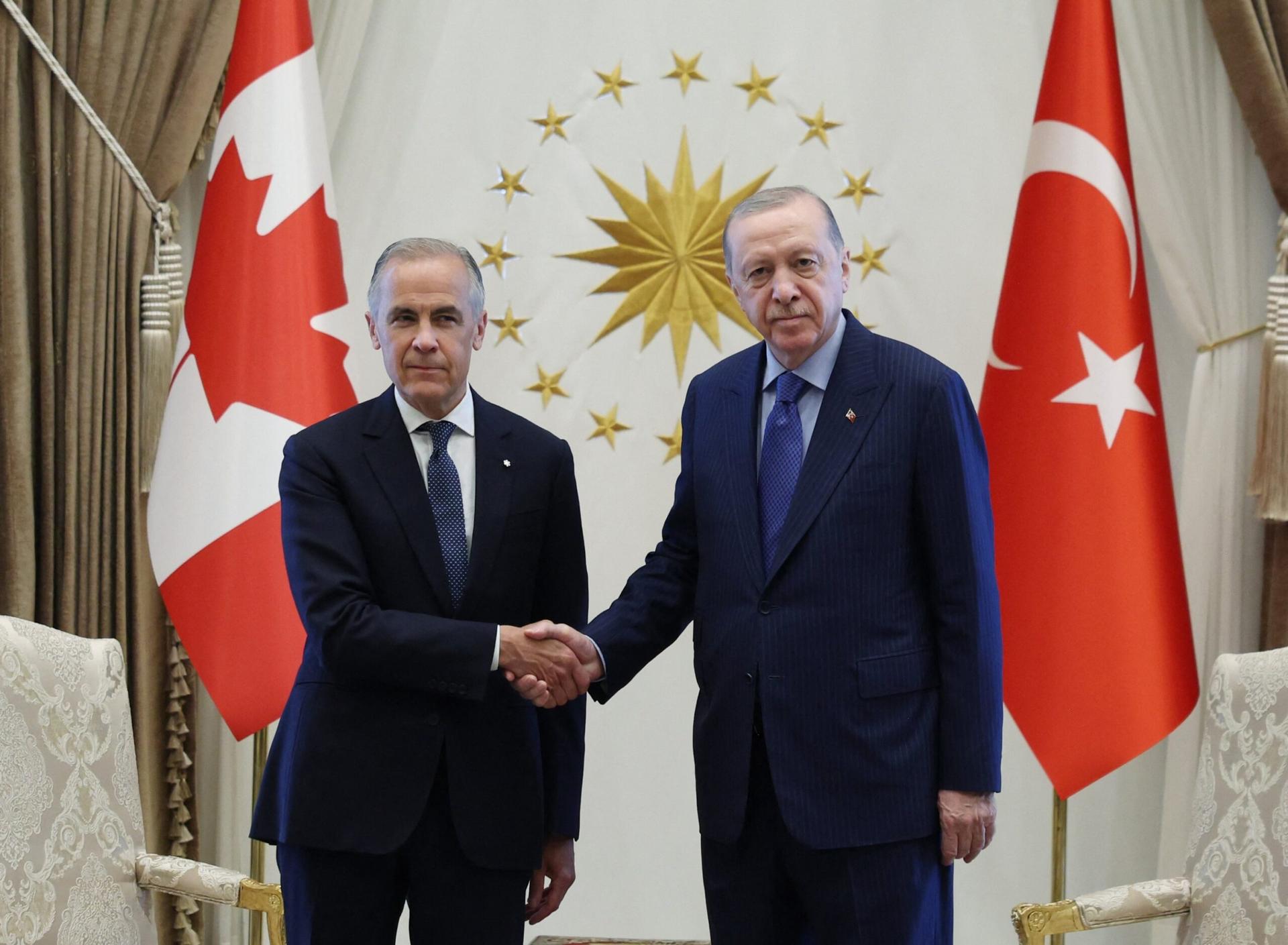
Prime Minister Mark Carney departs for Turkey on Wednesday for a three-day visit that includes meetings with President Recep Tayyip Erdoğan in Ankara and business leaders in Istanbul, and it is the first dedicated bilateral visit to Turkey by a Canadian prime minister.
Senior federal officials said the visit is in keeping with the prime minister's foreign policy, with one official saying, "Canada is meeting this moment with values based realism. We are pursuing an approach that is both principled and pragmatic."
Ottawa imposed a de facto arms embargo for several years, then Ottawa froze and then cancelled military permits in 2021 over allegations Ankara had redirected Canadian-manufactured drone parts to Azerbaijani forces during the conflict with Armenia over Nagorno-Karabakh, and the policy has since been eased.
Canada and Turkey are expected to sign a joint statement aimed at deepening bilateral cooperation in four areas, including defense and energy, and the agreement is also expected to cover the economic sphere with the goal of advancing negotiations for a bilateral free trade agreement.
Carney will meet Erdogan “to advance cooperation in trade and investment, energy, defense and security, as well as the links between both peoples,” and Friday’s meetings with Turkish companies aim to “promote the strengthening of bilateral trade and investment, as well as to foster new opportunities for business collaboration.”
Trade, energy, defence
Three issues are likely to dominate Carney's visit: negotiating a free trade agreement, expanding co-operation in energy and strategic industries, and developing a closer defence-industrial relationship. Carney and Erdoğan formally announced the launch of free trade negotiations during the NATO summit in Ankara on July 7, and Canada does about $4.3 billion in trade with Turkey. Turkish Energy Minister Alparslan Bayraktar told Kanal 7 that energy, and in particular nuclear energy, will be a priority on Carney's agenda, and Ankara expects the energy dialogue to also include potential purchases by Turkey of LNG from Canada, as well as critical minerals.
Canada sees a possible commercial opportunity for its Candu nuclear reactor technology, and in June the Canadian and Turkish trade ministers explicitly identified potential co-operation involving Candu reactors. Federal officials were asked whether a deal was possible during the trip and said they were "not in a position to say anything about any specific outcomes at this point."
Human rights backlash
Carney's October 21-23 visit to Ankara and Istanbul aims to launch a new strategic partnership while drawing sharp warnings from rights advocates who argue that economic and military partnerships must not eclipse Canada's commitment to human rights. Canadian Ambassador to Türkiye Marcel Lebleu described the visit as the formal launch of a strategic relationship that will encompass political dialogue, free trade negotiations, and enhanced military cooperation, and the itinerary includes high-level meetings with President Recep Tayyip Erdoğan and key cabinet ministers. The Armenian National Committee of Canada (ANCC) warned against compromising Canadian principles in pursuit of closer relations with Turkey, and it quotes ANCC national board member Sevag Belian saying, "Values-based realism must not become a convenient justification for compromising fundamental principles in pursuit of economic or strategic interests."
“Values-based realism must not become a convenient justification for compromising fundamental principles in pursuit of economic or strategic interests.”
Prominent Armenian-Canadian filmmaker Atom Egoyan told The Globe and Mail, "Canadian made technology must never be shared with a NATO ally which then deploys such technology to a non-NATO member aimed at the eradication of Armenian presence on historic lands," and it adds that he said, "In so doing, a history of genocide is perpetuated,". Senior federal officials said Canada continues to apply its export-control framework, including assessments of the risk that Canadian military equipment could contribute to violations of international humanitarian law or be transferred to unauthorized users, and one official said, "We are looking at each potential export on a case by case basis".