Iranupdated 1h ago3 min read
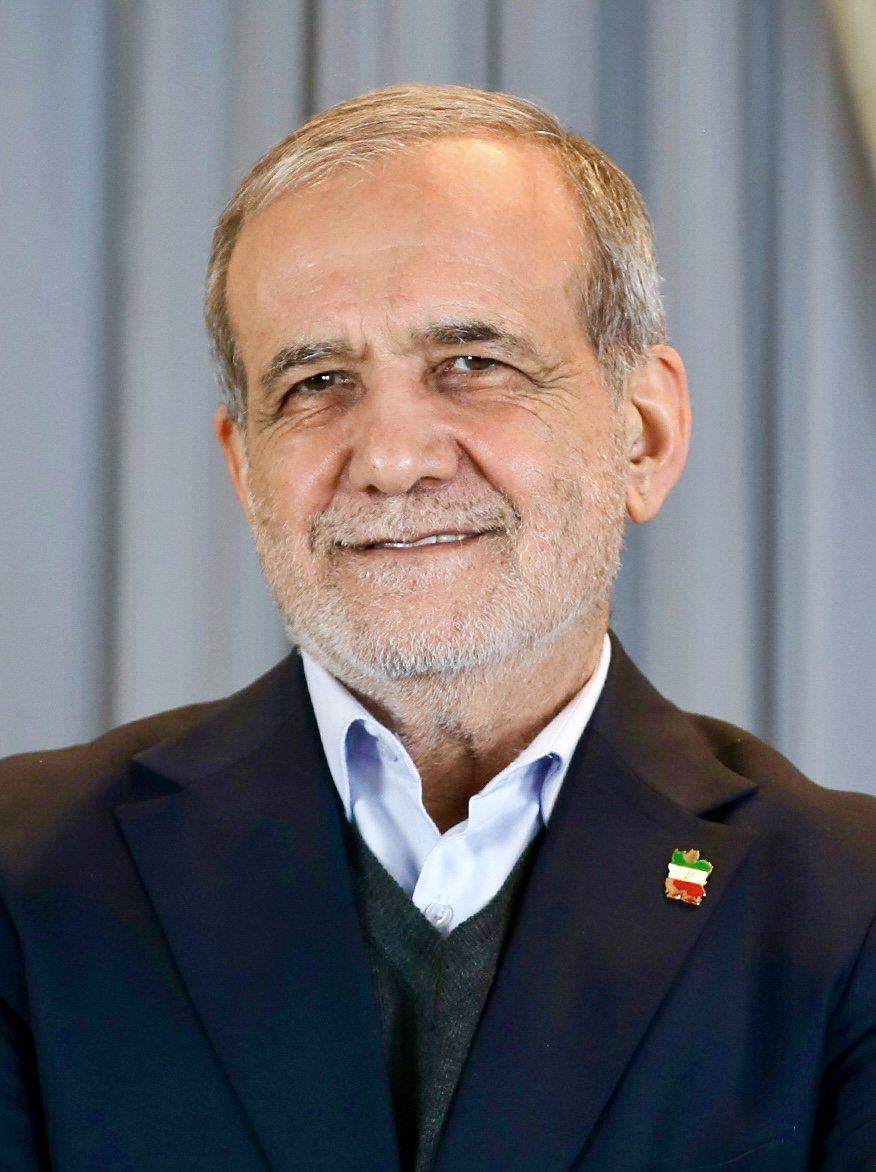
Archive photo · 27 December 2025Masoud Pezeshkian Congratulates Kassym-Jomart Tokayev on Kazakhstan National Day
7 West Asian2 Other1 AsianPhoto: Khamenei.ir, CC BY 4.0 · Cropped for layout
This article is an automated aggregation of coverage from news outlets. Our editorials offer in-depth analysis curated by the NewsCord team.
Pezeshkian congratulated Kassym-Jomart Tokayev on Kazakhstan's National Day. Stressed expanding friendly bilateral ties and deepening cooperation between Iran and Kazakhstan.
10 outlets told this the same way.
Pezeshkian to Tokayev
Iranian President Masoud Pezeshkian congratulated Kazakhstan President Kassym-Jomart Tokayev on Kazakhstan's National Day and emphasized shared responsibilities and capacities to strengthen regional peace, stability, and security through deepened bilateral cooperation. Pezeshkian said the relations between the Islamic Republic of Iran and the Republic of Kazakhstan have been based on friendship, mutual respect, and trust and have had a positive and stable trend. Pezeshkian pointed to historical, cultural, and civilizational commonalities and said the joint will of the leaders of the two countries provided suitable grounds for developing and deepening bilateral cooperation in various fields.
Pezeshkian expressed hope that by utilizing existing capacities and the planning and efforts of the officials of the two countries, the two sides would witness further expansion of cooperation and consolidation of friendly mutual relations in the near future. Pezeshkian prayed to God Almighty for the health, success, welfare, and prosperity of Tokayev and the people of Kazakhstan.
Araghchi on security
Iranian Foreign Minister Abbas Araghchi said regional security must be guaranteed by the states of the region and that Iran is ready to assist, while he criticized security architectures based on foreign presence.
Araghchi said American bases have not succeeded in providing security for host states and became a source of instability, and he placed primary responsibility on the Zionist entity for destabilizing the region.
Araghchi said the approach laid out by Martyr Dr. Kharazi remains a fundamental cornerstone of Iranian policy, namely the necessity for regional countries to assume responsibility for their own security without relying on foreign forces.
Araghchi warned that any agreement to end the war must include a halt to all confrontations on all fronts, and he said restricting settlements to limited theaters will not achieve the desired regional stability.
Araghchi said Iran stressed in negotiations with the American side mediated by Pakistan and Qatar and other international parties that the halt must cover all fronts.
Hormuz and negotiations
Iranian Ambassador to Pakistan Reza Amiri-Moghaddam said Iran is prepared to resume negotiations with the United States under Pakistan's mediation, but reopening the Strait of Hormuz is conditional on lifting the naval blockade of Iranian ports. Amiri-Moghaddam said the position was raised during the visit of Pakistan’s Army Chief Asim Munir to Tehran, and he described Pakistan as playing a key diplomatic role in efforts to ease tensions and facilitate a resolution between Tehran and Washington. Araghchi said the management of the Strait of Hormuz and the shipping routes passing through it will no longer be the same following the recent wars in the region, and he said discussions on future arrangements will continue.
Araghchi said Tehran is ready to work with regional countries to promote peace and stability, and he called for a regional security framework based on cooperation among the countries of the Persian Gulf without reliance on foreign military forces. Araghchi said the entire region “will not enjoy security and stability unless the wars on all fronts come to an end,” and he affirmed that the Strait of Hormuz will never return to the state it was in before these developments unfolded.